241If and when
Colour Amp rating
Red 10
Blue
15
Yellow 20
White or transparent 25
Green 30
Orange 40
Opening and closing the fuse box situated below the dash panel
● Opening: fold the cover down ⇒ Fig. 179.
● Closing: push back the cover in until it clicks into place.
To open the engine compartment fuse box
● Open the bonnet ⇒ page 204.
● Press the locking tabs in the direction indicated by the arrows to release
the fuse box cover ⇒ Fig. 180.
● Then lift the cover out.
● To fit the cover, place it on the fuse box. Push the locking tabs down, in
the opposite direction of that indicated by the arrows, until they click audi-
bly into place.
CAUTION
● Always carefully remove the fuse box covers and refit them correctly to
avoid problems with your vehicle.
● Protect the fuse boxes when open to avoid the entry of dust or humidity.
Dirt and humidity inside fuse boxes can cause damage to the electrical sys-
tem.
Note
In the vehicle, there are more fuses than those indicated in this chapter.
These should only be changed by a specialised workshop.
Replacing a blown fuse
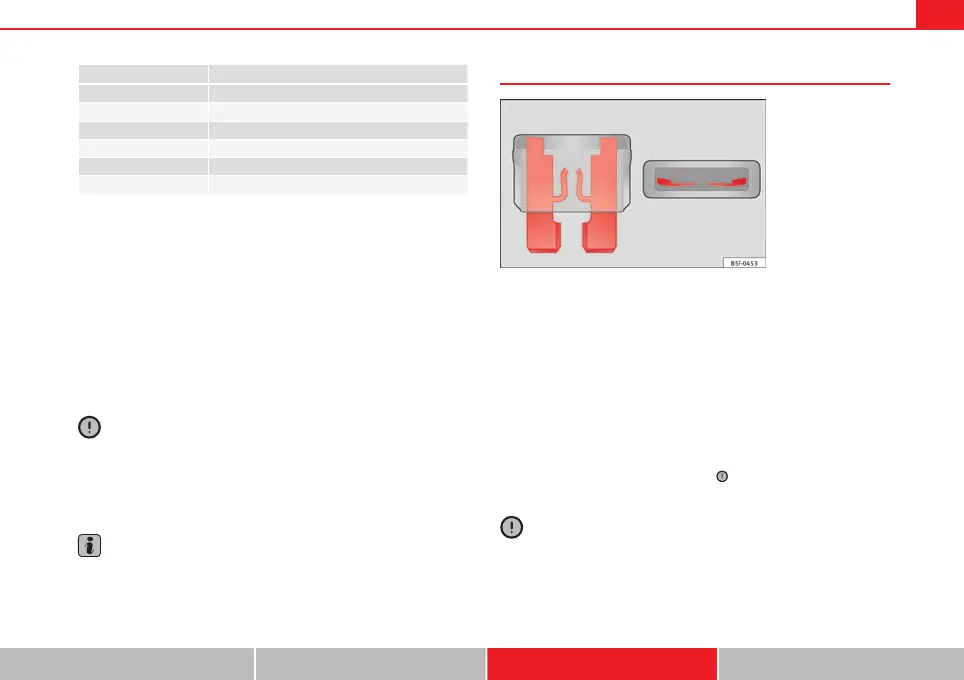
Fig. 181 Image of a
blown fuse
Preparation
● Switch off the ignition, lights and all electrical devices.
● Open the corresponding fuse box ⇒ page 240.
Identifying a blown fuse
A fuse is blown if its metal strip is ruptured ⇒ Fig. 181.
Point a lamp at the fuse. This will make it easier to see if the fuse is blown.
To replace a fuse
● Remove the fuse.
● Replace the blown fuse by one with an identical amperage rating (same
colour and markings) and identical size ⇒
.
● Replace the cover again or close the fuse box lid.
CAUTION
If you replace a fuse with higher-rating fuse, you could cause damage to an-
other part of the electrical system.
Safety Operation Advice Technical specifications



 To Next Page