
 Need help?
Do you have a question about the Selco Genesis 2700 PMC and is the answer not in the manual?
Guidelines for the proper and safe operating environment for the welding equipment.
Protective measures for the user and bystanders from welding hazards like radiation and sparks.
Safety measures to mitigate risks from welding fumes, gases, and powders.
Procedures to prevent fires and explosions during welding operations, especially near flammable materials.
Safety guidelines for handling, storage, and use of pressurized gas cylinders.
Critical warnings and measures to prevent electrical shock, including proper grounding and insulation.
Information on electromagnetic compatibility, potential interference, and precautions for sensitive individuals.
Details on the equipment's Ingress Protection rating against solids and liquids.
Procedures for safely handling the equipment during movement and unloading.
Recommendations for optimal and safe placement of the welding unit.
Steps and precautions for connecting the equipment to the power supply and earth.
General instructions for installing the welding system components, including specific connections.
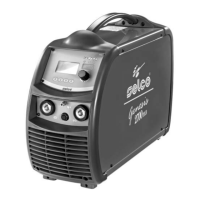
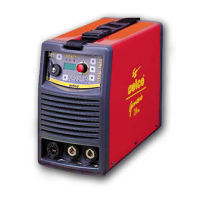
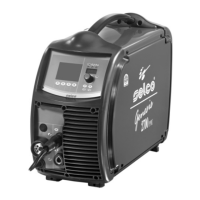
General introduction to the Genesis 2700 PMC power sources and their functions.
Detailed explanation of the controls and indicators on the front panel.
Description of the initial checks and display sequence upon powering on the unit.
Information regarding the test screen displayed when the side panel is open.
Overview of the main screen interface for controlling the welding process and displaying parameters.
Guide to adjusting various parameters for improved welding control and accuracy.
Explains how to select synergic curves for different welding processes and materials.
Details on storing and managing up to 64 personalized welding programs.
Options for customizing the equipment's interface and display settings.
Procedure for locking and unlocking control panel settings with a security password.
Setting up management methods for external devices like remote controls.
How to set warning and guard limits for welding parameters.
Information on alarm indications and solutions for troubleshooting operational issues.
Description of the connectors and controls located on the rear panel of the unit.
Identification and function of the various sockets on the equipment's panel.
General information on how remote controls activate and interact with the power sources.
Details on the RC 100 remote control unit for managing current and voltage.
Description of the RC 180 remote control for adjusting output current during welding.
Information on the RC 190 remote control for continuous adjustment of welding parameters.
Overview of the RC 200 remote control for display and adjustment of all parameters.
Introduction to MIG/MAG series torches and their features.
Details on U/D series torches for controlling MIG/MAG welding parameters.
Information on DIGIMIG torches for controlling key MIG/MAG welding parameters.
Description of Push-Pull torches for wire feeding and parameter control.
Explanation of the MMA welding process, electrode selection, and arc control.
Details on the TIG welding process, including arc striking and polarity.
Specific guidance for performing TIG welding on steel materials.
Information on applying TIG welding techniques to copper materials.
Overview of MIG/MAG welding, including system components and metal transfer methods.
 General
| Input Voltage | 400 V |
|---|---|
| Input Current | 16 A |
| Welding Current Range | 5 - 270 A |
| Protection Class | IP23 |
| Input Frequency | 50/60 Hz |
| Efficiency | 85% |
| Power Factor | 0.93 |
| Cooling System | Forced Air |


 To Next Page