WOOD BOILER INSTRUCTIONS Page 16 Copyright © 2011 Seton Wood Boilers all rights reserved
CHIMNEY MAINTENANCE
Measuring and Adjusting the Draft of the Flue
Draft is a function of the chimney flue, not the furnace. The natural draft generated through a chimney is
dependent on several factors including chimney height, temperature of flue gases, cross-sectional area of the
chimney, chimney wall insulation value, dilution air, and total volume of flue gases.
To operate properly, the Seton Boiler requires a draft of .06" to .07" wc (water column). Symptoms of an im-
properly designed or installed flue include visible smoke out the chimney, smoke escaping into the room,
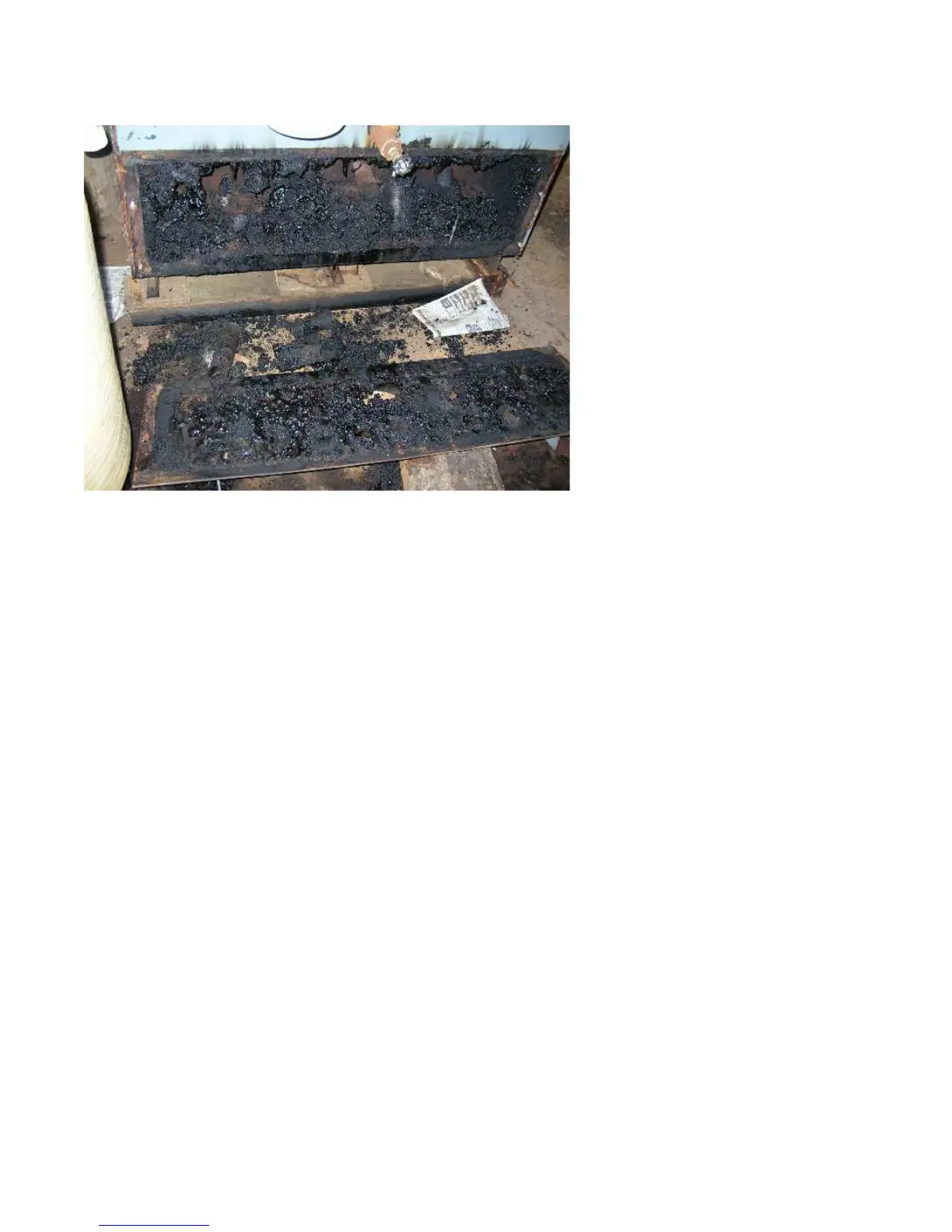
creosote buildup in the flue, and/or poor heating performance.
The following procedure describes how to measure draft using a manometer-a device that measure draft:
1. Close all windows and doors in the building and turn on all appliances that remove air from the home (e.
g., heat pump, air conditioner, exhaust fan, clothes dryer, fireplaces, etc.).
2. Drill a hole in the connector pipe (just large enough for the tube of the manometer) at least 1 foot above
the furnace outlet collar.
3. After all chimney connections, plumbing and wiring is complete, build a fire and allow the furnace to set-
tle into stable operation. If the boiler has been installed in conjunction with a Type A flue pipe, take the draft
reading after 1 hour. For all chimneys other than Type A flue pipe, take the draft reading after 2 hours.
4. Using the manometer, measure the draft in the flue.
a. If the draft measurement is below .06" wc (12.45 Pa), there is too little draft and a draft inducer or other
corrective measures are required to avoid air-starvation of the boiler. A draft inducer fan can be mounted in
the chimney.
THIS IS CAUSED BE NOT HAVING ENOUGH DRAFT



 To Next Page