OPERATING THE DIFFERENTIAL LOCK
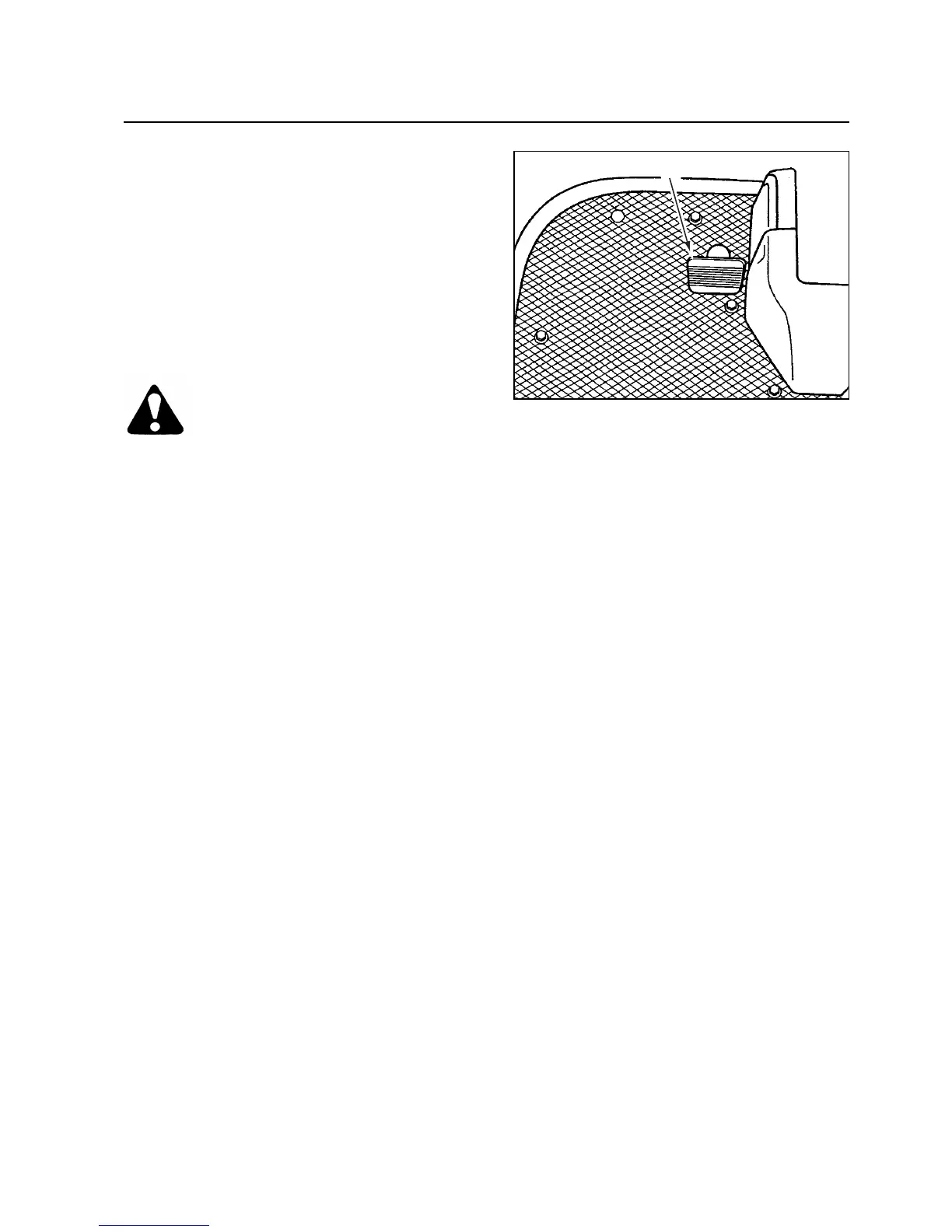
The differential lock is engaged by depressing
the pedal A. Depressing the pedal locks both
differential gears together, preventing one wheel
from rotating independently of the other. The
lock should be used to obtain additional traction
from the opposite wheel whenever one wheel
begins to slip in wet or loose soil.
Do not engage the differential lock when ground
speed is above 8 kmh.
WARNING: DO NOT ENGAGE THE DIF-
FERENTIAL LOCK WHEN TURNING THE
UNIT. IF THE LOCK IS ENGAGED WHEN
TURNING, A LOSS OF STEERING CONT-
ROL WILL RESULT.
To operate the differential lock depress and hold
down the pedal until the lock is positively
engaged. It is best to engage the differential
lock while the wheels are turning slowly to
minimize shock loads to the drive line. If a wheel
spins at high speed, as on ice, reduce engine
speed to idle before engaging the lock, or
damage may occur. The differential lock is
released when the pedal releases as the loads
equalise on both drive wheels.
NOTE: In some instances the lock may
remain engaged after the pedal is released.
This may occur if one front wheel tends to
turn at a faster speed than the other. Should
this happen, the lock may be disengaged by
either of two ways:
•
Decrease the drawbar pull by raising or
disengaging the implement so that neither
wheel tends to slip.
− OR −
•
Rapidly apply and release a light braking load
to the slipping front wheel.
2-17
OPERATION



 To Next Page