Large ensembles
(band, orchestra, choir)
Large ensembles generally do not need
much sound reinforcement, unless
the performance area is unusually
spacious. For choirs, use a technique
known as area miking (see figure 2, page 6). To determine the right number of
microphones, use one for every 10-15 voices. Remember not to use more micro-
phones than absolutely necessary and follow the 3-to-1 Rule (see page 12). As
in recording, use a flat frequency response condenser, preferably in a cardioid-
pattern. If the microphones will be suspended from the ceiling, make certain they
are aimed towards the singers’ mouths, not at tops of their heads. Handheld,
dynamic microphones are designed for up-close use only, and are not appropri-
ate for choir-miking under any circumstance.
Similar techniques apply to orchestras and concert bands. Depending on the
size of the ensemble, use at least one microphone per section. Remember to
keep the microphones as close in as possible and as far from the loudspeakers
as possible. For soloists or lead instruments, consider using a microphone
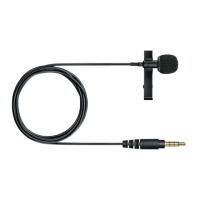
attached directly to the instrument. Miniature condenser microphones can be
attached or clipped onto the bells of brass and woodwind instruments or the chin
rest of string instruments.
Recommended Equipment/Suggested Models:
• One condenser microphone (PG81 or SM81) per section
• Soloist microphones – SM57 (horns, stand-mounted) or Beta 98H/C
(horns or strings, clipped-on)
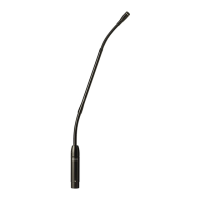
• Choir microphones – MX202 (permanent install, hung from ceiling or
stand-mounted) or PG81(stand-mounted only)
• Microphone stands
• An assortment of XLR microphone cables in varying lengths
• A mixer with enough input channels
• Power amplifier
• Loudspeakers
• Interconnect cables
• Signal processors (if desired)
Small ensembles (jazz combos, string quartet, vocal jazz groups)
For smaller groups, close-miking becomes essential for reducing leakage between
the instruments. Let’s examine each instrument type individually.
Music
Guide
Educators
13


 To Next Page