Lead vocal - Use a handheld, directional microphone (PG58, SM58 or Beta 58A).
The microphone should be touching the lips or just a few inches away. The same
technique applies to background vocalists or vocal ensembles (see figure 3).
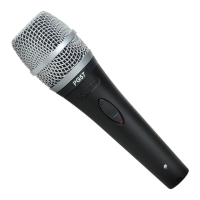
Electric Guitar Amplifier – Use an SM57 (or PG57) microphone
roughly 1-4 inches from the loudspeaker, pointed toward the
center of the speaker cone (see figure 4).
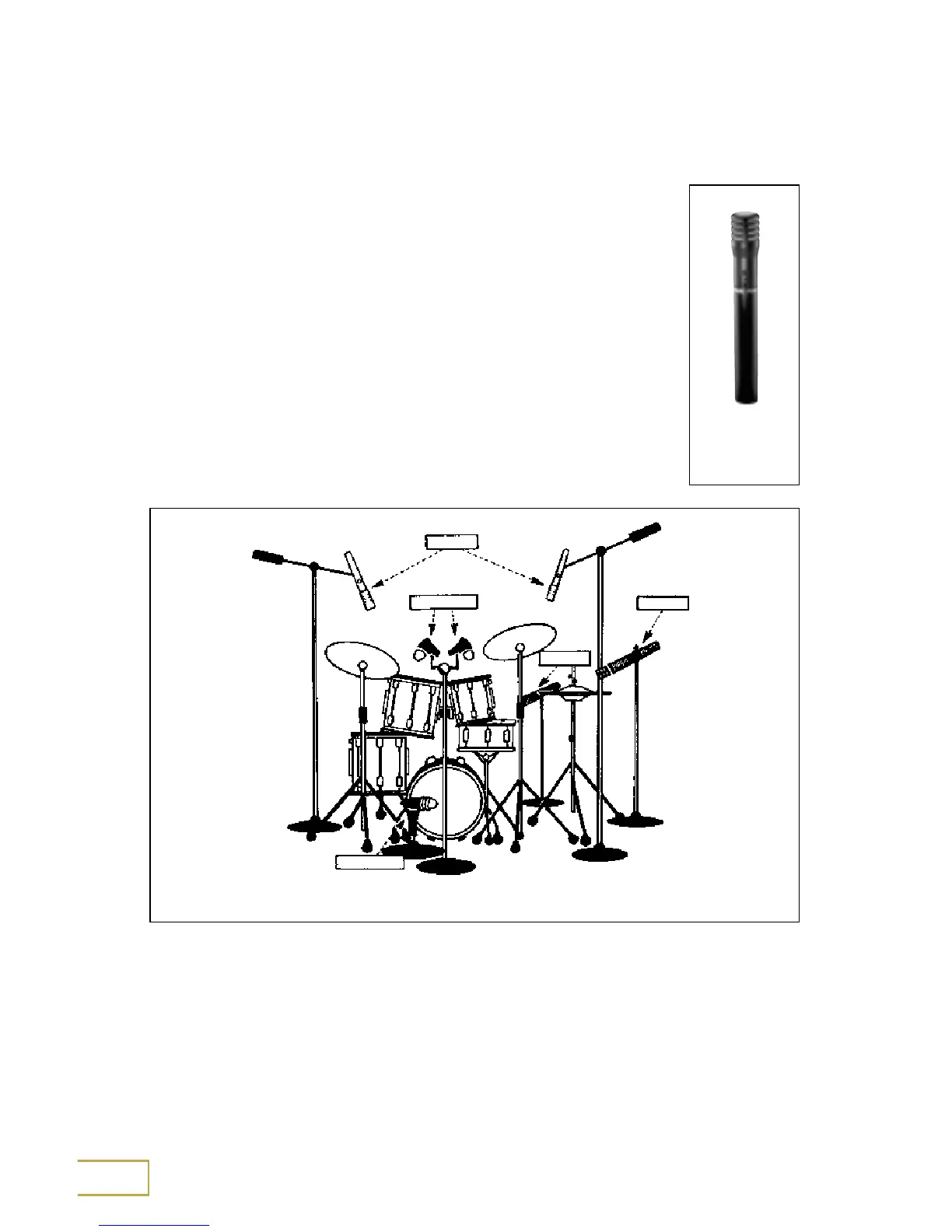
Drums – Jazz Band – Generally, three microphones are sufficient
to achieve an authentic jazz drum sound. Place one microphone
in front of the kick drum (Beta 52 or PG52), and use a pair of decent
condenser microphones (PG81 or SM81) above the kit for
cymbals, toms, and snare drum.
Drums (see figure 9) – Rock Band – To get a "big" rock sound, try
to place a microphone on every drum, with the following guidelines:
Snare drum - Use a dynamic microphone (SM57) on a short boom stand. Aim the
microphone at the top head, just above the top edge of the drum.
Kick (bass) drum - Use a front drum head that has a hole in it, or remove the front
head altogether. Mount a microphone (Beta 52 or PG52) on a short boom and
position it inside the drum a few inches from the beater head, on axis with the beater.
Use a wood beater to get more "attack", or stuff the drum with a blanket or pillows to
reduce boominess.
14
PG81
SM57
SM81
PG56
PG52
Figure 9
PG81
Condenser
Microphone


 To Next Page