16
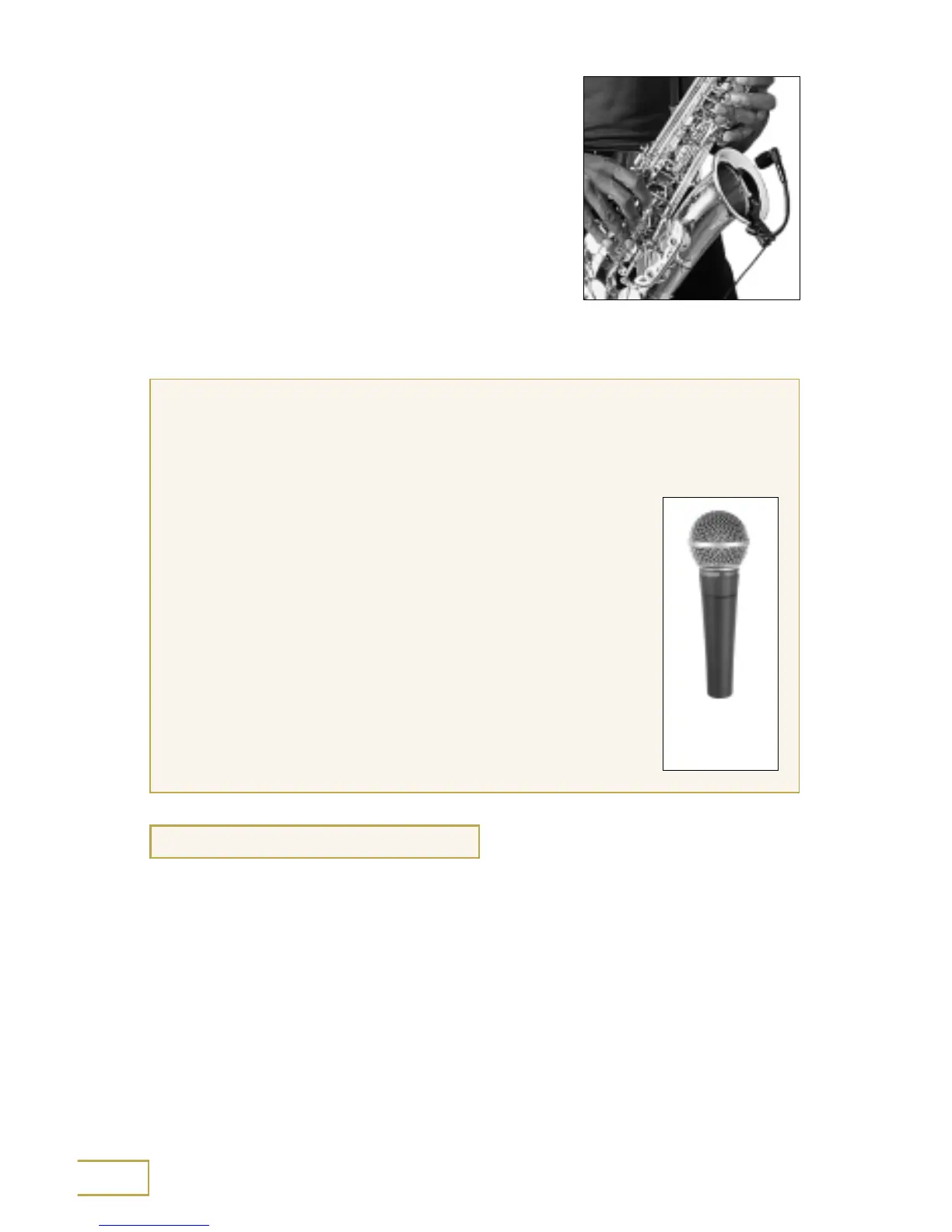
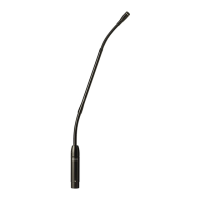
Saxophone (see figure 11) – Again, a miniature
condenser microphone (Beta 98H/C) clipped to the
instrument and aimed into the bell yields good, up-front
sound quality with great isolation. Alternatively, a
dynamic microphone on a stand (SM57) provides
similar results, but is slightly more cumbersome.
Brass (Trumpets, trombone, tuba)– Similar to the sax-
ophone, clip a Beta 98H/C to the bell of the instrument.
If the sound seems excessively bright, especially the
trumpet, try slightly off-axis to get a more mellow tone.
Recommended Equipment/Suggested Models:
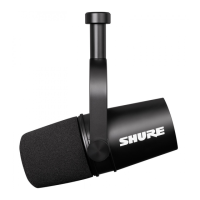
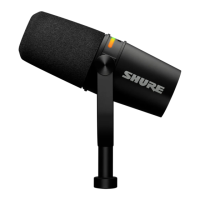
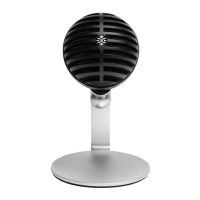
• Vocal microphone (PG58, SM58 or Beta 58A)
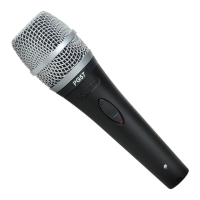
• Guitar amplifier microphone (PG57, SM57)
• Drum microphones (Beta 52 or PG52, SM57s, two SM81 or PG81)
• Piano microphone (PG81, SM81, or KSM27)
• Woodwinds (SM57 or Beta 98H/C)
• Brass (SM57 or Beta 98H/C)
• Stringed instruments (PG81 or Beta 98H/C)
• Microphone stands
• An assortment of XLR microphone cables in varying lengths
• A mixer with enough input channels
• Power amplifier
• Loudspeakers
• Interconnect cables
• Signal processors (if desired)
Mixers, Amplifiers and Loudspeakers
As in recording, mixers are used to combine microphone signals together. Mixers
designed for sound reinforcement of musical instruments usually feature a set of extra
controls for each microphone beyond just a volume control. These typically include a
gain, or "trim" control, an EQ section, a set of auxiliary send volume controls, a bus
section, a pan control, and a fader for volume control (see figure 12).
The gain control boosts the signal from microphone up to line level. The next stage
is the EQ, used for tone shaping. A typical mixer will have knobs to boost or cut the
highs and lows. Also common is a "sweepable" midrange, which utilizes two controls.
One knob selects the frequency, and the other one boosts or cuts that frequency.
Figure 11
SM58
Dynamic Vocal
Microphone


 To Next Page