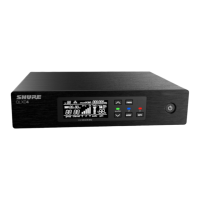
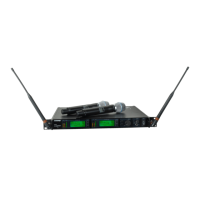
The receiver uses an Ethernet connection to network with other components and includes an internal
DHCP client for automatic network configuration when connected to a DHCP enabled router.
Connecting to a Network
1. Insert an Ethernet cable in the Ethernet port on the rear of the receiver.
2. Connect the cable to a computer or router.
3. The port LEDs on the receiver will illuminate to indicate network connectivity and network traffic.
Automatic IP Addressing
1. Enable a DHCP service on the server or use a DHCP enabled router.
2. When the receiver is powered on, the DHCP server will automatically assign an IP address to the
receiver.
Tip: Use the network reset option available in the advanced features menu to return the receiver to the default DHCP
addressing mode.
Configuration Tips
Use shielded Cat 5 or better Ethernet cables to ensure reliable network performance
The LEDs on the Ethernet port illuminate indicating a network connection is active
The network icon illuminates when the receiver detects additional Shure devices on the network
All components must operate on the same subnet
Use multiple Ethernet switches to extend the network for larger installations
Network Troubleshooting
Use only one DHCP server per network
All devices must share the same subnet mask
All receivers must have the same level of firmware revision installed
Look for the illuminated network icon on the front panel of each device:
If the icon is not illuminated, check the cable connection and the LEDs on the Ethernet port.
If the Ethernet port LEDs are not illuminated and the cable is plugged in, replace the cable and
recheck the LEDs and network icon.
To check connectivity of WWB6 to the network:
1. Start WWB6 software and use Inventory view to see devices connected to the network.
2. If not, find the IP address from one of the devices on the network (such as a receiver) and see if
you can ping it from the computer running WWB6.
3. From a WINDOWS/MAC command prompt, type ‘ping IPADDRESS’ of the device (e.g. "ping
192.168.1.100").
4. If the ping returns success (no packet loss), then the computer can communicate with the device
on the network. If the ping returns failure (100% packet loss), then verify that the IP address of the
computer is on the same subnet as the receiver.
5. If the pings are successful and the devices still do not show up in the WWB6 inventory, check to
ensure all firewalls are either disabled or allow the WWB network traffic to pass to the application.
Check that firewall settings are not blocking network access.


 To Next Page