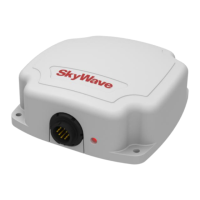
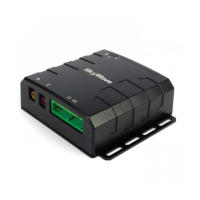
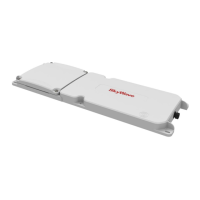
IDP 600 Terminal Series - Hardware Guide
© SkyWave Proprietary 27 T200, Version 02
Do not mount the terminal close to other electrical equipment due to possible radiated
and/or conducted electromagnetic interference.
Do not mount the terminal close to radar or other communications antennas. Use the
following guidelines:
> 1 m from VHF/UHF antenna
> 3 m from loop antenna
> 4 m from MF/HF antenna
> 5 m from other satellite antennas
Not within a radar beam
Do not mount the terminal where water may build-up or collect.
Ensure that any paint above the terminal is non-metallic and non-metallic flake, if the
installation is under fiberglass or composite wind fairings.
Check that the terminal's cable reaches the power source before you drill any
mounting holes.
Do not mount the terminal close to an exhaust pipe due to the excessive heat and the
potential for the exhaust pipe causing satellite blockage.
Do not mount the terminal close to air horns or any tractor roof hardware
(e.g., emergency lights) that could interfere with satellite communications.
Mount the terminal on the driver's side of the vehicle, if possible, when there is a
possibility of strikes by overhanging tree branches.
Do not install the terminal inside the truck under the roof liner.
Once you have picked the mounting location, mount the terminal (refer to Section 4.5).
4.5 Route the Main Cable
Consider the following guidelines before routing the cable assembly.
CAUTION Ensure the power cable will not be pinched, kinked or worn
down by any objects or moving parts such as the door hinges. It
is very important to secure the cable at many points along its
path.
CAUTION Prior to working on any cabling, ensure
that the terminal is powered off and
will not start while work is in progress.
Do not route the cable near the engine if routing through the engine compartment.
This location will subject the cable to extreme heat.
Keep the cable away from hot surfaces such as exhaust pipes as this may damage the
cable.
Do not run the cable over sharp or jagged edges.
Place the cable in recesses and channels, whenever possible, to prevent potential
damage or wear by foot traffic.



 To Next Page