4
ZCGG8850CE Rev. D (08/20)
• Injuries caused by prolonged use of a tool. When using
any tool for prolonged periods ensure you take regular
breaks.
• Impairment of hearing.
• Health hazards caused by breathing dust developed
when using your tool (example:- working with wood,
especially oak, beech and MDF.)
Improper use of power tools and accessories can
cause broken tools.
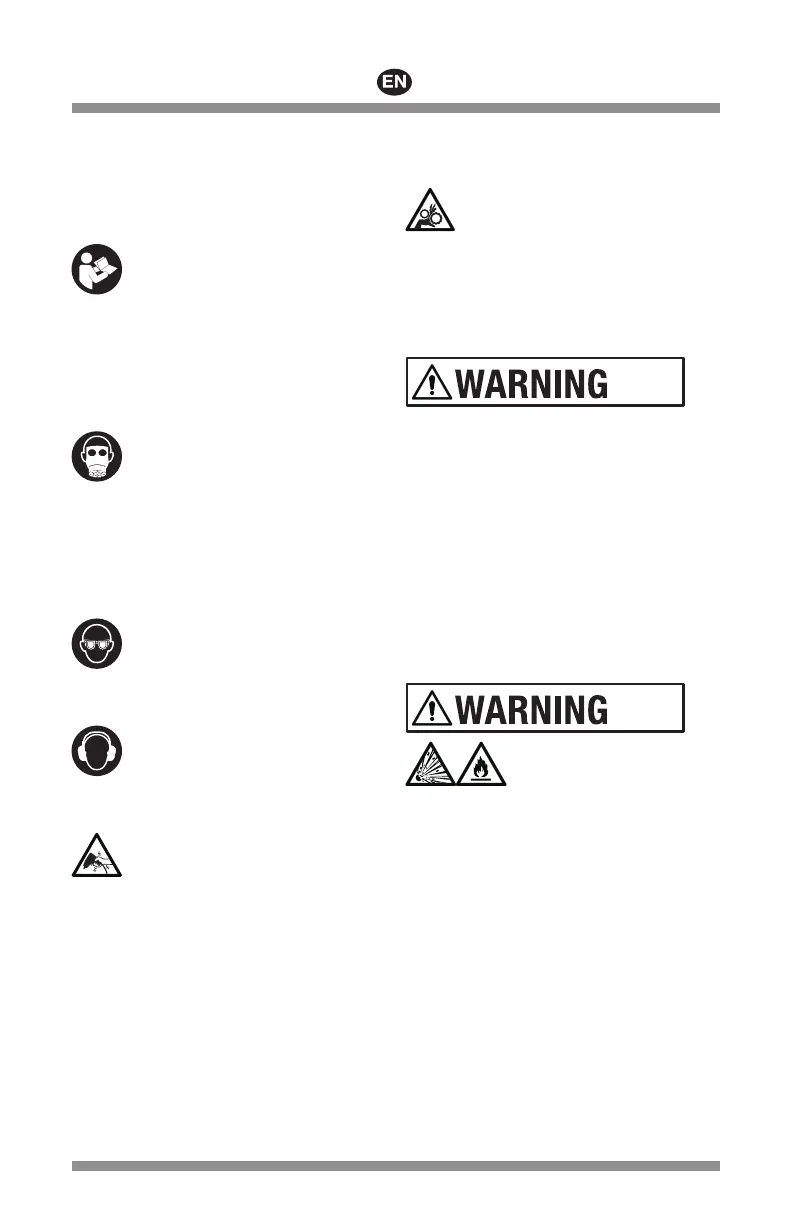
• Read instructions before operating power tools.
• Be sure these instructions accompany the tool when
passed from one user to a new or inexperienced user.
• Do not remove any labels. Replace all damaged
labels.
Broken tools can cause injury.
Risk of contamination from hazardous dust.
• Wear an approved dust mask or respirator when using
power tools that create dust.
• Some dust created by power sanding, sawing,
grinding, drilling and other construction activities
contains chemicals known to cause cancer, birth
defects or other reproductive harm.
Inhaling hazardous dust can cause injury.
Power tools can cause flying particles during use.
Wear safety goggles, user and bystanders.
Flying particles can cause injury.
Power tools generate noise.
Wear hearing protection, user and bystanders.
Prolonged exposure to noise can cause hearing loss.
Power tools vibrate.
• Avoid prolonged exposure to vibration, repetitive
motions and uncomfortable positions.
• Stop using the tool if discomfort, tingling feeling or pain
occurs. Seek medical advice before resuming use.
Prolonged exposure to vibration, repetitive motions and
uncomfortable positions can cause injury.
Sudden changes in motion or position can occur while
using the tool.
• Anticipate and be alert for changes in motion during
start up and operation.
• Maintain a secure grip.
• Anticipate reaction force. Adjust your stance and hold
tool securely.
• Observe the position of the reverse mechanism before
operating the tool and be aware of rotation direction
when you press the trigger. Sudden changes in motion
or position can cause injury.
Risk of entanglement.
• Keep body parts away from rotating parts.
• Wear protective hair covering to contain long hair.
• Keep handle dry, clean and free from oil and grease.
• Do not lock or tape the trigger in the ON position.
• Remove battery pack before changing accessories.
Entanglement can cause injury.
• Do not use the tool if it vibrates too much, makes
unusual noises, has loose parts, or shows any other
signs of damage.
• If the tool malfunctions, discontinue use and
immediately arrange for service and repair.
• Do not lubricate or clean tools with flammable or
volatile liquids such as kerosene, gasoline, diesel, or
jet fuel.
• Use clamps or other practical ways to secure and
support the workpiece to a stable platform. Holding the
work by hand or against your body is unstable and may
lead to loss of control.
Battery Pack Safety
Messages
Risk of explosion or fire.
• Do not store the tool and battery in locations where the
temperature may reach or exceed 120°F (49°C).
• CTC131/CTCA131/CTCEU131/CTCJ131 chargers will
not charge battery when temperature is below 32°F
(0°C) or above 113°F (45°C).
• Do not incinerate the battery, even if severely damaged
or completely exhausted. The battery may explode in
fire.
• Cover the battery pack terminals with heavy adhesive
tape after removing the battery pack.
• Do not attempt to destroy or disassemble the battery
pack or remove any of its components.
• Do not charge battery pack using an engine generator
or DC power source.
• Charge battery pack in a well ventilated area.
Explosion or flames can cause injury.



 To Next Page