6. Install the top oil fill vent port plug and continue filling the
system with oil until the fill line is reached in the expansion
tank.
7. Repeat this process for the other side of the machine.
8. Perform the
Purging the Air from the Hydraulic System
procedure.
Purging the Air from the Hydraulic System
Due to the effects air has on efficiency in hydraulic drive
systems, it is critical that it be purged from the system.
These purge procedures should be implemented any time a
hydraulic system has been opened to facilitate maintenance or
any additional oil has been added to the system.
The resulting symptoms of air in the hydraulic system may be:
• Noisy operation.
• Lack of power or drive after short term operation.
• High operation temperature and excessive expansion of
oil.
Before starting, make sure the transaxles/transmissions are at
the proper oil levels. If it is not, fill to the specifications outlined
in the
Check / Fill Transmission Oil Level
procedure.
Purging Air from the Hydraulic System:
1. Chock the front wheels to prevent the machine from rolling.
Raise the rear of the machine so that the vehicle’s rear tires
do not contact the ground. Position jack stands under the
rear bumper of the machine to secure it.
2. Open the transaxle’s bypass valves (see
Pushing the Rider
by Hand
for the location and function of the bypass valves),
start the engine, release the parking brake, and slowly move
the zero-turn rider’s ground speed control levers in both
forward and reverse directions (5 to 6 times), as air is
purged from the unit, the oil level will drop.
3. Stop the engine and engage the parking brake.
4. Close the transaxle’s bypass valves, start the engine,
release the parking brake, and slowly move the zero-turn
rider’s ground speed control levers in both forward and
reverse directions (5 to 6 times), as air is purged from the
unit, the oil level will drop.
5. Stop the engine. Remove the jack stands from underneath
the machine.
6. Repeat the process detailed above but with the unit's drive
wheels on the ground. The procedure should be performed
in an area free of any objects or bystanders.
It may be necessary to repeat the process detailed above until
all the air is completely purged from the system. When the
transaxles/transmissions operate at normal noise levels and
move smoothly forward and reverse at normal speeds, then the
transaxles/transmissions are considered purged.
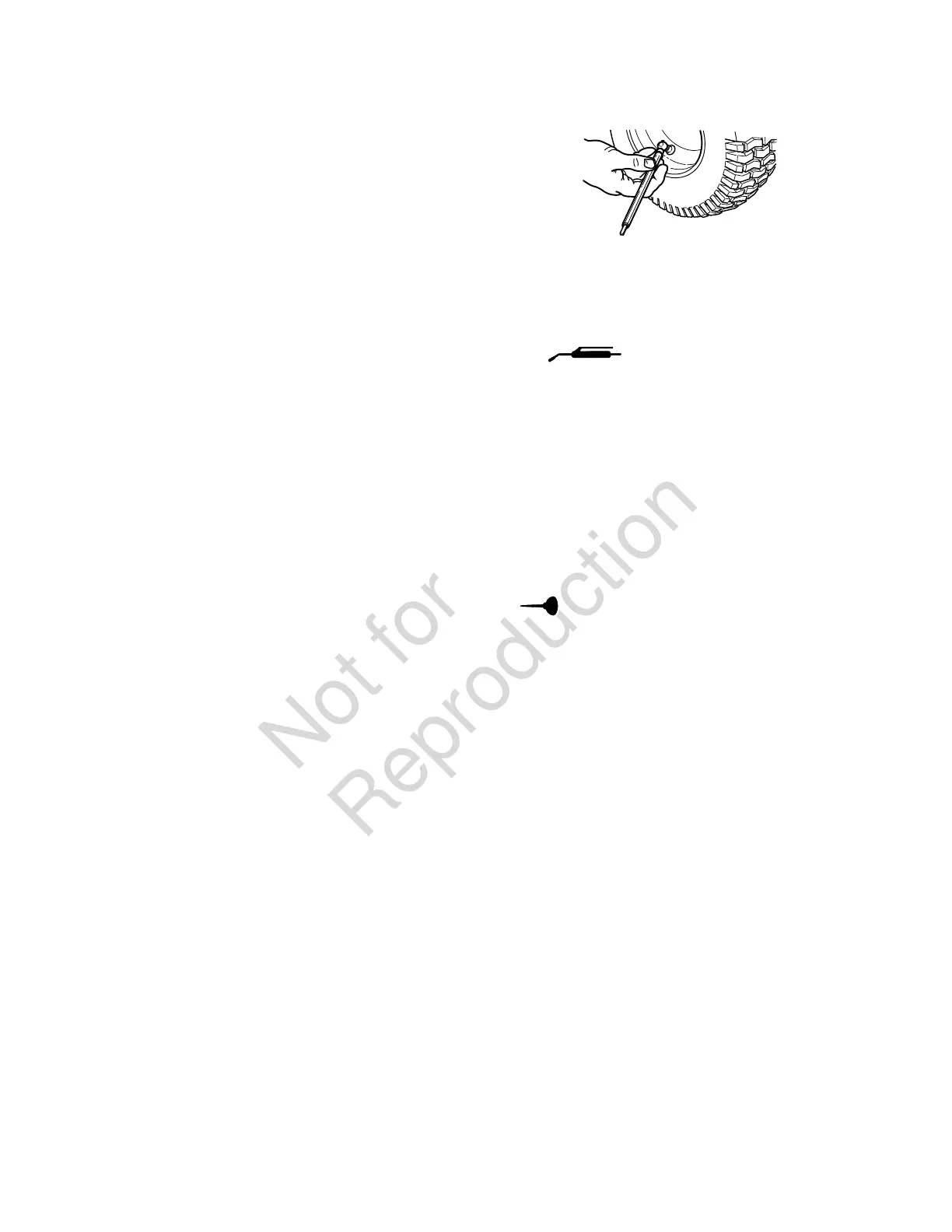
Checking Tire Pressures
Tire pressure should be checked periodically, and maintained
at the levels shown in the Specifications chart. Note that these
pressures may differ slightly from the "Max Inflation" stamped
on the side-wall of the tires. The pressures shown provide proper
traction and extend tire life.
Lubrication
Lubricate the unit at the locations shown in Figures 33 through
37 as well as the following lubrication points.
Grease:
• front caster wheel axles & yokes
• deck lift pivots blocks
• mower deck spindles
• mower deck pusher bars (72" mower decks)
Use grease fittings when present. Disassemble parts to apply
grease to moving parts when grease fittings are not installed.
Not all greases are compatible. Red grease (p/n 5022285) is
recommended, automotive-type, high-temperature, lithium
grease may be used when this is not available.
Oil:
• control handle pivots
• seat plate pivots
• deck lift pivots
• parking brake shaft pivots
• discharge chute hinge
• mower deck puller bar pivots (61" mower decks)
Generally, all moving metal parts should be oiled where contact
is made with other parts. Keep oil and grease off belts and
pulleys. Remember to wipe fitting and surfaces clean both before
and after lubrication.
61" Mower Decks:
30 snapperpro.com


 To Next Page