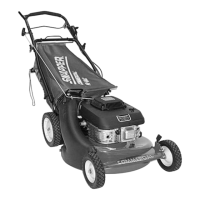
This document is a Safety Instructions & Operator's Manual for a Snapper 21" Steel Deck Walk Mower, Series 17, specifically for propelled models with the model number FRP2167517BV.
Function Description
The Snapper 21" Steel Deck Walk Mower is a self-propelled lawnmower designed for residential use. Its primary function is to cut grass, with features for both bagging and recycling (mulching) grass clippings. The manual emphasizes safe operation and maintenance to ensure the longevity and proper functioning of the machine.
Important Technical Specifications
The model number FRP2167517BV breaks down as follows:
- F: Flange Type Deck
- R: Recycling Model
- P: Self Propelled Model
- 21: 21" Cutting Width
- 675: 6.75 HP (Engine Horse Power)
- 17: Series Designation
- B: Briggs & Stratton (Engine Manufacturer)
- V: Over Head Valve Engine
Key specifications mentioned or implied:
- Cutting Width: 21 inches
- Engine Horse Power: 6.75 HP
- Engine Type: Briggs & Stratton Over Head Valve Engine
- Blade Torque: Recommended blade retaining cap screw torque is 40 ft. lbs.
- Blade Sharpening Angle: 22 to 28 degrees
- Transmission Grease: Snapper "00" Grease (Part No. 2-9443)
- Fuel: Requires fresh, clean gasoline; 2-cycle engines require a 32 to 1 mixture of gasoline and BIA certified TC-W oil. Fuel should not be older than 3 months.
- Oil: 4-cycle engines require oil to the full mark; refer to engine owner's manual for specifications.
Usage Features
The mower offers several user-friendly features:
- Self-Propelled Operation: Allows the operator to control the forward speed using a ground speed control, reducing physical effort. The speed can be adjusted from "First/Slow" to "Sixth/Fast."
- Engine Speed Control: A lever allows the operator to set the engine speed to "Fast" (Rabbit) or "Slow."
- Blade Control: A lever on the handle engages and disengages the blade. Releasing this control stops both the engine and blade for safety.
- Rope Start Handle: For manually starting the engine.
- Engine Primer: Used to start a cold engine by pushing it three times. Not usually required for a warm engine.
- Handle Height Adjustment: The mower handle height can be adjusted by loosening lower nuts, moving the handle up or down, and retightening.
- Cutting Height Adjustment: Features front and rear height adjustment latches. All wheels should be set to the same cutting height. Notch 6 is the highest position, and Notch 1 is the lowest.
- Recycling Operation (Mulching): The mower is designed for recycling grass clippings. For best results, cut up to 1/3 of grass blade length when dry, with the engine speed on "FAST" and ground speed on "slowest." The front deck baffle should be in the highest position for mulching.
- Grass Catcher Installation (Optional Accessory): Allows for bagging clippings. The front deck baffle should be in the lowest position when using a grass bag.
- Discharge Deflector Installation (Optional Accessory): Can be installed to direct clippings.
Maintenance Features
The manual outlines a comprehensive maintenance schedule and procedures:
- Pre-start Checklist: Before each start-up, check guards, deflectors, grass bag, adapter, and covers; ensure blade and wheel drive controls work freely; check cutting height; check engine oil; add fuel; and clean exterior surfaces.
- Engine Oil Change: Recommended after the first 5 hours, then every 25 hours (or more often under heavy load/high temperatures). The manual describes how to drain oil through the dipstick tube by tipping the mower onto its lower handle (after draining the fuel tank).
- Transmission Grease Check: After the first 5 hours, then every 25 hours. Remove the fill plug, roll the machine to check if Snapper "00" grease is visible on the input gear, and add if needed.
- Mower Blade Check: Frequently inspect for sharpness, wear, and damage. Recommended torque for the blade retaining cap screw is 40 ft. lbs.
- Blade Sharpening: Sharpen at an angle of 22 to 28 degrees, ensuring not to sharpen beyond the original cutting edge. Balance the blade after sharpening.
- Blade Replacement: Replace if badly chipped, bent, out of balance, or cracked.
- Engine Drive Belt Check: Visually check for cracking, fraying, or exposed strands every 25 hours. Replace if worn or damaged.
- Transmission Poly-V Belt Check: Visually check for cracking, fraying, or exposed strands every 25 hours. Replace if worn or damaged.
- Annual Service: Perform all maintenance described in the "Service Schedule" section. This includes engine service (refer to engine owner's manual), air filter service, and engine oil service.
- Storage Procedure: Drain fuel from the tank and carburetor, disconnect and remove the spark plug wire, tape openings, clean the underside of the deck, lubricate exposed metal, and fold handles (on self-propelled models) before storing in a dry area.
- Wheel Drive Control Adjustment: Adjust clearance between the spring hook and clutch cable eye to 1/16" to 1/8" when released.
- Driven and Drive Disc Service: Clean discs if slippage occurs due to oil or grease. Reconnect or replace the drive spring if loose or broken.
- Driven Disc Adjustment: Adjust by sliding the driven disc assembly to 1/8" from the outside edge of the drive disc, then tightening the connector hex nut.
- Rubber Driven Disc Replacement: Replace if badly chunked or worn.
- Driven Disc Bearing Replacement: Involves driving out the old bearing and installing a new one with retaining screws.
- Hex Shaft Bearing Replacement: Involves removing the hex lock nut, holder, O-ring, and old bearing, then installing new components.
- Engine Cooling System: Clean shroud and fins regularly to prevent overheating.
- Mower Deck: Clean debris accumulation regularly.
The manual also includes a detailed troubleshooting guide for common issues like engine not starting, engine stalling, loss of power, excessive vibration, mower not moving, improper cutting, and poor grass discharge. It stresses the importance of using genuine Snapper replacement parts to maintain original standards and safety. The document concludes with a 3-year limited warranty for residential use and 90 days for commercial use, with specific disclaimers regarding engines, batteries, and damage from improper use or maintenance. It also contains California Proposition 65 warnings regarding lead and engine exhaust.

 Need help?
 General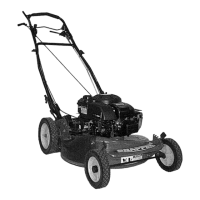

 To Next Page