
 Need help?
Do you have a question about the Streamit Lisa LCD and is the answer not in the manual?
Introduces the Lisa LCD as a modern IP-audio receiver and recommends reading the manual.
Details the components included in the package, such as the device, power supply, and cables.
Lists additional resources like the Streamit support site and Quick Start Guide for further information.
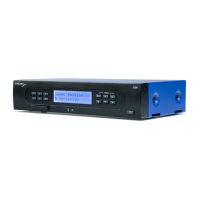
Describes the front and back views of the Lisa LCD device, including buttons and connectors.
Details the underside of the Lisa LCD device, showing labels and mounting points.
Explains how to mount the Lisa LCD in a 19-inch rack using specific mounting plates.
Describes placing the Lisa LCD on an office desk or mounting it in a professional environment.
Guides on connecting power supply, Ethernet cable, and audio output.
Details the use of the USB connection for service, programming, and software updates.
Guides the user through the initial power-on process and the configuration wizard.
Explains the device activation process, different editions, and internet connectivity requirements.
Guides the user through the setup wizard, covering language, network, proxy, time/date, volume, bass, treble, and keylock settings.
Provides step-by-step instructions for configuring static IP settings within the wizard.
Guides on how to configure the keylock feature during the initial setup wizard.
Explains how the Lisa connects to the Streamit Device portal and plays the first preset stream.
Details how to play audio files from an SD card, including playlist creation.
Explains the device's ability to switch to the SD card if internet connection fails.
Outlines the two steps required to use an HTTP proxy server with the Lisa.
Lists various methods for configuring Lisa devices, including web interface and LCT.
Provides instructions on how to access the device's setup menu when it's switched off.
Details how to navigate and change the menu language via the setup interface.
Explains how to access and change network settings (DHCP/Static IP) via the setup menu.
Describes how to enable or disable the proxy server setting through the setup menu.
Guides on setting the device's time and date through the setup menu.
Explains how to adjust the output volume level using the setup menu.
Details how to adjust the bass level through the setup menu.
Explains how to adjust the treble level through the setup menu.
Describes enabling and configuring the infrared remote control feature via the setup menu.
Explains the keylock feature for preventing unauthorized keypad access and its PIN mechanism.
Provides step-by-step instructions for enabling the keylock feature and setting a PIN.
Describes the process of disabling the keylock, including PIN entry and potential extra steps.
Explains how to force keylock off using the master PIN or Lisa Configuration Tool.
Details the two-step process to change the existing keylock PIN.
Guides on accessing the service menu for hardware/software information and operations.
Explains how to perform a self-test to diagnose hardware malfunctions.
Describes performing a connection test to verify network and port configurations.
Explains how to find and use the device's unique serial number (Lisa ID).
Guides on loading default settings and notes which settings are not reset.
Explains how to force a software update using the service menu when RSU is disabled.
Describes triggering content updates on the SD card manually from the service menu.
Explains how to initiate device activation via command interface or service menu.
Discusses using remote monitoring platforms for information on device status and events.
Details how LCT logging provides more detailed monitoring information than remote monitoring.
Lists and explains various error codes encountered during operation, covering warnings, errors, and system errors across multiple pages.
Provides contact information and resources for technical support and documentation.
Presents an overview of available Lisa Compact and Lisa LCD models and their features.
Describes the intended use of Lisa devices in in-store audio applications and operational setups.
Details using the Lisa device independently for playing audio files from an SD card.
Explains the benefits and requirements of using the Device portal for managing multiple devices.
Introduces the ADP for planning and distributing content and playlists.
Discusses developing a custom platform for controlling Lisa devices and the need for a support agreement.
Introduces LCT as a Windows PC software for device configuration, updates, and monitoring.
Describes the SCS Toolkit for file conversion, playlist creation, and card formatting.
Lists the types of SD cards supported (SD, SDHC, SDXC) and file system requirements (FAT32).
Provides rules for storing audio tracks on the SD card, including formatting and file naming.
Details specific rules for creating playlists on the SD card, including naming and entry format.
Explains how to update SD card content automatically using the 'Update content' task.
Discusses configuring content updates to occur in the background without interrupting playback.
Explains how and when the Lisa device retrieves configuration updates from web resources.
Provides a high-level overview of the operational flow within a Lisa device.
Details the startup procedure, including initialization and update processes.
Illustrates the startup process flow, including software initialization, activation, and configuration updates.
Explains how the Lisa plays streams from the internet, based on last used source or user selection.
Describes how the Lisa plays playlists from an SD card, including tracking the last played entry.
Details the mechanism for switching to SD card playback when internet streaming fails.
Explains how fallback works with playlists and direct streams, and coupling stations to fallback playlists.
Describes how playlists are played sequentially or with random playback, and reloading after completion.
Explains the 'standby' state and ongoing functions like monitoring and task scheduling.
Outlines requirements for playlists retrieved from online resources versus those stored on SD card.
Details specific rules for creating playlists on the SD card, including naming and entry format.
Specifies requirements for playlist files sourced from web servers, including size and URL formats.
Explains how random playback is determined by fallback status, settings, and playlist size.
Lists supported audio formats like MP3, WMA, OGG, and AAC+.
Provides tables detailing supported bitrates for MPEG1.0, MPEG2.0, and MPEG2.5 MP3 formats.
Describes supported WMA codec versions and profiles, excluding WMA Professional.
Lists supported bitrates for WMA 4.0/4.1 across various sample rates.
Lists supported bitrates for WMA 7 across various sample rates.
Lists supported bitrates for WMA 8 across various sample rates.
Lists supported bitrates for WMA 9 across various sample rates.
Specifies support for Ogg Vorbis formats, including floor 1 and channel limitations.
Details supported AAC formats (MPEG2-AAC-LC, MPEG4-AAC-LC) and maximum bitrates.
Lists TCP ports required for device operation, configuration, monitoring, and streaming.
Details specific ports for Streamit Device portal and webserver for configuration and monitoring.
Explains ports used for audio streaming and Store-and-Forward, including ADP and custom ports.
Describes how the device handles basic HTTP authentication for resource access.
Explains how RSU is managed via the Streamit Device portal and custom update servers.
Details the conditions determining automatic software updates based on release and beta versions.
Describes how to force a remote software update, including upgrading to beta versions.
Explains how to manually force an update using the service menu when RSU is disabled.
Offers recommendations for software update procedures, including test phases and installation.
Details using LCT for detailed monitoring and device programming via textual commands.
Explains the requirements and process for remote monitoring via a monitoring server.
Shows examples of how log messages are displayed on the ADP and Device portal.
Discusses player status, content update stages, and stream stability information in periodic logs.
Describes event-driven log messages that indicate state changes or specific events.
Explains how the Task Scheduler manages autonomous operations and dynamic interactions.
Details how the Task Scheduler initiates tasks and how tasks can interrupt ongoing processes.
Details task interruption interactions with playing streams or content updates.
Explains how task failures are handled, including rescheduling due to power issues or other problems.
Describes controlling the Lisa remotely via the monitoring server connection.
Explains using Telnet as a command interface over port 23 for controlling the Lisa.
Presents a comprehensive list of available commands for controlling the Lisa, with descriptions and parameters.
Continues the list of commands, including those for content update, IP settings, and card operations.
Continues the command list, covering IP gateway, netmask, keylock, log level, and operation modes.
Continues the command list, including proxy settings, remote monitoring, and schedule updates.
Continues the command list, covering stream names, URLs, system status, and time/date settings.
Provides practical examples to clarify the usage of various commands for controlling the Lisa.
Continues command examples, demonstrating proxy setup, monitoring interval, and configuration URL settings.
Explains the keylock feature to prevent unauthorized access to device controls.
Discusses encrypting audio files to prevent playback on unauthorized devices.
Guides on using the Streamit Card and Scheduler Toolkit to generate encryption keys.
Details the process of loading the encryption key into the Lisa using the Lisa Configuration Tool.
Describes monitoring upload progress and waiting for completion during key upload.
 General
| Remote Control | Yes |
|---|---|
| Display Type | LCD |
| Power Consumption | 5W |
| Aspect Ratio | 16:9 |
| Built-in Speaker | Yes |
| Interface | USB |
| Screen Size | 7 inches |
| Input Voltage | DC 5V |

 To Next Page
