49
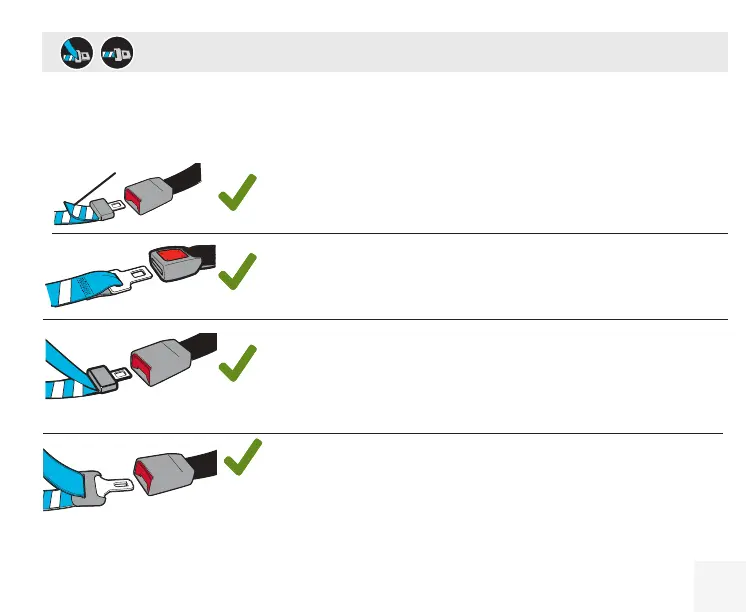
Lap Belt with
Automatic
Locking Retractor
(ALR)
The automatic locking retractor does not
allow the lap belt to get longer once it is
buckled. The vehicle belt is tightened by
feeding seat belt webbing into retractor.
Lap Belt with
Locking Latch
Plate
Once buckled, the vehicle belt is tightened
by pulling on the free end of the strap until
the belt is tight.
Lap/Shoulder Belt with Sliding Latch Plate
with Locking Retractor
The latch plate slides freely along the lap/shoulder belt. Vehicle belts
with sliding latch plates are typically locked at the shoulder belt
retractor by buckling the belt and pulling all of the webbing out
slowly to switch the retractor. Check vehicle owner’s manual for specic instructions.
The vehicle belt is tightened after switching the retractor by pulling shoulder belt all the
way out and feeding the webbing into the retractor.
The lap portion of this belt does not loosen
once the belt is buckled. The vehicle belt
is tightened by pulling up hard on shoulder
belt and feeding the extra webbing into the
retractor.
If you have any of these types of vehicle belt systems listed, these are SAFE to use to install your
child restraint in the vehicle. Review vehicle owner’s manual for specic instructions on child
restraint installation. LATCH can be used IN PLACE OF these vehicle belt types. Refer to your
vehicle owner’s manual for LATCH locations.
SAFE VEHICLE BELT TYPES THAT CAN BE USED
Lap/Shoulder
Belt with
Locking Latch
Plate
Free end


 To Next Page