Section 5
5-2
FIRE AND EXPLOSION
For additional information on extinguishing fires and specific fire extinguisher
requirements, see Fire Extinguisher on page 3-33.
DANGER! Gasoline is extremely flammable and highly explosive under
certain conditions.
• Do not smoke or allow open flames or sparks nearby when refueling.
• Do not store fuel in any containers or compartments which are not designated
for fuel storage.
• Static electricity can be generated while fueling and can cause a fire or
explosion. To prevent electrostatic spark when refueling, make sure the nozzle
is in contact with the fill pipe at all times.
• Avoid damaging fuel lines and connectors and make sure fuel does not contact
hot engine parts.
• USCG-approved fire extinguishers are required on all Class I, II and III boats.
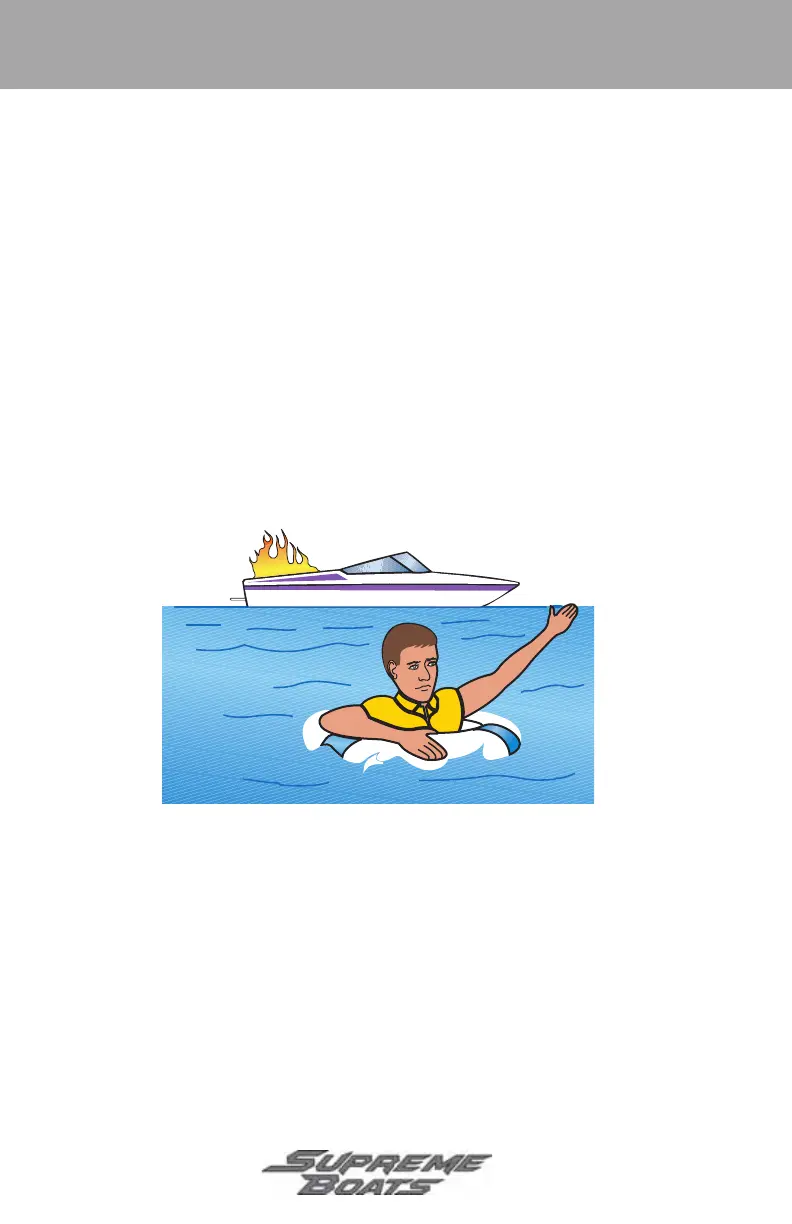
Figure 1
Figure 5-1
A fire or explosion may occur when you least expect it. Your decision to abandon
the boat or stay to fight the fire is difficult and depends on many factors. Formulate
a fire plan in advance to make that decision quickly and without hesitation. Keep in
mind the following guidelines:
Supreme_2018.book Page 2 Wednesday, January 31, 2018 9:30 AM



 To Next Page