22
&RUGHG%XWWRQKROH6WUHWFK)DEULFV
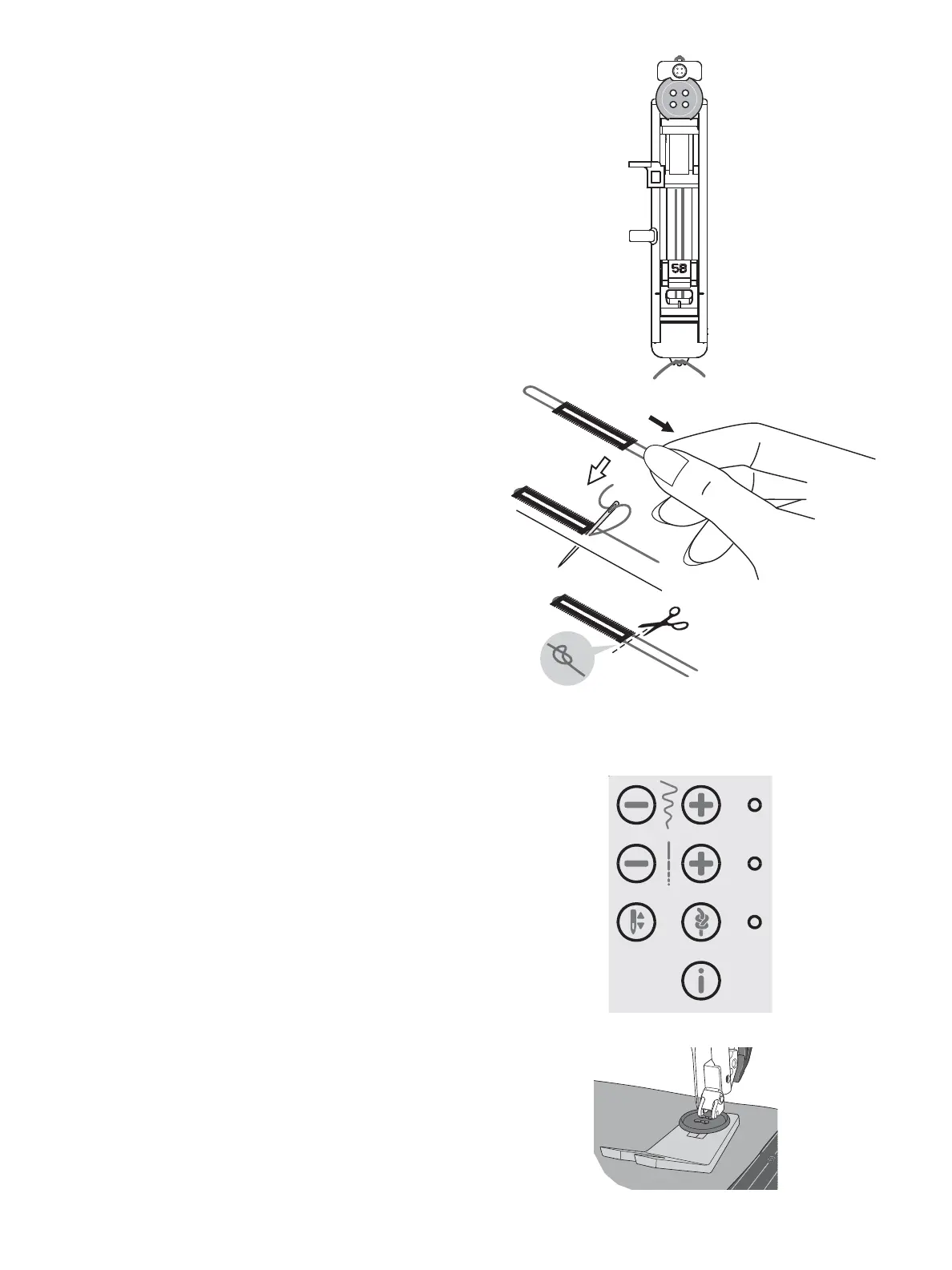
When sewing buttonholes in stretch fabrics we
recommend cording the buttonhole to increase the
stability and to keep the buttonhole from stretching out.
1. Loop a piece of heavy thread or pearl cotton over
WKH¿QJHUDWWKHEDFNRIWKH%XWWRQKROH)RRW%
Pull the thread tails under the foot, toward the front,
WKHQVHFXUHDURXQGWKH¿QJHUDWWKHIURQWRIWKHIRRW
6WLWFKDEXWWRQKROH7KHVDWLQEXWWRQKROHFROXPQV
will stitch over the cord.
:KHQWKHEXWWRQKROHLV¿QLVKHGOLIWWKHFRUGRIIWKH
¿QJHUDQGSXOORXWWKHVODFN
4. Cross the cord in front of the needle and thread cord
ends into a large needle, pull to the wrong side and
knot ends before cutting excess.
5. Use the seam ripper to carefully open the
buttonhole.
Sew on a Button
1. To sew on a button, remove the presser foot and
select the button sewing stitch, number 13.
2. Lower the feed teeth.
3. Place the button under the presser foot holder. Turn
the handwheel slowly to make sure the holes in the
button are aligned with the swing of the needle and
the width is appropriate for the actual button. If
necessary, adjust the stitch width to accommodate
the width between the holes.
4. You can increase or decrease the number of stitches
that will fasten the button on the fabric in steps of
WZRXVLQJWKH6WLWFK/HQJWK%XWWRQV$7KHVHW
number of stitches is indicated on the display. 8
stitches is default.
6WDUWWRVHZ7KHPDFKLQHZLOOVHZWKHSURJUDPIRU
you and then tie-off and stop.
Note: Use the Clearance Plate to create a thread shank
for your button.
A



 To Next Page