Need help?
Do you have a question about the TBB Trident and is the answer not in the manual?
Comprehensive safety guidelines for charger operation, installation, and battery handling.
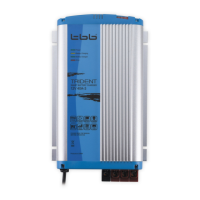
Highlights key features and capabilities of the TRIDENT battery charger.
Explains the charger's 6-step charging process for efficient battery replenishment.
Explains the capability to charge multiple batteries concurrently using separate terminals.
Explains the charger's ability to supply DC load while simultaneously charging batteries.
Lists various built-in safety features and protection mechanisms of the charger.
Provides a table detailing the meaning of LED indicators and their states (ON/FLASHING).
Details requirements for selecting an appropriate installation location for the charger.
Provides specific criteria for choosing a dry, clean, and cool installation site.
Specifies the requirements for DC wiring, including recommended cable sizes for different amperages.
Provides crucial safety warnings and cautions regarding the installation process.
Detailed steps for connecting the DC wiring to the batteries, including safety warnings.
Step-by-step instructions for charging batteries, including safety and sensor usage.
Lists electrical parameters, including battery bank outputs, voltage, current, and charging algorithms.
Outlines the various protection mechanisms implemented in the battery charger.
Lists common issues and their corresponding solutions based on indicator light displays.
 General
| Input Voltage | 100-240V AC |
|---|---|
| Input Frequency | 50/60Hz |
| Battery Type | AGM, GEL, Wet, Lithium |
| Charging Stages | 8 |
| Operating Temperature | -20°C - +50°C |
| Cooling | Fan |
| Protection | Over Voltage, Over Temperature, Short Circuit, Reverse Polarity |
| Output Voltage | 12V / 24V |

 To Next Page