Need help?
Do you have a question about the TBB NEMO Series and is the answer not in the manual?
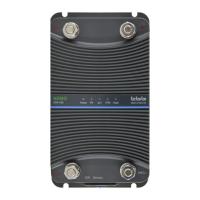
The NEMO series battery to battery charger, also known as a DC-DC charger, is designed to provide a quick and reliable in-vehicle charging solution for auxiliary batteries. It draws power from the alternator to charge auxiliary batteries while driving, and for dual-input models, it can also charge via solar power when stationary. This charger is compatible with Euro 6 vehicles, which often feature variable voltage "smart alternators," ensuring a stable output to the auxiliary battery. This stability helps the battery receive a full charge in the shortest time possible, preventing overcharging or undercharging, both of which can reduce battery lifespan.
The core function of the NEMO series is to protect your auxiliary battery by regulating voltage and controlling the output current. It incorporates TBB's premium II multistage charging algorithm, which is suitable for various battery chemistries, including AGM, GEL, WET, and Lithium Iron Phosphate (LFP). This advanced algorithm ensures optimal charging tailored to the specific battery type. The charger also features built-in automatic temperature and voltage compensated battery charging, further enhancing battery health and longevity.
A key usage feature is its ability to support auxiliary batteries with low voltage (under 2V) before initiating charging, and it includes an LFP wake-up function with continuous output for lithium batteries. This ensures that even deeply discharged batteries can be safely brought back to charge. The battery protection function is designed to prevent deep-discharge of the starter battery, ensuring that the vehicle always has enough power to start.
For models with dual input (DDX/IDDX series), a built-in solar charge controller with Maximum Power Point Tracking (MPPT) is integrated. This allows for efficient charging from solar panels, providing an additional power source for the auxiliary battery. Furthermore, when the auxiliary battery is full, the solar charge can provide maintenance charging to the starter battery, adding another layer of utility.
The NEMO series offers flexibility in voltage configurations, with models available for 12Vdc input and 24Vdc output, catering to different vehicle electrical systems. Its design is compact and waterproof with an IP63 rating, and it operates without a fan, making installation convenient and suitable for various environments. For applications requiring higher charging currents, multiple units can be connected in parallel to increase the overall output. The charger is also suitable for supporting loads up to its maximum output rating while the vehicle is in motion. It holds E-Mark approval, signifying compliance with European automotive standards, and comes with a 2-year warranty.
Regarding maintenance and safety, it is crucial to isolate the NEMO charger before any servicing. The manual emphasizes the importance of using appropriate cable sizes and fuse ratings, recommending that fuses be installed on both the input and output sides, as close to the battery as possible. Proper electrical connections are vital to avoid fire, electric shock, and poor performance. The charger should not be placed directly above batteries, as gases from batteries can corrode and damage the unit. Similarly, batteries should not be placed over the charger.
When working with batteries, several precautions are highlighted: use plenty of fresh water if battery acid contacts skin, clothing, or eyes, and seek medical attention. Batteries can generate flammable gas during charging, so smoking, sparks, or flames should be kept away from the vicinity of a battery. Metal tools or objects should not be placed on the battery to prevent sparks and short circuits that could lead to an explosion. It is also advised to remove all personal metal items like rings, bracelets, necklaces, and watches when working with batteries, as short-circuit currents can be high enough to melt metal and cause severe burns.
For installation, the manual advises selecting a clean, cool location with good ventilation, ensuring the charger's metal body is free from excessive heat and vibration. Although the electronics are enclosed in a sealed housing, the charger is not designed for installation in locations where water might short between terminals. All installed cables must be fused, with fuses placed as close as possible to the power source. M5 screws are recommended to secure the charger to a solid surface. Correct polarity is critical during connection; reverse polarity will burn the fuse or damage the charger and void the warranty.
For Euro 6 vehicles with "smart alternators," connecting the IGN (ignition) wire is essential. The general connection sequence for safety is to connect the negative (NEG.-) first, followed by the auxiliary battery positive, starter battery positive, and then the PV positive (if applicable). In-line fuses should be removed before connecting cables and inserted afterward. The built-in battery sensor, which detects voltage and temperature of the auxiliary battery for charging voltage compensation, must be connected to the positive terminal of the auxiliary battery. For IDX and IDDX models, an RS485 communication cable can be connected to a PC monitor or controller to view working information. The maximum open circuit voltage for PV input is 25VDC for 12V models and 50VDC for 24V models, and users must ensure their solar panel matches these limits.
Before operation, a double-check is recommended to ensure the battery voltage matches the charger model, cable polarity is correct, the voltage sensor is installed on the battery's positive terminal, and the ignition wire is connected for Euro 6 vehicles. The charger's front panel LEDs provide status indications for Power, PV, ALT (alternator), CHG (charging), and Fault, using solid ON, slow flashing, and quick flashing patterns to communicate normal working status and abnormal conditions such as overvoltage, over-temperature, battery disconnection, or internal faults. This comprehensive feedback system aids in monitoring and troubleshooting the device.
 General
| Output Voltage | 12V / 24V / 48V |
|---|---|
| Battery Type | Lead-acid, Lithium-ion |
| Operating Temperature | -20°C to 60°C |
| Cooling | Fan |
| Protection | Overvoltage, Overcurrent, Short-circuit, Overheating |
| Communication | CAN / RS485 |
| Charging Ports | 1 |
| Dimensions | Varies by model |

 To Next Page