Teikoku USA | Chempump Instruction Manual HE-10677-P (1018)19
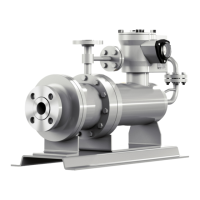
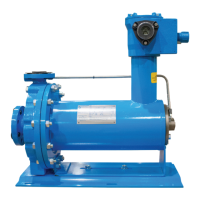
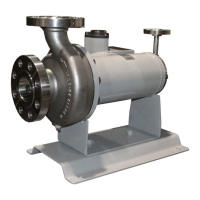
Teikoku Type-R (Plan 13-SE) Refrigeration Pump
Table C-1. Troubleshooting
Problem Probable Cause Suggested Solution
Failure to deliver
required capacity
Pump not primed. Reprime pump in accordance with Section 3.2.2
Air leaks in suction piping. Locate leaks and eliminate.
Motor not energized. Check motor wiring. See Section 2.3.
Motor windings burnt-out or grounded.
Check electrical continuity of windings and is negative response, stator
assembly needs to be replaced.
Low suction head. Correct suction side of system to ensure availability of design NPSH.
Discharge head too high. Correct discharge side of system to ensure proper operating conditions.
Discharge valve closed or partially opened. Open discharge valve until rated discharge pressure is obtained.
Impeller clogged. Remove obstructions in impeller.
Wrong direction of rotation.
Reverse any two motor leads and check with phase sequence meter.
See Section 3.2.3.
Damaged impeller Impeller must be repaired or replaced.
Insufficient pressure Pump not primed. Reprime pump in accordance with Section 3.2.2
Air leaks in suction piping. Locate leaks and eliminate.
Motor not energized. Check motor wiring. See Section 2.3..
Motor windings burnt-out or grounded.
Check electrical continuity of windings and is negative response, stator
assembly needs to be replaced.
Low suction head. Correct suction side of system to ensure availability of design NPSH.
Discharge valve open too wide. Close down discharge valve until rated discharge pressure is obtained.
Impeller clogged. Remove obstructions in impeller.
Wrong direction of rotation. Reverse any two motor leads
Damaged impeller Impeller must be repaired or replaced.
Pump loses prime
after starting
Pump not properly primed at starting. Reprime pump in accordance with Section 3.2.2.
Excessive change in suction vessel pressure. Locate source pressure fluctuations and correct as required.
Air or gas in liquid. Locate source of gas or air entrainment and correct.
Low suction head. Correct suction side of system to ensure availability of design NPSH.
Pump takes too much
power
Shaft bent. Replace rotor assembly or straighten shaft if bend not too great.
Rotating element binds.
Replace bearings (see Section 4) as a result of excessive wear or check
for presence of foreign material in rotor chamber
Electrical short.
Check electrical continuity of all phases of the motor winding and
replace stator assembly if necessary
Wrong direction of rotation. Reverse any two motor leads.
Pump vibrates Foundation not sufficiently rigid. Tighten all bolts on the pump base and base supporting structure.
Impeller partially clogged. Remove obstructions in the impeller.
Shaft bent. Replace rotor assembly or straighten shaft if bend is not too great.
Worn bearings. Replace bearings (see Section 4).
Rotating element rubbing stator liner.
Replace bearings (see Section 4) as a result of excessive wear or check
for presence of foreign material in rotor chamber
Motor running hot
Motor operating at overload condition.
Make sure pump is operating at design point and conditions specified
when purchased.
Pump is operating below minimum flow. Increase flow through the pump.
Pump is running dry. Check suction line for obstructions and closed valves
C. Troubleshooting


 To Next Page