Unit Description 5-6
OptiSet™ Option
µP-VI, SR-2 and SR-3 control systems include the OptiSet feature as standard. OptiSet allows each customer to program a set of
unit operating details for a specific setpoint or setpoint temperature range. When the unit setpoint falls within a programmed
setpoint range, all unit operation is automatically determined by the OptiSet settings for that setpoint range. Unit operating
features that can be programmed using the OptiSet feature include:
All optiset functions and features can be found and programmed using Optiset program tool and/or Wintrac 6.0 and later
service tool
Data Acquisition System (DAS) Option
A stand-alone data recorder with an independent memory and independent real-time clock is available to record up to 6
independent temperature sensors as well as setpoint and alarm codes from the unit controller to track temperature management
against setpoint. The DAS option can interface with TG-VI, µP-V, µP-VI and multi-temperature µP-IV controllers.
Remote Control Options (SR-3, SR-2, TG-V, µP-IV Multi-Temp, µP-V and µP-VI Controllers)
Remote controls are available for SR-3, SR-2, TG-V, µP-IV Multi-Temp, µP-V and µP-VI Controllers. Remote controls are used
to operate the unit from inside the trailer or the truck cab. The flush mount remote control is usually mounted in a wall inside the
trailer. The in-cab remote control is usually mounted in the dash of the truck cab.
Sequence of Operation
Engine Operation
Continuous Mode
• High Speed Cool
• Low Speed Cool
• Low Speed Heat
• High Speed Heat
2, 3
• Defrost
Note: Tables shown are for basic operation and can be used for basic diagnostic’s. However, these may change from this
owing the the basic programmable features configurations and/or optiset configurations.
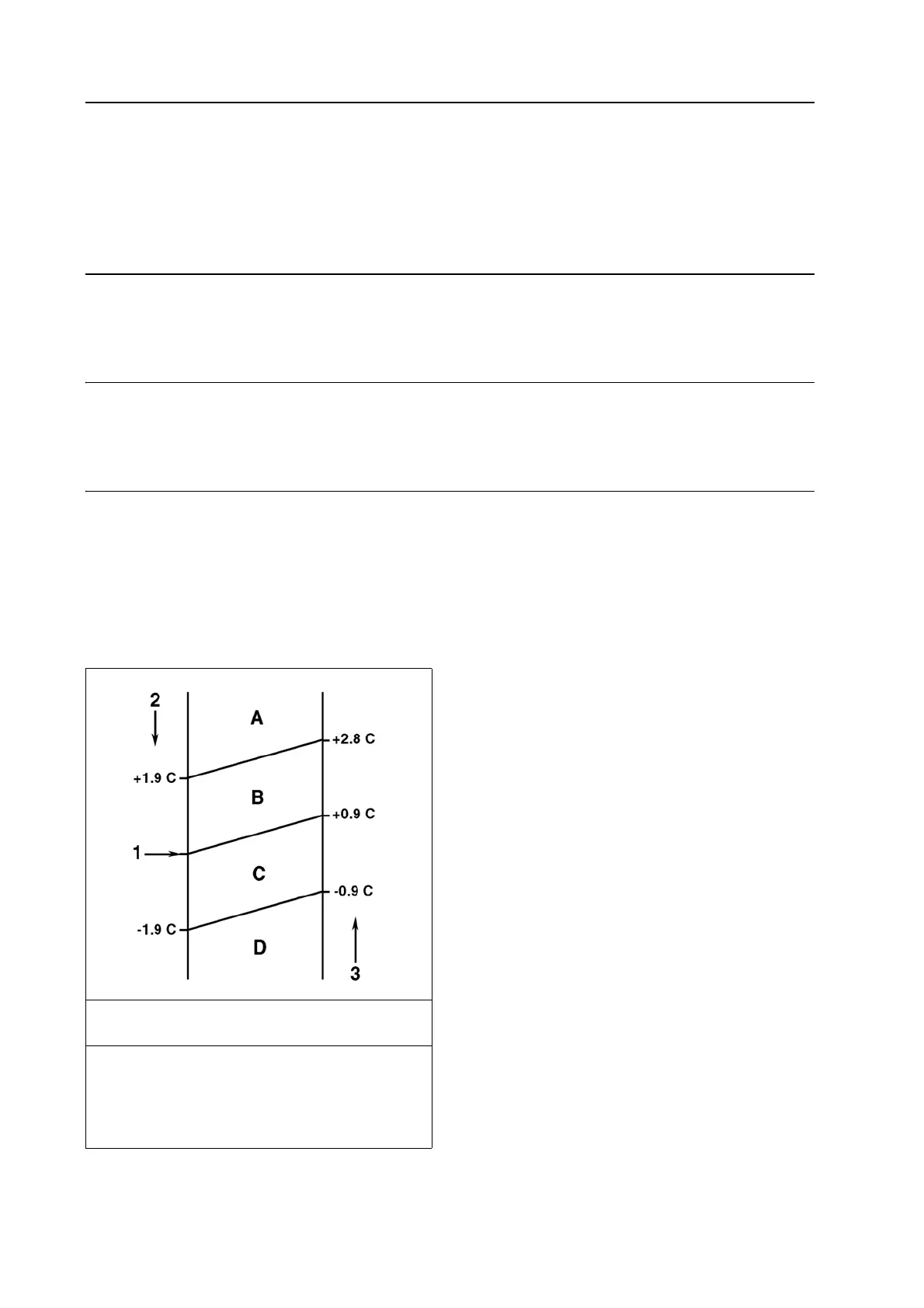
Basic Operating Modes – Continuous Run Engine
Operation
1. Setpoint
2. Temperature Decrease
3. Temperature Increase
A. High Speed Cool
2
B. Low Speed Cool
C. Low Speed Heat
D. High Speed Heat
2, 3



 To Next Page