ENGINE OPERATION
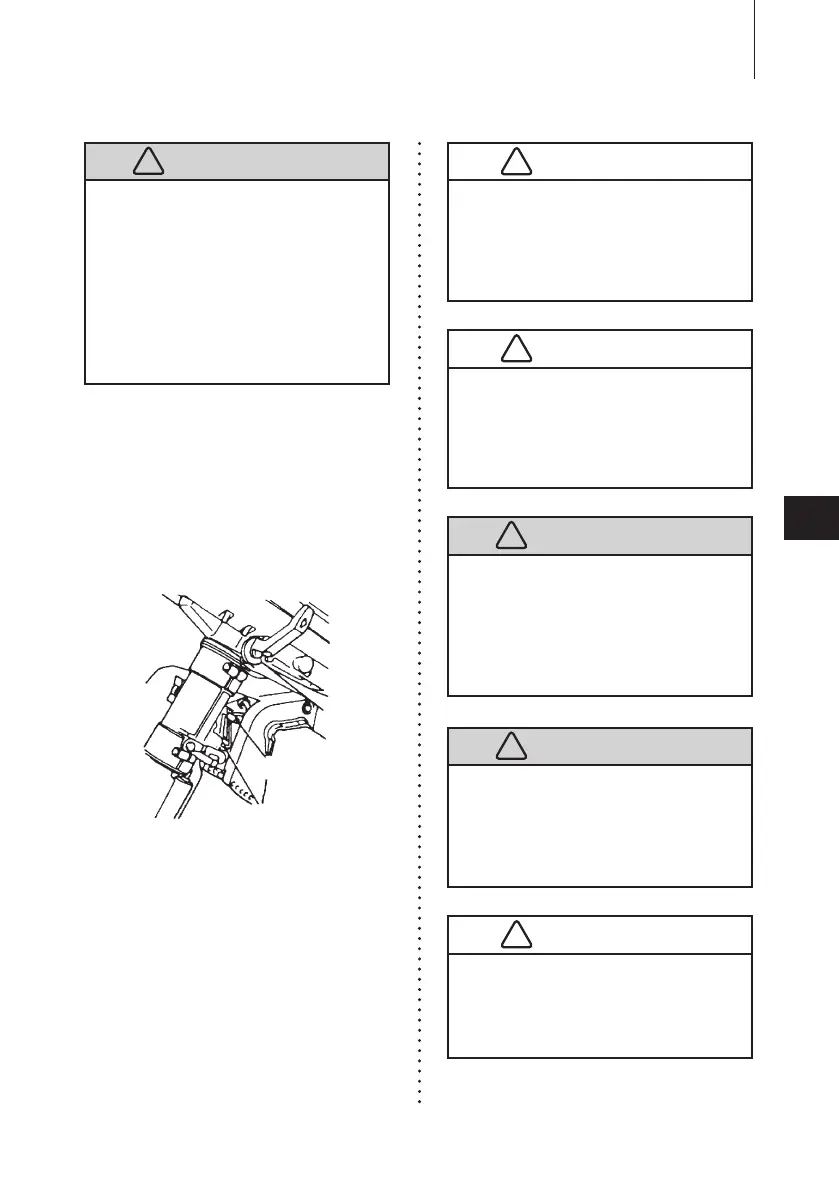
->ÜÊÜ>ÌiÀÊÀÕ}Ê«ÃÌ\
Ê 7ÌÊÌiÊÃvÌÊiÛiÀÊÊ iÕÌÀ>ÊÀÊ
ÀÜ>À`]ÊÌÌÊÌiÊÕÌL>À`ÊÌÀÊ
Õ«ÊÃÜÞ]ÊÌÊ>««ÀÝ>ÌiÞÊ{äÂ]Ê
ÌiÊÜiÀÊÌiÊÕÌL>À`ÊÌÀÊÌÊ
ÜÊ>ÕÌ>ÌV>ÞÊÃiÌÊÊÌiÊÃ>ÜÊ
Ü>ÌiÀÊ«iÀ>ÌÊ>}i°
,iÌÕÀÊÌÊÀ>ÊÀÕ}Ê«ÃÌ\
Ê /ÌÊÌiÊÕÌL>À`ÊÌÀÊÕ«]Ê
>««ÀÝ>ÌiÞÊ£xÂ]ÊÌiÊÜiÀÊÌiÊ
ÌÀÊÃÜÞÊÌÊÌiÊÀ>ÊÀÕ}Ê
«ÃÌ°
x
ÓÇ
While in shallow water drive position,
do not operate the outboard motor in
reverse. Operate the outboard motor
at slow speed and keep the cooling
water intake submerged.
!
#!54)/.
Do not overtilt outboard motor
when driving shallow water, or air
may be sucked through subwater
inlet, potentially leading to engine
overheating.
!
#!54)/.
!
7!2.).'
Do not tilt up or down outboard motor
when swimmer(s) or passenger is near
to prevent them from being caught
between outboard motor body and
clamp bracket in case the outboard
motor body falls.
!
7!2.).'
When tilting up outboard motor with
fuel joint for over a few minutes, be
sure to disconnect fuel hose or close
fuel cock, or fuel may leak, potentially
catching fire.
Do not tilt up outboard motor while
engine operates, or no cooling water
may be fed, leading to engine seizure
due to overheating.
!
#!54)/.
!
7!2.).'
• Run at lowest possible speed when
using shallow water drive.
• Tilt lock is disabled when in shallow
water drive position.
• When driving shallow water, be
careful not to strike outboard motor
against sea bottom, or propeller
may be pushed out of water,
resulting in loss of control.


 To Next Page