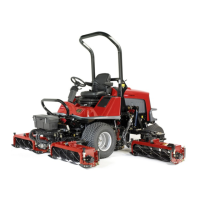
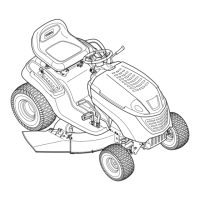
This document outlines the installation and maintenance procedures for a Vinyl or Fabric Air Ride Seat Kit designed for specific Toro mower models: the LT2240 Compact Triple 4-Wheel Drive Turf Mower, LT3340 Triple Reel Mower, and LT-F3000 Triple Flail Mower. The kit is compatible with Model No. 02875 and 02876, both with serial numbers 400000000 and up.
The primary function of this kit is to replace the existing seat with a new air ride seat, enhancing operator comfort and potentially reducing fatigue during operation. The air ride feature allows for adjustment of air pressure to match the operator's weight, ensuring optimal suspension performance. This is crucial for machines used in demanding turf care applications, where prolonged operation can lead to discomfort.
Installation Instructions
The installation process is divided into several procedures, each with specific steps and required parts.
Procedure 1: Preparing the Machine
This initial step involves ensuring the machine is safely prepared for seat removal and installation.
- Park the machine on a level surface to ensure stability.
- Lower the cutting units to prevent accidental engagement or obstruction.
- Engage the parking brake to secure the machine.
- Shut off the engine and remove the key to prevent accidental startup.
- Wait for all moving parts to stop completely before proceeding.
- Allow the engine to cool down fully to avoid burns.
To access the seat mounting area, the operator's platform must be raised.
- Locate the platform-latch handle and move it toward the front of the machine until the latch hooks clear the locking bar.
- Raise the platform. A gas lift cylinder assists in this process, making it easier to lift.
Removing the Storage Compartment
The storage compartment needs to be removed to access certain components.
- Open the door of the storage compartment located on the left side of the operator's platform.
- Remove the three knobs and three washers that secure the storage compartment to the machine, then remove the compartment itself.
Disconnecting the Battery
For electrical safety, the battery must be disconnected.
- Loosen the forward nut of the negative battery-cable terminal.
- Lift the negative battery cable from the battery post. It's important to position the cable so it cannot accidentally contact the negative battery post.
Opening the Hood (Model 31654)
For Model 31654, the hood needs to be unlatched and opened.
Procedure 2: Removing the Existing Seat (Model 31654)
This procedure details the removal of the old seat for Model 31654. The existing seat weighs 38 kg (84 lb), so assistance or a suitable crane is recommended.
- Disconnect the connector for the seat-switch wire harness from the machine wire harness connector.
- Route the seat-switch wire harness connector through the seat platform and secure it to the seat.
- Remove the boot from the seat base:
- Locate the mounting tabs of the seat-base boot that protrude through the slot in the seat base channel.
- Pull each tab along the slot until it is over the hole, then pull it out and away from the channel. This may require pulling the boot forward or rearward depending on the tab being removed.
- Once all tabs are removed, pull the rubber boot down.
- While supporting the seat, remove the four 8 mm washers and four 8 mm locknuts that secure the seat to the seat platform. Note that the four 8 x 25 mm bolts should not be removed from the holes in the seat and seat platform at this stage.
- Lower the operator's platform:
- Lower the platform carefully.
- Move the locking-latch handle toward the front of the mower as the platform nears its fully lowered position to ensure the latch hooks clear the locking bar.
- Fully lower the platform and move the locking handle toward the rear of the mower until the latch hooks fully engage the locking bar.
- Remove the seat from the platform. The four 8 x 25 mm bolts, four 8 mm locknuts, and four 8 mm washers should be discarded.
Procedure 3: Removing the Existing Seat (Models 31657 and 31659)
This procedure covers the removal of the old seat for Models 31657 and 31659. The seat also weighs 38 kg (84 lb), requiring assistance or a crane.
- Disconnect the main wire-harness connector from the control-arm harness. Rotate the collar and pull the connector to remove it. It is important to cover and protect the electrical connectors to prevent damage.
- Disconnect the seat-switch harness from the seat, leaving it on the platform.
- Remove the boot from the seat base, following the same steps as for Model 31654 (locating tabs, pulling them out, and pulling the rubber boot up). This step provides access to the four 8 x 25 mm bolts securing the seat to the platform.
- While supporting the seat, remove the four 8 mm locknuts that secure the seat to the seat platform. Do not remove the four 8 x 25 mm bolts from the holes in the seat and seat platform.
- Lower the operator's platform carefully, with the gas lift cylinder assisting.
- As the platform nears the fully lowered position, move the platform-latch handle toward the front of the machine to ensure the latch hooks clear the locking bar.
- Fully lower the platform and move the platform-latch handle toward the rear of the machine until the latch hooks fully engage the locking bar.
- Remove the existing seat with the control arm attached from the platform. Discard the four 8 x 25 mm bolts and four 8 mm locknuts.
Procedure 4: Preparing the New Seat (Model 31654)
This section details how to prepare the new seat for installation on Model 31654. The required part is one seat and suspension assembly.
- Remove the covers and bolts securing the seat belt to the old seat, then remove the seat belt.
- Remove the nut from the right armrest and remove the armrest. Retain both the nut and armrest.
- Assemble the seat belt onto the new seat and install the previously removed armrest using the retained nut. Set the armrest to the same height as the other side.
- Torque the seat belt bolts to 70 to 75 N·m (52 to 55 ft-lb) and install the covers.
Procedure 5: Preparing the New Seat (Models 31657 and 31659)
This section outlines the preparation of the new seat for Models 31657 and 31659. The required part is one seat and suspension assembly.
Removing the Control Arm and Seat Belt from the Seat
- Place the seat and control arm onto a bench.
- Remove the seat cushion to access the flange nut securing the control arm to the seat.
- Remove the plastic cover on the left side and loosen the bolt to remove the seat-belt retainer from the seat.
Installing the Control Arm and Seat Belt to the New Air Ride Seat
- Remove the three Phillips-head screws securing the seat cushion and remove the seat cushion. This provides access to secure the control arm to the seat.
- Remove the plastic cover from the left side, loosen the bolt, and secure the seat-belt retainer using the previously removed bolt. Apply Loctite® 243 to the bolt and torque it to 70 to 75 N·m (52 to 55 ft-lb), then install the plastic cover.
- Locate the previously removed control arm and brackets.
- Secure the previously removed fasteners.
- Apply Loctite® 243 to the hex-head bolt (7/16 x 2 inches) and torque it to 70 to 75 N·m (52 to 55 ft-lb).
- Secure the front control arm support plate to the seat.
- Secure the previously removed hex-head bolt (8 x 10 mm), coupling hex nut (8 mm), and washer (8 mm) at the top of the seat arm.
- Install the previously removed seat cushion.
Procedure 6: Installing the Seat (Model 31654)
This procedure details the installation of the new seat for Model 31654. Required parts include four 8 mm locknuts and four 8 x 25 mm hex-head bolts.
- Locate the seat-mounting holes on the bottom plate of the new seat for your machine.
- Assemble the four 8 x 25 mm hex-head bolts to the holes in the flange of the bottom plate.
- Align the four 8 x 25 mm hex-head bolts of the new seat with the holes in the operator's platform.
- Assemble two 8 mm locknuts to the bolts on the left side of the seat.
- Partially raise the operator's platform to access the threads of the other two 8 x 25 mm hex-head bolts. Important: Support the seat to prevent it from falling.
- Assemble the remaining two 8 mm locknuts to the other two hex-head bolts by hand.
- Fully raise the platform.
- Torque the hex-head bolts (8 x 25 mm) and locknuts (8 mm) to 27 N·m (20 ft-lb).
Procedure 7: Installing the Seat (Models 31657 and 31659)
This procedure covers the installation of the new seat for Models 31657 and 31659. Required parts include four 8 x 25 mm hex-head bolts and four 8 mm locknuts.
- Locate the seat-mounting holes on the bottom plate of the new seat for your machine.
- Secure the seat assembly to the platform using the four 8 x 25 mm hex-head bolts and four 8 mm locknuts.
- Fully raise the platform.
- Torque the four 8 mm locknuts to 27 N·m (20 ft-lb).
Procedure 8: Connecting the Electrical Components
This procedure details the electrical connections. Required parts vary by model: one 10A standard fuse for Model 31654, and one 10A mini fuse for Models 31657 and 31659.
Model 31654
- Locate the connector labeled AIR-RIDE on the seat behind the rubber boot.
- Locate the air-ride seat connector on the main wire harness breakout and install the connector. The breakout is located by the seat.
- Connect the seat-switch connector.
- Remove the cover from the fuse block.
- Insert the 10A standard fuse into the 5th fuse position from the left of the fuse block, ensuring it is fully seated.
- Install the cover onto the fuse block.
Models 31657 and 31659
- Connect the main wire-harness connector to the control arm that was previously disconnected.
- Locate the connector labeled AIR-RIDE on the seat behind the rubber boot.
- Locate the air-ride seat connector on the main wire harness breakout and install the connector.
- Connect the seat-switch connector.
- Remove the fuse-block cover located next to the battery.
- Install the new 10A mini fuse into the fuse block. Use the decal on the fuse-block cover for the correct fuse position.
- Install the fuse-block cover.
Procedure 9: Completing the Seat Kit Installation
This final procedure covers reassembly and checks.
Connecting the Battery
- Assemble the terminal of the negative battery cable onto the negative battery post.
- Tighten the forward nut and T-bolt of the negative battery cable terminal.
Installing the Storage Compartment
- Align the holes on the bottom of the storage compartment with the holes in the chassis brackets.
- Assemble the storage compartment to the machine using the three knobs and three washers.
- Close the storage-compartment door.
Closing the Hood (Model 31654)
Close and latch the hood.
A warning is provided about operating the machine with an unlatched platform, which can lead to loss of control and serious injury.
- Lower the platform carefully, with the gas lift cylinder assisting.
- As the platform nears the fully lowered position, move the platform-latch handle toward the front of the machine to ensure the latch hooks clear the locking bar.
- Fully lower the platform and move the platform-latch handle toward the rear of the machine until the latch hooks fully engage the locking bar.
Checking the Operator's Seat Switch
Check that the seat switch operates correctly. Refer to the Operator's Manual for specific instructions.
Product Overview - Controls
Seat Controls
The new air ride seat features several controls for optimal adjustment and comfort.
Seat-Adjustment Lever
This lever, located on the side of the seat, allows the operator to slide the seat forward or backward to the desired position. Moving the lever outward, sliding the seat, and then releasing the lever locks the seat into place.
Weight and Height Adjustment Lever
This lever is used to adjust the air pressure in the suspension to match the operator's weight. Pulling the lever up increases air pressure, while pushing it down decreases it. Correct adjustment is indicated when the weight and height gauge is in the green region. This lever also adjusts the seat height, allowing the suspension to be positioned anywhere within the green region on the gauge.
Armrest-Adjustment Knob
This knob allows the operator to rotate and adjust the angle of the armrest for personalized comfort.
Seat-Back-Adjustment Lever
This lever adjusts the angle of the seat back, enabling the operator to recline or sit more upright.
Weight and Height Gauge
This gauge provides a visual indication of when the seat is correctly adjusted for the operator's weight and height, specifically when it falls within the green region.
Maintenance
Greasing the Seat Suspension Mechanism
This maintenance task should be performed yearly.
- Pull back the rubber boot from the channel of the seat base.
- Apply good quality grease to all pivot points of the suspension mechanism.
- Install the boot back onto the channel of the seat base.
Maintaining the Seat Belt
The seat belt has no field-serviceable parts. If it shows any signs of wear, damage, or malfunction, the entire seat belt assembly must be replaced.
Cleaning the Seat
It is important not to clean the seat with a pressure washer. Keep the surfaces of the operator's seat clean.
A caution is issued regarding cleaning the backrest: unintentionally moving the backrest-tilt lever can cause the backrest to rotate forward unexpectedly, potentially causing injury. When cleaning the backrest cushion, firmly hold the backrest while operating the backrest-tilt lever.
- Upholstery does not need to be removed from the seat frame for cleaning.
- When cleaning upholstery, do not allow cleaning solution to soak through the upholstery surfaces.
- Use commercially available upholstery or plastic cleaning solution. Always test a new cleaning solution on a small, concealed area of the seat for compatibility before widespread use.


 To Next Page
 General