8
© March 2003 Tractel. All rights reserved.
7. REMINDER OF STANDARDS
7.1 The Travsafe
®
system meets or exceeds general OSHA and CSA standards as well as any other regulations.
Consult governing federal, state, local or provincial regulations as revision may occur.
WARNING
The use of a lifeline device indicates that you are accessing part of a building or installation, which
presents a potential risk of falling from a height. We would therefore draw your attention to the fact
that your movements must be performed slowly and smoothly. The route you are going to take should,
as far as possible, be free from all obstacles. When you have finished, you should take care to leave
the area clear of obstacles or obstructions of any sort for the next user.
8. INSTALLATION
WARNING
The area selected to install the traveler on the wire ropes must not present a fall hazard. If this is
not the case, the user must immediately inform the person responsible for safety. Personnel are
strictly forbidden to attach themselves or to remove themselves from the Travsafe
®
system outside
the area chosen to install the traveler.
8.1. Standard traveler
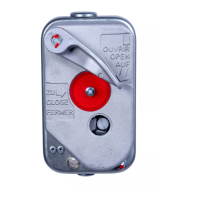
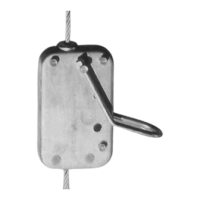
The traveler is the mobile anchorage point. It consists of a body on which two jaws are articulated. The jaws
automatically grip the wire ropes in the event of a fall. A ring, which is an integral part of the traveler body, is
used for attaching the shock-absorbing lanyard via a connector.
• The standard traveler slides onto the wire ropes at one of the end anchors.
• Hold the jaws of the traveler in front of the sleeves at the ends of the wire ropes.
• Slide the traveler over the sleeves and then over the end anchor.
• The end stop allows the traveler to pass over it when it is being attached to the line but prevents it from
becoming unfastened accidentally. Once the traveler is engaged on the wire ropes the end stop automatically
returns to the locked position by the operation of a spring.
WARNING
The operator must check that both wire ropes are correctly positioned in the jaws of the traveler.
fig. 3
fig. 4 fig. 5
The operator must check that both wire ropes are correctly positioned in the jaws of the traveler.
The operator must check that both wire ropes are correctly positioned in the jaws of the traveler.
becoming unfastened accidentally. Once the traveler is engaged on the wire ropes the end stop automatically
returns to the locked position by the operation of a spring.
The end stop allows the traveler to pass over it when it is being attached to the line but prevents it from
becoming unfastened accidentally. Once the traveler is engaged on the wire ropes the end stop automatically
returns to the locked position by the operation of a spring.
Hold the jaws of the traveler in front of the sleeves at the ends of the wire ropes.
Slide the traveler over the sleeves and then over the end anchor.
The end stop allows the traveler to pass over it when it is being attached to the line but prevents it from
automatically grip the wire ropes in the event of a fall. A ring, which is an integral part of the traveler body, is
The standard traveler slides onto the wire ropes at one of the end anchors.
Hold the jaws of the traveler in front of the sleeves at the ends of the wire ropes.
The traveler is the mobile anchorage point. It consists of a body on which two jaws are articulated. The jaws
The area selected to install the traveler on the wire ropes must not present a fall hazard. If this is
not the case, the user must immediately inform the person responsible for safety. Personnel are
becoming unfastened accidentally. Once the traveler is engaged on the wire ropes the end stop automatically
returns to the locked position by the operation of a spring.
The operator must check that both wire ropes are correctly positioned in the jaws of the traveler.
Slide the traveler over the sleeves and then over the end anchor.
The end stop allows the traveler to pass over it when it is being attached to the line but prevents it from
becoming unfastened accidentally. Once the traveler is engaged on the wire ropes the end stop automatically
returns to the locked position by the operation of a spring.
used for attaching the shock-absorbing lanyard via a connector.
The standard traveler slides onto the wire ropes at one of the end anchors.
Hold the jaws of the traveler in front of the sleeves at the ends of the wire ropes.
Slide the traveler over the sleeves and then over the end anchor.
The end stop allows the traveler to pass over it when it is being attached to the line but prevents it from
becoming unfastened accidentally. Once the traveler is engaged on the wire ropes the end stop automatically
returns to the locked position by the operation of a spring.
The traveler is the mobile anchorage point. It consists of a body on which two jaws are articulated. The jaws
automatically grip the wire ropes in the event of a fall. A ring, which is an integral part of the traveler body, is
used for attaching the shock-absorbing lanyard via a connector.
The standard traveler slides onto the wire ropes at one of the end anchors.
Hold the jaws of the traveler in front of the sleeves at the ends of the wire ropes.
Slide the traveler over the sleeves and then over the end anchor.
The end stop allows the traveler to pass over it when it is being attached to the line but prevents it from
The traveler is the mobile anchorage point. It consists of a body on which two jaws are articulated. The jaws
automatically grip the wire ropes in the event of a fall. A ring, which is an integral part of the traveler body, is
used for attaching the shock-absorbing lanyard via a connector.
The standard traveler slides onto the wire ropes at one of the end anchors.
The traveler is the mobile anchorage point. It consists of a body on which two jaws are articulated. The jaws
automatically grip the wire ropes in the event of a fall. A ring, which is an integral part of the traveler body, is
used for attaching the shock-absorbing lanyard via a connector.
The area selected to install the traveler on the wire ropes must not present a fall hazard. If this is
not the case, the user must immediately inform the person responsible for safety. Personnel are
strictly forbidden to attach themselves or to remove themselves from the Travsafe
The area selected to install the traveler on the wire ropes must not present a fall hazard. If this is
not the case, the user must immediately inform the person responsible for safety. Personnel are
strictly forbidden to attach themselves or to remove themselves from the Travsafe
The area selected to install the traveler on the wire ropes must not present a fall hazard. If this is
not the case, the user must immediately inform the person responsible for safety. Personnel are
that your movements must be performed slowly and smoothly. The route you are going to take should,
as far as possible, be free from all obstacles. When you have finished, you should take care to leave
The use of a lifeline device indicates that you are accessing part of a building or installation, which
presents a potential risk of falling from a height. We would therefore draw your attention to the fact
that your movements must be performed slowly and smoothly. The route you are going to take should,
as far as possible, be free from all obstacles. When you have finished, you should take care to leave
The operator must check that both wire ropes are correctly positioned in the jaws of the traveler.
The operator must check that both wire ropes are correctly positioned in the jaws of the traveler.
The operator must check that both wire ropes are correctly positioned in the jaws of the traveler.
The operator must check that both wire ropes are correctly positioned in the jaws of the traveler.
The operator must check that both wire ropes are correctly positioned in the jaws of the traveler.
becoming unfastened accidentally. Once the traveler is engaged on the wire ropes the end stop automatically
returns to the locked position by the operation of a spring.
becoming unfastened accidentally. Once the traveler is engaged on the wire ropes the end stop automatically
returns to the locked position by the operation of a spring.
The end stop allows the traveler to pass over it when it is being attached to the line but prevents it from
becoming unfastened accidentally. Once the traveler is engaged on the wire ropes the end stop automatically
returns to the locked position by the operation of a spring.
The end stop allows the traveler to pass over it when it is being attached to the line but prevents it from
becoming unfastened accidentally. Once the traveler is engaged on the wire ropes the end stop automatically
returns to the locked position by the operation of a spring.
Hold the jaws of the traveler in front of the sleeves at the ends of the wire ropes.
Slide the traveler over the sleeves and then over the end anchor.
The end stop allows the traveler to pass over it when it is being attached to the line but prevents it from
Hold the jaws of the traveler in front of the sleeves at the ends of the wire ropes.
Hold the jaws of the traveler in front of the sleeves at the ends of the wire ropes.
Hold the jaws of the traveler in front of the sleeves at the ends of the wire ropes.
Hold the jaws of the traveler in front of the sleeves at the ends of the wire ropes.
Hold the jaws of the traveler in front of the sleeves at the ends of the wire ropes.
Hold the jaws of the traveler in front of the sleeves at the ends of the wire ropes.
Slide the traveler over the sleeves and then over the end anchor.
The end stop allows the traveler to pass over it when it is being attached to the line but prevents it from
automatically grip the wire ropes in the event of a fall. A ring, which is an integral part of the traveler body, is
The standard traveler slides onto the wire ropes at one of the end anchors.
Hold the jaws of the traveler in front of the sleeves at the ends of the wire ropes.
automatically grip the wire ropes in the event of a fall. A ring, which is an integral part of the traveler body, is
The standard traveler slides onto the wire ropes at one of the end anchors.
The standard traveler slides onto the wire ropes at one of the end anchors.
The standard traveler slides onto the wire ropes at one of the end anchors.
The standard traveler slides onto the wire ropes at one of the end anchors.
Hold the jaws of the traveler in front of the sleeves at the ends of the wire ropes.
Hold the jaws of the traveler in front of the sleeves at the ends of the wire ropes.
Hold the jaws of the traveler in front of the sleeves at the ends of the wire ropes.
Hold the jaws of the traveler in front of the sleeves at the ends of the wire ropes.
The traveler is the mobile anchorage point. It consists of a body on which two jaws are articulated. The jaws
The traveler is the mobile anchorage point. It consists of a body on which two jaws are articulated. The jaws
The area selected to install the traveler on the wire ropes must not present a fall hazard. If this is
not the case, the user must immediately inform the person responsible for safety. Personnel are
The area selected to install the traveler on the wire ropes must not present a fall hazard. If this is
not the case, the user must immediately inform the person responsible for safety. Personnel are
not the case, the user must immediately inform the person responsible for safety. Personnel are
not the case, the user must immediately inform the person responsible for safety. Personnel are
not the case, the user must immediately inform the person responsible for safety. Personnel are
not the case, the user must immediately inform the person responsible for safety. Personnel are
not the case, the user must immediately inform the person responsible for safety. Personnel are
not the case, the user must immediately inform the person responsible for safety. Personnel are
not the case, the user must immediately inform the person responsible for safety. Personnel are
becoming unfastened accidentally. Once the traveler is engaged on the wire ropes the end stop automatically
returns to the locked position by the operation of a spring.
The operator must check that both wire ropes are correctly positioned in the jaws of the traveler.
becoming unfastened accidentally. Once the traveler is engaged on the wire ropes the end stop automaticallybecoming unfastened accidentally. Once the traveler is engaged on the wire ropes the end stop automaticallybecoming unfastened accidentally. Once the traveler is engaged on the wire ropes the end stop automatically
becoming unfastened accidentally. Once the traveler is engaged on the wire ropes the end stop automatically
returns to the locked position by the operation of a spring.returns to the locked position by the operation of a spring.returns to the locked position by the operation of a spring.
returns to the locked position by the operation of a spring.
The operator must check that both wire ropes are correctly positioned in the jaws of the traveler.
The operator must check that both wire ropes are correctly positioned in the jaws of the traveler.
Slide the traveler over the sleeves and then over the end anchor.
The end stop allows the traveler to pass over it when it is being attached to the line but prevents it from
becoming unfastened accidentally. Once the traveler is engaged on the wire ropes the end stop automatically
returns to the locked position by the operation of a spring.
Slide the traveler over the sleeves and then over the end anchor.
Slide the traveler over the sleeves and then over the end anchor.
Slide the traveler over the sleeves and then over the end anchor.
Slide the traveler over the sleeves and then over the end anchor.
The end stop allows the traveler to pass over it when it is being attached to the line but prevents it fromThe end stop allows the traveler to pass over it when it is being attached to the line but prevents it fromThe end stop allows the traveler to pass over it when it is being attached to the line but prevents it from
The end stop allows the traveler to pass over it when it is being attached to the line but prevents it from
becoming unfastened accidentally. Once the traveler is engaged on the wire ropes the end stop automatically
returns to the locked position by the operation of a spring.
used for attaching the shock-absorbing lanyard via a connector.
The standard traveler slides onto the wire ropes at one of the end anchors.
Hold the jaws of the traveler in front of the sleeves at the ends of the wire ropes.
Slide the traveler over the sleeves and then over the end anchor.
The end stop allows the traveler to pass over it when it is being attached to the line but prevents it from
becoming unfastened accidentally. Once the traveler is engaged on the wire ropes the end stop automatically
returns to the locked position by the operation of a spring.
used for attaching the shock-absorbing lanyard via a connector.
The standard traveler slides onto the wire ropes at one of the end anchors.
The standard traveler slides onto the wire ropes at one of the end anchors.
The standard traveler slides onto the wire ropes at one of the end anchors.
The standard traveler slides onto the wire ropes at one of the end anchors.
Hold the jaws of the traveler in front of the sleeves at the ends of the wire ropes.
Hold the jaws of the traveler in front of the sleeves at the ends of the wire ropes.
Hold the jaws of the traveler in front of the sleeves at the ends of the wire ropes.
Hold the jaws of the traveler in front of the sleeves at the ends of the wire ropes.
Hold the jaws of the traveler in front of the sleeves at the ends of the wire ropes.
Slide the traveler over the sleeves and then over the end anchor.
The end stop allows the traveler to pass over it when it is being attached to the line but prevents it from
becoming unfastened accidentally. Once the traveler is engaged on the wire ropes the end stop automatically
returns to the locked position by the operation of a spring.returns to the locked position by the operation of a spring.returns to the locked position by the operation of a spring.
returns to the locked position by the operation of a spring.
The traveler is the mobile anchorage point. It consists of a body on which two jaws are articulated. The jaws
automatically grip the wire ropes in the event of a fall. A ring, which is an integral part of the traveler body, is
used for attaching the shock-absorbing lanyard via a connector.
The standard traveler slides onto the wire ropes at one of the end anchors.
Hold the jaws of the traveler in front of the sleeves at the ends of the wire ropes.
Slide the traveler over the sleeves and then over the end anchor.
The end stop allows the traveler to pass over it when it is being attached to the line but prevents it from
The traveler is the mobile anchorage point. It consists of a body on which two jaws are articulated. The jaws
automatically grip the wire ropes in the event of a fall. A ring, which is an integral part of the traveler body, is
used for attaching the shock-absorbing lanyard via a connector.
The standard traveler slides onto the wire ropes at one of the end anchors.
Hold the jaws of the traveler in front of the sleeves at the ends of the wire ropes.
Hold the jaws of the traveler in front of the sleeves at the ends of the wire ropes.
Hold the jaws of the traveler in front of the sleeves at the ends of the wire ropes.
Hold the jaws of the traveler in front of the sleeves at the ends of the wire ropes.
Hold the jaws of the traveler in front of the sleeves at the ends of the wire ropes.
Slide the traveler over the sleeves and then over the end anchor.
The end stop allows the traveler to pass over it when it is being attached to the line but prevents it from
The traveler is the mobile anchorage point. It consists of a body on which two jaws are articulated. The jaws
automatically grip the wire ropes in the event of a fall. A ring, which is an integral part of the traveler body, is
used for attaching the shock-absorbing lanyard via a connector.
The standard traveler slides onto the wire ropes at one of the end anchors.
The traveler is the mobile anchorage point. It consists of a body on which two jaws are articulated. The jaws
automatically grip the wire ropes in the event of a fall. A ring, which is an integral part of the traveler body, is
used for attaching the shock-absorbing lanyard via a connector.
The standard traveler slides onto the wire ropes at one of the end anchors.
The standard traveler slides onto the wire ropes at one of the end anchors.
The standard traveler slides onto the wire ropes at one of the end anchors.
The standard traveler slides onto the wire ropes at one of the end anchors.
The traveler is the mobile anchorage point. It consists of a body on which two jaws are articulated. The jaws
automatically grip the wire ropes in the event of a fall. A ring, which is an integral part of the traveler body, is
used for attaching the shock-absorbing lanyard via a connector.
The traveler is the mobile anchorage point. It consists of a body on which two jaws are articulated. The jaws
automatically grip the wire ropes in the event of a fall. A ring, which is an integral part of the traveler body, is
used for attaching the shock-absorbing lanyard via a connector.
The area selected to install the traveler on the wire ropes must not present a fall hazard. If this is
not the case, the user must immediately inform the person responsible for safety. Personnel are
strictly forbidden to attach themselves or to remove themselves from the Travsafe
The area selected to install the traveler on the wire ropes must not present a fall hazard. If this is
not the case, the user must immediately inform the person responsible for safety. Personnel are
not the case, the user must immediately inform the person responsible for safety. Personnel are
not the case, the user must immediately inform the person responsible for safety. Personnel are
not the case, the user must immediately inform the person responsible for safety. Personnel are
strictly forbidden to attach themselves or to remove themselves from the Travsafe
The area selected to install the traveler on the wire ropes must not present a fall hazard. If this is
not the case, the user must immediately inform the person responsible for safety. Personnel are
strictly forbidden to attach themselves or to remove themselves from the Travsafe
The area selected to install the traveler on the wire ropes must not present a fall hazard. If this is
not the case, the user must immediately inform the person responsible for safety. Personnel are
not the case, the user must immediately inform the person responsible for safety. Personnel are
not the case, the user must immediately inform the person responsible for safety. Personnel are
not the case, the user must immediately inform the person responsible for safety. Personnel are
strictly forbidden to attach themselves or to remove themselves from the Travsafe
system outsidesystem outsidesystem outsidesystem outside
The area selected to install the traveler on the wire ropes must not present a fall hazard. If this is
not the case, the user must immediately inform the person responsible for safety. Personnel are
The area selected to install the traveler on the wire ropes must not present a fall hazard. If this is
not the case, the user must immediately inform the person responsible for safety. Personnel are
as far as possible, be free from all obstacles. When you have finished, you should take care to leave
that your movements must be performed slowly and smoothly. The route you are going to take should,
as far as possible, be free from all obstacles. When you have finished, you should take care to leave
The use of a lifeline device indicates that you are accessing part of a building or installation, which
presents a potential risk of falling from a height. We would therefore draw your attention to the fact
that your movements must be performed slowly and smoothly. The route you are going to take should,
as far as possible, be free from all obstacles. When you have finished, you should take care to leave
The use of a lifeline device indicates that you are accessing part of a building or installation, which
presents a potential risk of falling from a height. We would therefore draw your attention to the fact
that your movements must be performed slowly and smoothly. The route you are going to take should,
as far as possible, be free from all obstacles. When you have finished, you should take care to leave
The operator must check that both wire ropes are correctly positioned in the jaws of the traveler.
The operator must check that both wire ropes are correctly positioned in the jaws of the traveler.
The operator must check that both wire ropes are correctly positioned in the jaws of the traveler.
The operator must check that both wire ropes are correctly positioned in the jaws of the traveler.


 To Next Page
 Loading...