EasyManua.ls Logo

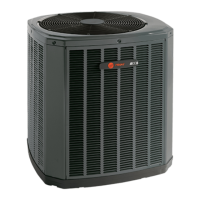
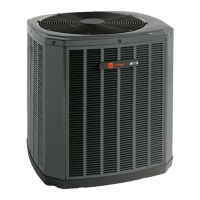
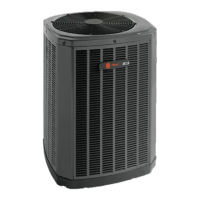
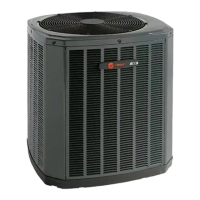
Trane 4TWR4 - User Manual

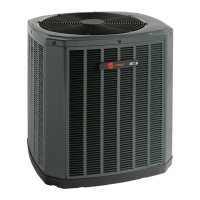
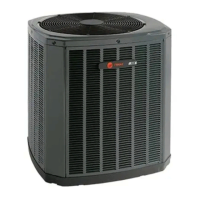
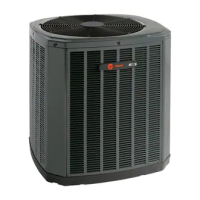
Trane 4TWR4
30 pages
Print Icon
To Next Page IconTo Next Page
Loading...
18-BC95D1-5E-EN
ALL phases of this installation must comply with NATIONAL, STATE AND LOCAL CODES
IMPORTANTThis Document is customer property and is to remain with this unit. Please return to service informa-
tion pack upon completion of work.
Heat Pumps
4TWR4
These instructions do not cover all variations in systems or provide for every possible contingency to be met in connection with
the installation. Should further information be desired or should particular problems arise which are not covered sufficiently for the
purchaser’s purposes, the matter should be referred to your installing dealer or local distributor.
Note: The manufacturer recommends installing only approved matched indoor and outdoor systems. All of the manufacture’s split
systems are AHRI rated only with TXV/EEV indoor systems. Some of the benefits of installing approved matched indoor and out-
door split systems are maximum efficiency, optimum performance and the best overall system reliability.
Installation and Operation Manual
Table of Contents
Section 1. Safety ..................................................................................... 2
Section 2. Unit Location Considerations ............................................. 4
Section 3. Unit Preparation .................................................................... 5
Section 4. Setting the Unit ..................................................................... 5
Section 5. Refrigerant Line Considerations ......................................... 5
Section 6. Refrigerant Line Routing ..................................................... 6
Section 7. Refrigerant Line Brazing ...................................................... 8
Section 8. Refrigerant Line Leak Check ............................................... 8
Section 9. Evacuation ............................................................................ 9
Section 10. Service Valves .................................................................... 9
Section 11. Electrical - Low Voltage ................................................... 10
Section 12. Electrical - High Voltage .................................................. 11
Section 13. Start Up .............................................................................. 12
Section 14. System Charge Adjustment ............................................. 12
Section 15. Checkout Procedures ...................................................... 16
Section 16. Defrost Control ................................................................. 17
Section 17. Troubleshooting ............................................................... 20
Section 18. Wiring Diagrams ............................................................... 22
Section 19. Pressure Curves ............................................................... 25
Section 20. Refrigerant Circuit ............................................................ 30

Other manuals for Trane 4TWR4

Question and Answer IconNeed help?

Do you have a question about the Trane 4TWR4 and is the answer not in the manual?

Summary

Section 1. Safety

General Safety Warnings and Cautions

Essential safety guidelines for handling the unit and its components.

Refrigerant Handling and Grounding Requirements

Procedures for safe refrigerant management and electrical grounding.

Electrical and Thermal Hazards

Warnings about dangerous electrical voltages and hot surfaces.

Brazing Safety and Chemical Exposure Notice

Precautions for brazing and important chemical safety information.

Section 5. Refrigerant Line Considerations

Section 7. Refrigerant Line Brazing

Refrigerant Line Brazing Procedure

Step-by-step instructions for brazing refrigerant lines correctly.

Section 8. Refrigerant Line Leak Check

Section 9. Evacuation

Section 10. Service Valves

Section 11. Electrical - Low Voltage

Section 12. Electrical - High Voltage

Section 14. System Charge Adjustment

Temperature Measurements for System Charging

Key temperature readings required for accurate system charging.

Subcooling Charging Method (Above 55°F Outdoor)

Procedure for charging based on subcooling at higher outdoor temperatures.

Special Subcooling Applications and Charging Chart

Specific subcooling scenarios and the associated charging chart.

Charging Below 55°F Outdoor Using Weigh-In Method

Method for charging at low temperatures and using the weigh-in technique.

Section 15. Checkout Procedures

Section 16. Defrost Control

Section 17. Troubleshooting

Compressor Start Failure Diagnosis

Flowchart to diagnose issues when the compressor fails to start.

Compressor Running Issues Diagnosis

Flowchart to diagnose problems when the compressor runs incorrectly.

TXV and Heating Mode Performance Troubleshooting

Steps to troubleshoot TXV issues and heating mode performance.

Section 18. Wiring Diagrams

Section 19. Pressure Curves

Overview

This document outlines the installation and operation procedures for Trane 4TWR4 series heat pumps. It is intended for individuals with adequate electrical and mechanical experience, emphasizing compliance with national, state, and local codes. The manual stresses the importance of proper installation to ensure optimal performance, efficiency, and system reliability, particularly when using AHRI-rated matched indoor and outdoor systems with TXV/EEV indoor systems.

Function Description

The Trane 4TWR4 heat pump is designed to provide both heating and cooling for residential and commercial applications. It utilizes R-410A refrigerant, which operates at higher pressures than R-22, necessitating the use of R-410A approved service equipment. The unit's operation involves a refrigerant circuit that can be reversed for heating or cooling modes. A key component is the demand defrost control, which measures outdoor ambient and coil temperatures to determine the need for defrost cycles, optimizing heating capacity and efficiency in colder climates. The system also incorporates various safety features, including high and low-pressure cutouts, and internal overload protection for the compressor.

Usage Features

The heat pump is designed for ease of installation and operation, though it requires professional handling due to the nature of its refrigerant and electrical components. Key usage features include:

  • Refrigerant Management: The system uses R-410A refrigerant and POE oil, which is hygroscopic. This means the system should remain sealed whenever possible to prevent moisture absorption. Specific instructions are provided for brazing refrigerant lines, leak checking, and evacuation to ensure a dry and leak-free system. The manual details how to open service valves safely to prevent abrupt release of system charge.
  • Electrical Connections: Comprehensive instructions are given for both low and high voltage electrical hook-ups, including maximum wire lengths for low voltage wiring and the requirement for a separate disconnect switch for high voltage. Grounding is mandatory for all electrical components.
  • System Start-Up: A step-by-step start-up procedure is provided, including waiting periods for compressor crankcase heaters if applicable, to ensure a smooth and safe initial operation.
  • Charge Adjustment: The manual details the subcooling charging method for cooling mode (above 55°F outdoor temperature) and the weigh-in method for heating mode (below 55°F outdoor temperature). This ensures the system is accurately charged for optimal performance across different ambient conditions. Charts are provided to determine the correct subcooling values based on line length and lift.
  • Defrost Control: The unit features a selectable defrost termination temperature (47°F or 70°F) to adapt to varying climate conditions. The defrost control board includes diagnostic LEDs to indicate normal operation or fault conditions, aiding in troubleshooting. Forced defrost can be initiated for testing or servicing purposes.
  • Troubleshooting: Flowcharts are included to guide technicians through troubleshooting common issues such as compressor failure to start and problems with outdoor TXV/heating mode. These charts help diagnose electrical issues, refrigerant problems, and component failures.

Maintenance Features

Regular maintenance is crucial for the longevity and efficient operation of the Trane 4TWR4 heat pump. The manual highlights several maintenance-related aspects:

  • Refrigerant Line Integrity: Emphasizes ensuring all refrigerant line joints are brazed, not soldered, and that lines are free of leaks, acid, and oil, especially when reusing existing lines. Proper insulation of vapor lines and isolation from structural elements are also critical to prevent noise and vibration transmission.
  • Drier Replacement: Advises changing driers whenever the system is opened for component replacement to maintain refrigerant purity.
  • Component Inspection: Recommends a final unit inspection to ensure factory tubing has not shifted during shipment and that all wiring connections are tight and properly secured. This prevents rubbing and potential electrical issues.
  • Airflow and Drainage: Stresses the importance of ensuring indoor coil drain lines drain freely and that supply registers and return grilles are open and unobstructed. The outdoor unit's location should allow for adequate airflow and prevent obstruction of drain holes in the basepan, especially in cold climates where snow and ice accumulation can be an issue.
  • Filter Maintenance: Reminds installers to ensure a return air filter is installed and to check that the correct airflow setting is used for the indoor blower motor.
  • Fault Detection: The defrost control board's LED fault codes provide immediate diagnostic information, simplifying troubleshooting and maintenance. These codes indicate issues such as sensor failures, low pressure switch open, and various lockout conditions, guiding technicians to specific problem areas.
  • Sensor Testing: Instructions are provided for testing temperature sensors by measuring resistance and comparing it to a thermistor table, allowing for quick verification of sensor functionality.

The manual serves as a comprehensive guide for professional installers and service technicians, ensuring that the Trane 4TWR4 heat pump is installed, operated, and maintained to the highest standards.

Trane 4TWR4 Specifications

General IconGeneral
RefrigerantR-410A
TypeHeat Pump
Warranty10 Year Limited Warranty on compressor
StagesSingle Stage
Cooling Capacity2 to 5 Tons
Cooling Capacity (BTU/h)24, 000 to 60, 000
Heating Capacity (BTU/h)24, 000 to 60, 000

Related product manuals