
 Need help?
Do you have a question about the Trane UD1A040A9241A Series and is the answer not in the manual?
Precautions and testing steps to prevent carbon monoxide poisoning.
Warnings about potential fire or explosion risks during installation or servicing.
Guidelines for furnace placement and required clearances from combustible materials.
Guidelines and warnings for making electrical connections, including grounding requirements.
Description of abnormal operating conditions and potential causes like pressure issues or flame loss.
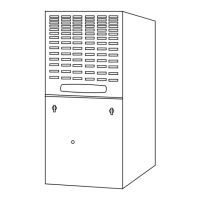
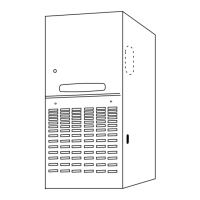
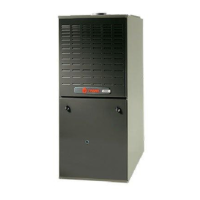
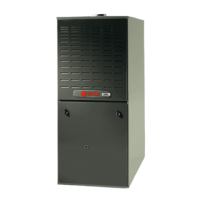
This document is an installer's guide for Trane furnaces, specifically for models with a "D" in the fourth position of the model number, indicating a downflow or horizontal configuration. The guide covers various aspects of installation, operation, and maintenance to ensure safe and efficient use.
The Trane furnaces described in this guide are designed for residential heating applications. They are available in upflow, downflow, and horizontal configurations, offering flexibility for different installation requirements. The furnaces utilize natural gas or LP gas as fuel and are designed to provide warm air for space heating. Some models are also suitable for use in manufactured homes.
Fuel Type: Natural Gas or LP Gas. Input BTUH: Ranges from 40,000 to 140,000 BTUH, depending on the model. Electrical Supply: 115V, 60 Hz, 1 Phase. Airflow: Designed for various airflow configurations, including upflow, downflow, and horizontal. Ventilation: Requires proper venting systems, including single-wall, double-wall, or B-vent, depending on the installation and local codes. Clearances to Combustibles: Specific minimum clearances are required for top, front, rear, sides, and bottom, varying by furnace configuration and venting type. For example, upflow furnaces typically require 1 inch on the top, 3 inches on the front, 0 inches on the rear, 0 inches on the sides, and 0 inches on the bottom (for combustible floor). Horizontal furnaces may require 6 inches on the top, 3 inches on the front, 0 inches on the rear, 6 inches on the sides, and 0 inches on the bottom. Filter Sizes: Various filter sizes are specified, such as 14"x20"x1", 16"x20"x1", 17"x20"x1", 20"x20"x1", 24"x20"x1", depending on the cabinet width and filter location (side or bottom). Manifold Pressure: Natural gas: 3.5" W.C.; LP gas: 10.5" W.C. Temperature Rise: The furnace is designed to operate within a specific temperature rise range, which is critical for efficient and safe operation. Gas Pipe Sizing: Detailed tables are provided for sizing gas piping based on BTUH input and pipe length for both natural gas and LP gas. Vent Pipe Sizing: Tables are included for sizing vent pipes based on BTUH input, number of burners, and vent type (natural gas or LP gas).
Installation Flexibility: The furnaces can be installed in upflow, downflow, or horizontal positions, making them adaptable to various home layouts and ductwork configurations. Specific instructions are provided for each orientation, including standoffs for upflow, sub-base for downflow, and suspension for horizontal installations. Confined vs. Unconfined Spaces: The guide provides detailed criteria and requirements for installing the furnace in both confined and unconfined spaces, including minimum area requirements for combustion air. Duct Connections: Instructions are given for connecting supply and return air ducts, emphasizing the importance of proper sizing and sealing to prevent noise and ensure efficient airflow. Electrical Connections: Wiring diagrams are provided for single-stage heating, single-stage cooling, and twinning applications, ensuring correct electrical hookup. Gas Piping: Detailed instructions for gas pipe installation, including drip legs, shut-off valves, and pressure testing, are provided to ensure safety and compliance with codes. Ventilation System: Comprehensive guidance on selecting and installing the appropriate vent system, including considerations for vent pipe materials, sizing, and termination, to ensure proper exhaust of combustion byproducts. Air Filter System: The furnaces are equipped with air filter racks, and instructions are provided for installing and maintaining filters in various configurations (side return, bottom return, horizontal). Optional filter rack accessory kits are available for enhanced filtration. Thermostat Compatibility: The furnaces are designed to work with standard 24V thermostats, with specific wiring instructions for different heating and cooling stages. Twinning Capability: Instructions and wiring diagrams are provided for twinning two furnaces to operate as a single unit, which can be useful for larger homes or specific zoning requirements. Adjustments: Procedures for adjusting gas pressure, temperature rise, and other operational parameters are outlined to optimize performance and efficiency.
Regular Inspections: The guide recommends periodic inspections of the furnace and its components, including the heat exchanger, burner, vent system, and electrical connections, to ensure safe and efficient operation. Air Filter Replacement: Instructions for regular inspection and replacement of air filters are provided. Clean filters are crucial for maintaining good indoor air quality and furnace efficiency. Cleaning: Guidance on cleaning the burner and other components to prevent soot buildup and ensure proper combustion. Troubleshooting: A section on integrated furnace control error codes is included, providing a quick reference for diagnosing common issues and their potential solutions. For example, "Continuous OFF" indicates a power failure, while "2 Flashes" could mean a pressure switch problem. Professional Servicing: The guide emphasizes the importance of having a qualified service technician perform annual maintenance and any complex repairs to ensure safety and compliance with warranty requirements. Component Accessibility: The design of the furnace allows for relatively easy access to key components for inspection and maintenance, such as the blower deck and filter racks. Safety Warnings: Numerous warnings and cautions are prominently displayed throughout the guide, highlighting potential hazards such as carbon monoxide poisoning, fire, explosion, electrical shock, and property damage, underscoring the importance of proper installation and maintenance. Documentation: The guide itself serves as a crucial maintenance tool, providing detailed instructions, diagrams, and tables that technicians and homeowners can refer to for proper care of the device.


 To Next Page
 General