• ADJUSTING THE TRIM ANGLE
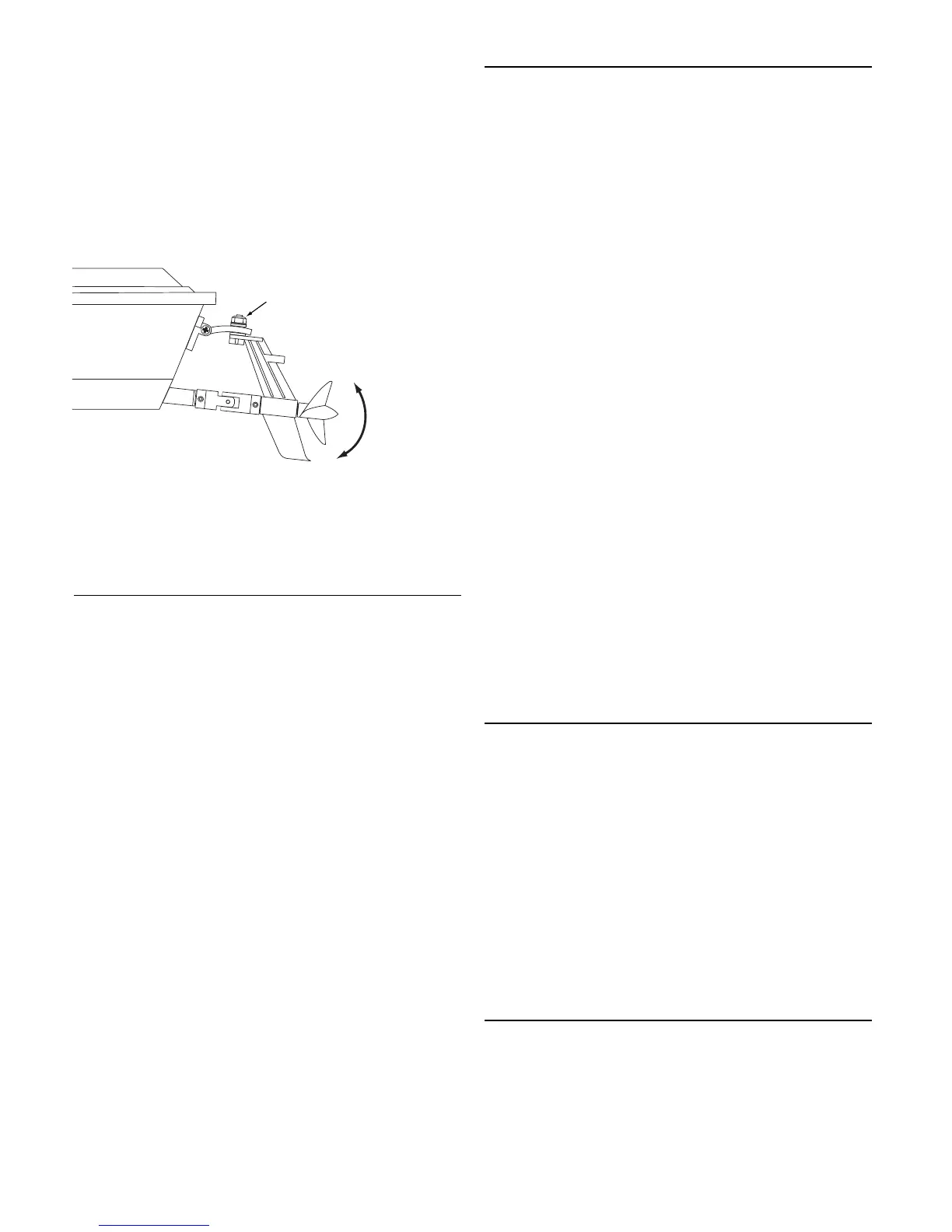
The outdrive strut on the Nitro Vee will allow you to adjust the
trim angle of the propeller. The trim angle changes how high the
bow of the boat rides out of the water. Setting the trim angle cor-
rectly will provide the maximum speed and efficiency from the
Nitro Vee. As the outdrive is trimmed up, the bow (front) of the
boat will ride higher. The Nitro Vee will run slightly faster however,
it will be more unstable in the wind. Do not trim the outdrive up
on windy days or when running in choppy water. If the trim is set
to high, then the bow will bounce up and down (“porpoise”), and
the prop may begin to cavitate.
As the outdrive is trimmed down, the bow of the boat is low-
ered thus increasing the wetted surface of the boat. This will slow
the Nitro Vee slightly but, stability and control will be improved.
Experiment with this adjustment to find out what works best for
your particular conditions.
RETURN TO SHORE SYSTEM (R.T.S.)
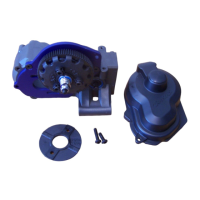
The R.T.S. system is provided to power the Nitro Vee back to
shore if the engine stops running. The R.T.S. system should only
be used in emergency situations. Frequent use of the R.T.S. sys-
tem will greatly reduce the battery life. Avoid having to use the
R.T.S. system by maintaining the mechanical integrity of the boat
and by watching the fuel level. With experience, you will learn
about how long the boat can run between fuel stops.
To engage the R.T.S system, pull the throttle lever all the way
down. The Nitro Vee will then operate at a very slow speed.
NEVER ENGAGE THE R.T.S. SYSTEM WHILE THE ENGINE IS
RUNNING. THIS COULD DAMAGE THE GEARS.
The R.T.S. system may not have enough power to overcome a
strong headwind. In this case, turn the boat away from the wind
and retrieve it from the opposite shore (when possible).
After the R.T.S. system has been used for a total of 15 minutes,
all six of the receiver batteries in the boat should be replaced. After
the boat has been retrieved, flip the R.T.S. drive gear back to its
normal resting position before restarting the engine.
ALTERNATE RETRIEVAL METHODS
If the Nitro Vee accidentally flips over and fills with water, it is
equipped with foam flotation to help prevent it from sinking.
Traxxas does not recommend ever trying to swim or wade to
retrieve a boat. If you have chosen your launch sight carefully
(downwind), the Nitro Vee will probably drift back to you on its own.
If there is no wind, you will need a tennis ball and a length of
string. Tie the tennis ball securely to one end of the string and
then throw the ball over the drifting boat. Pull the ball in and try
to entangle the boat in the string. Pull the boat back slowly to
shore. If only the bow of the boat remains visible, try using a fish-
ing lure with many hooks and a fishing pole. Try to snag the lip of
the upper deck or drive mechanism with the hooks.
MECHANICAL PRECAUTIONS
If the precautions are followed and your Nitro Vee is operated
sensibly and with care at all times, it poses very little danger to you
or your spectators. Failure to operate your fuel-powered model in
a safe and responsible manner could result in property damage
and injury. You alone must see to it that the instructions are fol-
lowed and the precautions are adhered to.
• The engine is capable of turning 30,000 or more RPMs at full throt-
tle. Continuous full-throttle, high-speed operation will greatly
decrease the life span of the internal engine parts. For longer
engine life, vary your speed. If the engine will be run at high speeds
in a racing situation, expect to replace worn parts more often.
• Do not attempt to operate the engine using gasoline, alcohol,
naptha, or any other fuel besides model engine fuel.
• Do not allow the engine to overheat. This will damage the engine.
• Do not run excessively lean mixtures. A lean mixture will cause
engine overheating and damage.
• If the engine performance suddenly changes, stop at once and
find the cause for the change.
• Do not over-rev the engine. The engine will over-rev if the throttle
is left fully open with no load on the engine.
• Do not allow the engine to run out of fuel while it is running at
high RPMs. This could damage the glow plug.
•Test the radio system each time before you operate the model.
Always use strong batteries in the radio system. Stop running
immediately at the first sign of weak batteries.
•Do not drive the boat in mossy or grassy water. This puts exces-
sive loads on the engine and can block the cooling passages.
• The fuel used must meet the recommendations outlined in this
manual. Failure to use the correct fuel will damage the engine.
• Using fuels containing more than 20% nitromethane will cause
the engine to run hotter and decrease its longevity. It can also
increase the risk of fuel damage to the plastic hull.
•Avoid removing the boat from the water by picking it from the
front. This could cause water to enter the rear of the boat.
• Do not run the boat in rough water and/or high wind. Even at
moderate speeds, the boat could flip over in these conditions.
•Avoid running the boat in salt water. If you do run in salt water,
flush the boat clean with fresh water and then oil the metal com-
ponents. This will help prevent corrosion. Damage caused by salt
water corrosion is not covered by warranty.
MAINTENANCE
•Keep the Nitro Vee clean of accumulated dirt and oil. Oil and fuel
residue will begin to accumulate inside the boat after a period of
time. Any excess fuel and oil should be wiped up with a soft cloth.
Do not allow puddles of fuel to remain inside the boat because
continuous exposure can damage the fuel-resistant properties of
the plastic. Do not use any solvents to clean the boat or the fin-
ish will be damaged. Use a cloth dipped in soapy water to
remove stains and oil. Denatured alcohol may also be used to
flush oil and fuel residue out of the boat. Do not allow it to con-
tact the electronics or adhesive stickers (it will dissolve the adhe-
sive). Do not allow water to enter the engine or the radio system
components. Use fine polishes made for plastics and acrylics on
the Nitro Vee to maintain its original finish.
•Periodically, re-oil the RTS and starter motor bushings. Use an
oil made for electric motors such as 3-in-1 Oil
TM
.
•Frequently re-oil the bushings in the outdrive housings.
•Keep all of the screws in the drive system tight.
STORAGE
Use an after-run product in the engine anytime the model is
going to be stored. The chemicals in the fuel attract moisture and
can cause moisture and corrosion to form inside the engine. Drain
the fuel tank, connect the EZ-Start control box, and try to start the
engine until all of the remaining fuel is completely used up. Place
the recommended number of drops (usually 6) of after-run oil into
the carburetor. Run the starter for 3-5 seconds to circulate the oil.
Never store the boat with unused fuel in it.


 To Next Page
 Loading...