11
5.1.4 SOFT FOOT
Soft foot is a condition in which one of the booster feet does
not sit at on the base. Usually, this is due to irregularities in
the surface to which the booster is mounted. When you tighten
the bolt on the foot, the booster will distort slightly, but enough
to cause problems with bearing and seal life, and premature
internal contact between the rotors and the housing.
1. Place booster on base.
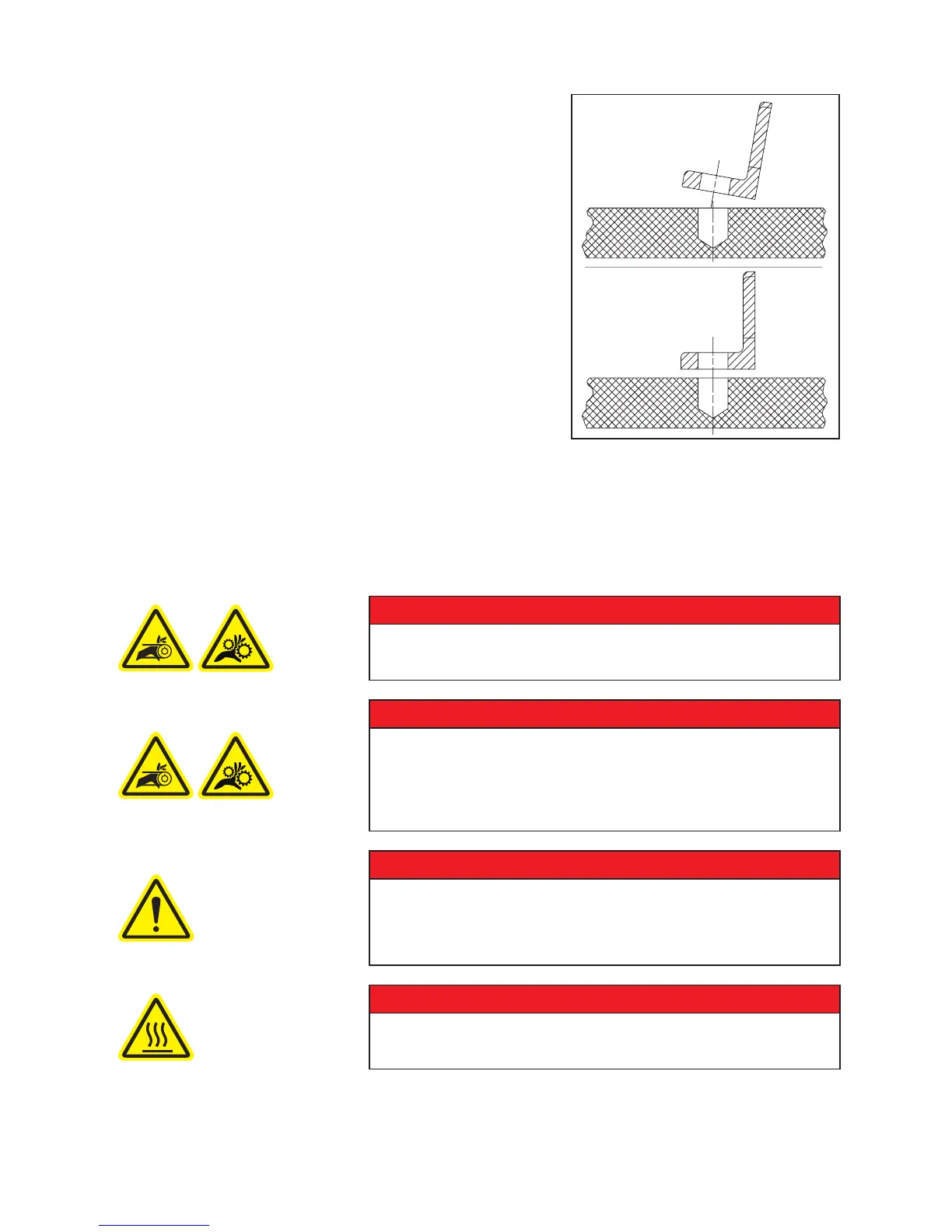
2. Check each foot for gaps between foot and base (soft foot),
shim as necessary to ll gap within .002” (.05 mm) Below are
shown the two most common types of soft foot conditions. If
either type is present, and measures more than .003” (.076
mm), the booster may fail prematurely.
3. Tighten all bolts.
4. Mount a dial indicator on base contacting one foot at 12
o’clock position.
5. Loosen bolt on that foot. Observe indicator travel and
add shims as needed to reduce “spring” to less than .002”
(.05 mm). Tighten bolt on foot. Repeat steps 4 and 5 on
remaining feet.
5.2 SAFETY
Tuthill Vacuum & Blower Systems recommends the use of relief valves to protect against excessive pressure
or vacuum conditions. These valves should be tested at initial start-up to be sure they are properly adjusted
to relieve at or below the maximum pressure differential rating of the booster.
DANGER
It is the responsibility of the installer to assure that proper guarding is in
place and compliant with all applicable regulatory requirements.
DANGER
Internal and external rotating parts of the booster and driving equipment
can produce serious physical injuries. The booster should never be run with
the inlet or discharge piping removed. If it becomes necessary to inspect
the rotating parts of the booster or to change V-belts, be absolutely sure
that all power to the motor controls has been shut off, the motor controls are
locked out, and properly tagged before proceeding.
DANGER
Assure that properly sized vacuum breaks/relief valves are used on the inlet
side of the booster. Also assure that properly sized pressure relief valves
are used on the outlet of the booster. The sizing shall be such to assure
that the proper ow can be achieved without exceeding the rated vacuum
and pressure ratings.
DANGER
Blower housing and associated piping or accessories may become hot
enough to cause major skin burns on contact.
Figure 3 - Illustrations of Soft Foot
ANGULAR
SOFT FOOT
PARALLEL
SOFT FOOT



 To Next Page