18
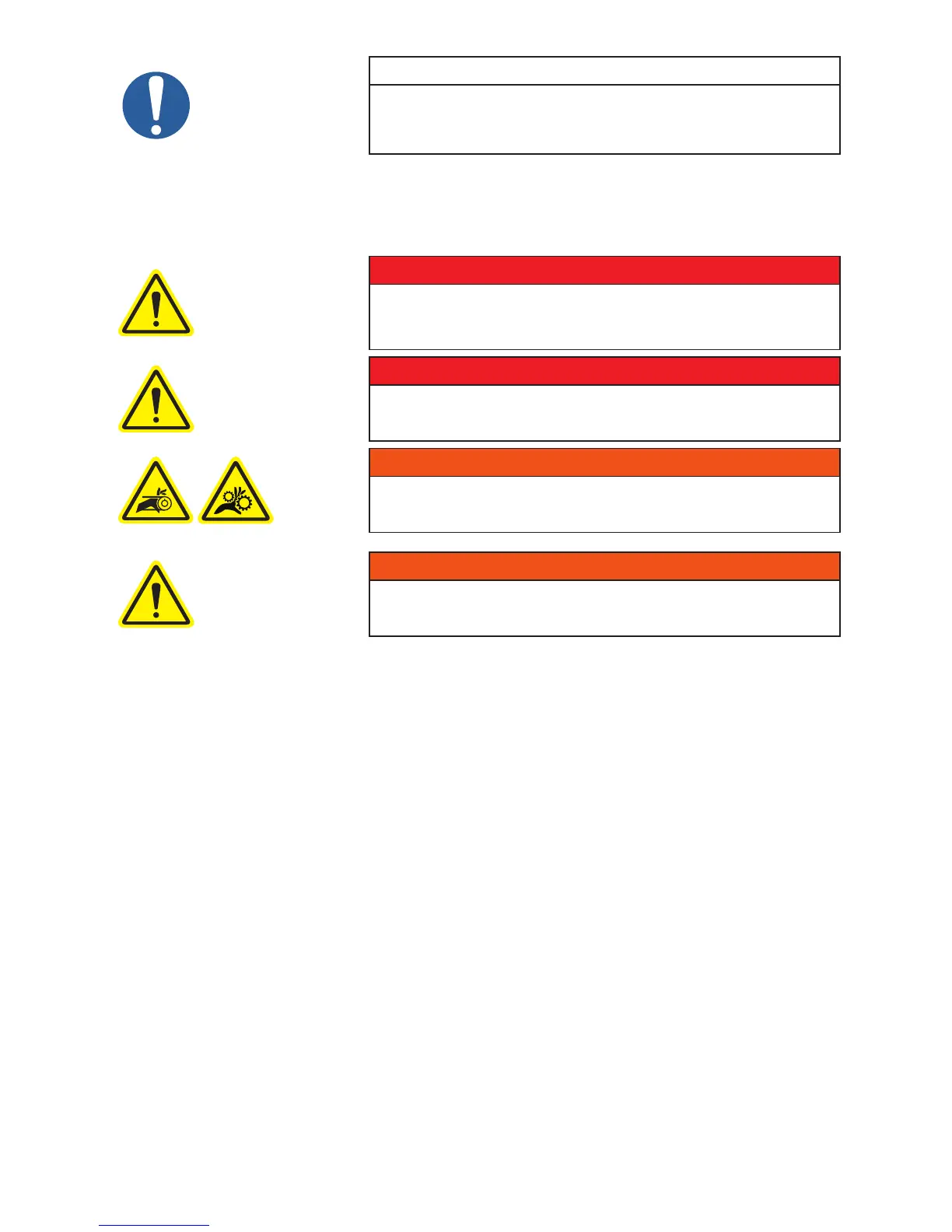
NOTE
Be sure not to compress the rubber sleeves or the spider between the
couplings or hub halfs. Compression could result in damage or failure.
Consult manufacturer’s instructions for approximate gaps between coupling
or hubs.
6. OPERATION
6.1 GENERAL
DANGER
The booster is not intended to be used with explosive products or in
explosive environments. Consult manufacturer if the booster is to be used
in these environments.
DANGER
The booster is not intended to be used with hazardous or toxic gases.
Consult the manufacturer if the booster is to be used in these applications.
WARNING
Do not operate without guards in place. Assure that the coupling guard is
in place and secure prior to operation.
WARNING
Maximum operating speed: Table 1 states the maximum operating speed
in RPM (rotations per minute) and maximum temperature. Do not exceed
these limits.
Before starting the booster for the rst time under power, recheck the installation thoroughly to reduce the
likelihood of troubles. Use the following check list as a guide, but also consider any other special conditions in
your installation.
1. Be certain no bolts, rags, or dirt have been left in booster.
2. Be certain that inlet piping is free of debris. If an open outdoor air intake is used, be sure the opening is clean
and protected by an inlet lter. This also applies to indoor use.
3. If installation is not recent, check booster leveling, drive alignment, belt tension, and tightness of all mounting
bolts.
4. Be certain the proper volume of oil is in the oil reservoir chambers.
5. Be certain the driving motor is properly lubricated, and that it is connected through suitable electrical overload
devices.
6. With electrical power off and locked out to prevent accidental starting, rotate booster shaft several times by
hand to make sure booster is rotating freely. Unevenness or tight spots is an indication of a problem that
should be corrected before progressing.
7. Check motor rotation by momentarily pushing the start button and check ow direction of the booster.
Reverse the motor connections if ow is in the wrong direction.
Initial operation should be carried out under “no load” conditions by opening all valves and venting the discharge
to atmosphere, if possible. Then start motor briey, listen for unusual noises, and check that the booster coasts
freely to a stop. If no problem appears, repeat this check, and let the motor run a little longer. If any questions
exist, investigate before proceeding further.
Assuming all tests are satisfactory, the booster will now be ready for continuous full load operation. During the
rst several days, make periodic checks to determine that all conditions remain acceptable and steady. These
checks may be particularly important if the booster is part of a process system where conditions may vary. At the
rst opportunity, stop the booster and clean or remove inlet lter. Also, recheck leveling, coupling alignment or
belt tension, and mountlng bolts for tightness.



 To Next Page