11
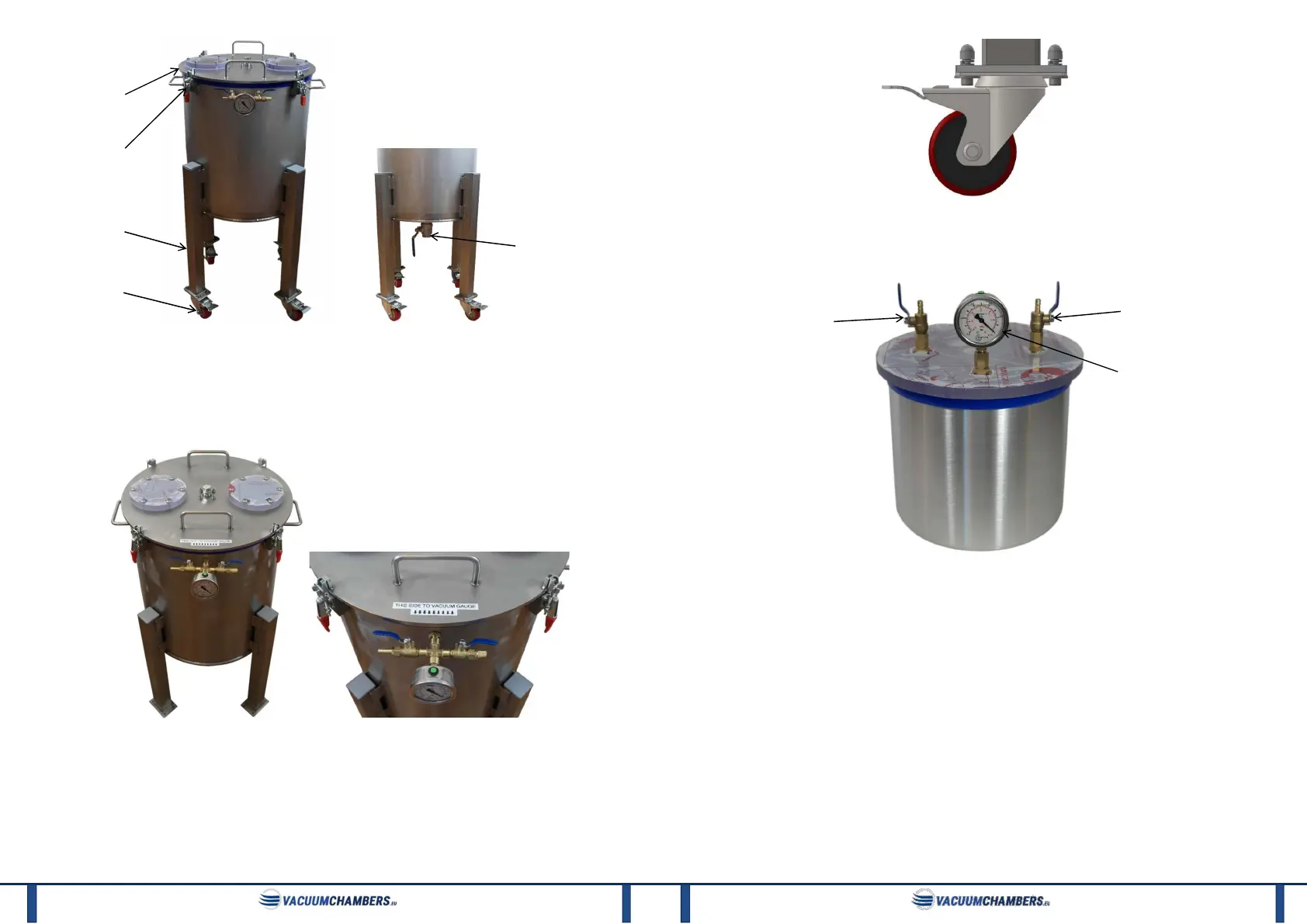
Photo 13: Vacuum chamber with stirrer mechanism.
The legs (3) and the castors (4) makes possible to move the chamber and to place a container under the tank. The clamps
(2) are used to close the chamber. The drain valve (5) allows the chamber to be drained.
The lid should be mounted centrally in the middle of the chamber (Photo 14). The lid should be secured with clamps. Make
sure that the elements of the clamps of the lid are located directly above the corresponding elements of the clamps on the
chamber. Additionally, it is important that the label "THIS SIDE TO VACUUM GAUGE" is placed next to the vacuum gauge.
Photo 14: Correct location of the lid on the chamber.
If it is difficult or impossible to close at least one clamp, make sure that the lid is correctly positioned. If necessary, the
length of the clamps can be adjusted.
To avoid damage to the chamber during transport, the castors usually are included separately. The manufacturer attaches
to the package a set of bolts, washers and nuts that allow the customer to assemble the castors by himself. Their correct
installation is shown in the picture below.
1
4
2
2. Clamps.
3. Legs.
4. Castors with brake.
5. Stainless steel drain valve 1 ¼ inches.
12
Picture 1: Correct installation of the castor to the tank leg.
D. Vacuum trap.
The vacuum trap (Photo 15) is a vacuum chamber with a modified configuration. It is used in the infusion process as a
protection for a vacuum pump.
Photo 15: Vacuum trap.
Two ball valves (1,2) and a glycerine vacuum gauge (3) are mounted on the lid of the vacuum trap. The valves enable control
of the process and are suitable for connecting pneumatic hoses. The vacuum gauge indicates the current pressure in the tank.
The separate use of valves and vacuum gauge instead of the air manifold (used in standard chambers) makes easier vacuum trap
cleaning.
After getting inside the trap, the liquid casting material falls to the bottom by gravity. This prevents material from getting
inside the vacuum pump. It protects against contamination of the trap elements and the pneumatic hose leading to the pump.
During proper use, the resin only comes into contact with the hose leading to the mould and the ball valve of the trap lid
connected to it. To simplify cleaning of the vacuum trap, it is recommended to place a container inside the tank to hold excess
resin that gets inside the trap.
E. Vacuum cold trap.
A vacuum cold trap is a type of vacuum chamber. It is used to protect the vacuum pump against harmful compounds that
may evaporate in the vacuum chamber. Such compounds can be, for example, water or ethanol. Due to the low pressure inside
the vacuum chamber, water and ethanol can evaporate at room temperature. Vapours can cause oil turbidity, deterioration of
pump performance, corrosion and damage to individual elements of the vacuum pump. The vacuum cold trap is used as an air
purifier for the air passing from the vacuum chamber to the pump. In the vacuum cold trap, the vapours undergo a process of
deposition (the transition from gas phase to solid phase). The cold trap is not a filter and does not protect the pump against all
harmful factors, e.g. dust. It is used only to ensure appropriate conditions for the deposition process.
1
3
2. Ball valve.
3. Vacuum gauge.
2


 To Next Page
 Loading...