Need help?
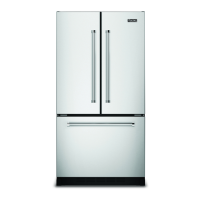
Do you have a question about the Viking VCFF036SS and is the answer not in the manual?
Instructions for reviewing service information before beginning repairs.
General safety messages and symbols used throughout the manual.
Immediate hazards resulting in severe personal injury or death.
Hazards or unsafe practices resulting in severe personal injury or death.
Hazards or unsafe practices resulting in minor personal injury or property damage.
Information to locate an authorized servicer and contact customer service.
Details of the warranty coverage for refrigerators and their components.
Covers freestanding refrigerators and components for two years from purchase.
Covers sealed refrigeration system components for six years.
Covers sealed refrigeration system components for twelve years.
Warranty for non-standard residential use, excluding commercial.
How to obtain warranty service and required information.
How the control board manages defrost cycles based on run time.
Location of the model and serial number data plate.
Guidelines for installing the refrigerator, including location and clearance.
Instructions on how to level the refrigerator for proper function.
Steps to adjust refrigerator doors for proper alignment and closure.
Location and functions of the climate control panel.
How to adjust temperature settings for refrigerator and freezer.
How to activate the Max Ice feature for increased ice production.
Explanation of the ORDER and REPLACE lights for the water filter.
How to activate and deactivate Vacation Mode for energy saving.
How the door open alarm alerts and how to deactivate it.
How the High Temp Alarm alerts to temperature exceedances.
How to activate Max Cold for faster cooling after door openings.
Accessing settings for temperature display, alarms, and Sabbath mode.
Explanation of normal cabinet warmth during operation.
Operation and maintenance of the automatic ice maker.
Instructions on how to use the water dispenser.
Table detailing what to use and not use for cleaning refrigerator parts.
Common sounds the refrigerator might make and their causes/solutions.
Troubleshooting a non-operating compressor with lights on.
Troubleshooting warm drawers or food temperature problems.
Troubleshooting steps for a refrigerator that won't turn on.
Causes and solutions for condensation on the refrigerator exterior.
Troubleshooting food being too cold or too warm.
Causes and solutions for odors inside the refrigerator.
Causes and solutions for condensation inside the refrigerator.
Troubleshooting unfamiliar noises from the refrigerator or ice maker.
Causes and solutions for drawers not closing properly.
Troubleshooting why the refrigerator runs too frequently.
Troubleshooting issues with ice production or ice shape.
Causes and corrective actions for ice maker not producing ice.
Troubleshooting the red water filter indicator light.
Causes and solutions for slow water flow from the dispenser.
Causes and solutions for cloudy water from the dispenser.
Causes and solutions for ice formation in the ice maker inlet tube.
Troubleshooting steps for a refrigerator leaking water.
Causes and solutions for dispenser water not being cold.
Troubleshooting particles found in water or ice cubes.
Troubleshooting steps for a unit that does not run at all.
Causes and solutions for both refrigerator and freezer sections being too warm.
Causes and solutions for the refrigerator section being too warm.
Causes and solutions for the refrigerator section being too cold.
Causes and solutions for frost or ice buildup on the evaporator.
Troubleshooting frequent cycling of the refrigerator.
Causes and solutions for the freezer section being too cold.
Troubleshooting why the unit runs continuously without stopping.
Troubleshooting various sources of noisy operation in the refrigerator.
How to access and use the programming mode for unit settings.
How the control board manages defrost cycles.
Steps to activate the forced defrost function.
How to enter and navigate the service test mode.
Testing the defrost heater and circuit status.
Testing compressor, condenser fan, and evaporator fan operation.
Testing refrigerator, freezer, and compartment thermistors.
Checking refrigerator and freezer door states, and water actuator.
Testing keypad operation and LED indicator functionality.
Testing ice maker water valve and mullion heater operation.
Testing defrost operation and displaying temperature set points.
Adjusting refrigerator and freezer temperature set points.
Resetting the unit to default factory settings.
How to switch between Fahrenheit and Celsius temperature display.
How to enter and exit the Show Room Mode.
How to activate and deactivate Sabbath Mode.
How to enable or disable audible alarms.
Description and test procedures for the capacitor.
Resistance and ground test procedures for the compressor.
Performing an operation test on the compressor.
Description and leak testing procedures for the condenser.
Description and resistance test procedures for overload/relay.
Reference to Control Board section for troubleshooting.
Reference to Ice Maker section for service information.
Testing the ECM condenser motor for resistance and voltage.
Testing the evaporator fan motor for resistance and voltage.
Testing the refrigerator light switch.
Testing the freezer light/dispenser switch.
Testing the water valve coil windings.
Information on drier replacement and handling precautions.
Further steps for drier removal and handling precautions.
Testing the evaporator defrost heater and defrost system.
Testing the thermostat continuity and function.
Testing the evaporator for leaks.
Testing thermistor resistance at various temperatures.
Testing the electric damper control.
Testing the water dispenser switch.
How pressure variations indicate system issues.
Signs and symptoms of an overcharged refrigeration system.
Signs and symptoms of air in the refrigeration system.
Signs and symptoms of a refrigerant shortage.
How ambient temperature affects system performance and efficiency.
Factors contributing to increased heat load and their effects.
Signs and symptoms of restrictions in the refrigeration system.
List of equipment required for servicing HFC134a systems.
Dangers and methods for leak testing refrigeration systems.
Procedures for leak testing systems containing refrigerant.
Procedures for leak testing systems without refrigerant.
Safety precautions when handling refrigerants and chemicals.
Use and limitations of line piercing valves for diagnosis.
Precautions for keeping refrigeration lines closed to atmosphere.
Procedures for testing compressor operation using direct wiring.
Process of removing moisture from the sealed refrigeration system.
Symptoms and common causes of restrictions in the system.
Procedures to diagnose and test for restrictions in the system.
Procedures for evacuating and charging the refrigeration system.
Step-by-step guide for evacuating the sealed refrigeration system.
Procedures for charging the refrigeration system with refrigerant.
Information about HFC134a as an alternative refrigerant and its properties.
Health, safety, and handling considerations for HFC134A.
Comparison of properties between CFC12 and HFC134a refrigerants.
Procedures and materials for brazing refrigeration components.
Procedures for installing a replacement service compressor.
Procedures for testing compressor performance and operation.
Procedures for replacing the drier filter in the system.
Diagram illustrating the flow of refrigerant through the system.
Diagram illustrating the air flow within the refrigerator cabinet.
Diagram illustrating air flow in the machine compartment.
Diagram showing the water dispenser system components and tubing.
Steps to remove and replace refrigerator light bulb and socket.
Steps to remove the electronic control board from the housing.
Steps to remove the light switch from the unit.
Steps to remove the refrigerator thermistor.
Steps to remove the electronically controlled damper.
Steps to remove and replace the water filter cartridge.
Steps to access the machine compartment for servicing.
Steps to remove the water filter assembly from its bracket.
Steps to remove the water tank assembly from the unit.
Steps to remove the water dispenser switch.
Steps to remove the freezer light socket.
Steps to remove and replace the freezer light bulb.
Steps to remove the freezer drawer and its glides.
Steps to remove the ice maker from the freezer compartment.
Steps to remove the freezer thermistor.
Steps required to access the evaporator section.
Steps to remove the evaporator fan motor assembly.
Steps to remove the defrost thermostat and defrost heater.
Steps to remove the evaporator coil from the unit.
Steps to remove the condensate drain tube.
Steps to remove the water valve assembly.
Steps to remove the condenser fan motor and blade.
Steps to remove the compressor from the unit.
Steps to remove overload/relay and condensate drip pan.
Steps to remove the condenser coil from the basepan.
Steps to remove leveling rollers and door gaskets.
Steps to install door handles and remove doors/hinges.
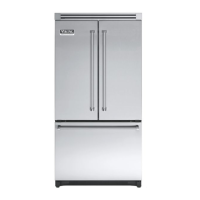
 General
| Width | 36 in |
|---|---|
| Finish | Stainless Steel |
| Color | Stainless Steel |
| Defrost Type | Automatic |
| Door Style | French Door |


 To Next Page