Introduction
Introduction
Congratulations on purchasing the finest electrochemical
weld
cleaning and passivation equipment available today.
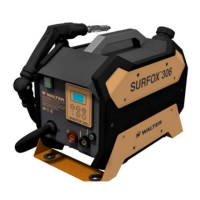
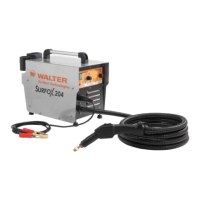
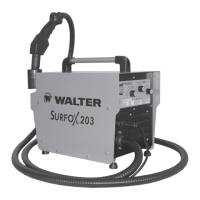
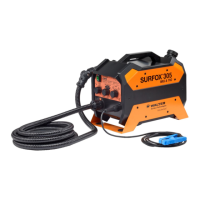
WALTER’s SURFOX
TM
weld cleaning equipment quickly,
easily and cost effectively removes the heat tint from heat
affected zones on stainless steel and aluminum while
completely passivating the stainless steel surface.
SURFOX machines are equipped with self-regulating
inverter boards, automatically monitoring and adjusting
the current so as to ensure maximum cleaning effective-
ness without loss of productivity.
Before starting, please read the SURFOX owner’s manual
completely as we take you step-by-step through the
start-up, operating and maintenance procedures of your
new SURFOX equipment. Your new SURFOX machine has
been built with extra durability to stand up to the heavy
demands of industrial use. However, like any piece of
electrical equip-ment, care and safety should always be
taken when using and maintaining this valuable invest-
ment. With proper care and maintenance your SURFOX
equipment will provide years of dependable service.
To learn more about the other WALTER products,
visit our website: walter.com
Operation
The SURFOX machine works by an electrochemical
process to clean and passivate welds on stainless steel.
SURFOX electrolyte solutions are phosphoric acid based,
approved for food industry, and are activated by an
electrical cur-rent to clean welds. The process takes only
a few seconds without damaging or scratching the surface
of the parts to be cleaned.
Your SURFOX machine can clean:
•
TIG welds
•
Plasma welds
•
Laser welds
•
Spot welds
•
MIG welds (with Pulse technology)
Basics of passivation:
•
The cleaning of the welds is not only for aesthetic
purposes but most importantly for passivation.
•
Passivation is the treatment of stainless steel surfaces
to remove contaminants and promote the formation of
a thick and durable protective chromium oxide layer.
•
This passive layer will insure the corrosion resistance
of stainless steel.
•
If passivation is not done properly, stainless steel and
heat affected zones may start to rust.


 To Next Page