20.
Verify
that
NOISE FREQ
HZ vernier
control
provides approximately
10:1 variation in
clock
frequency at
the NOISE CLOCK
connector
(rear panel).
21.
Rotate
function selector to
/
“
!
J
position and
check to assure
oscilloscope
displays analog
noise.
22. Check to
assure SEQUENCE
LENGTH push
buttons
vary the length
of the sequence of
analog noise. (Use NOISE
SYNC connector on
rear panel.)
23.
Connect
oscilloscope
external trigger cable to
FUNCTION SYNC connector
(rear panel) and
Set
i
u il C
t
tG i~i ScicClGi' tO
I
i
pGSitiGi
».
24.
Set S/N
—
N/S (d
B )
selector to
—10
position
and
vernier control fully ccw.
25.
Depress MODE
—
FM push button
and check
to assure square waveforms are
frequency
modu-
lated
by
analog noise.
26.
Release MODE
—
FM push button
and depress
MODE
—
S/N push button. Check to assure
square wave and analog noise
are mixed.
27.
Depress MODE
—
N/S push button and rotate
S/N
—
N/S
(dB)
selector
ccw
through
each
position, checking
for
reduction in signal level.
28.
Verify
that the
S/N
—
N/S
(dB) vernier
attenu-
ates
the signal approximately
10
dB
between
each step of the
S/N
—
N/S (dB) selector.
OPERATING
CONTROLS
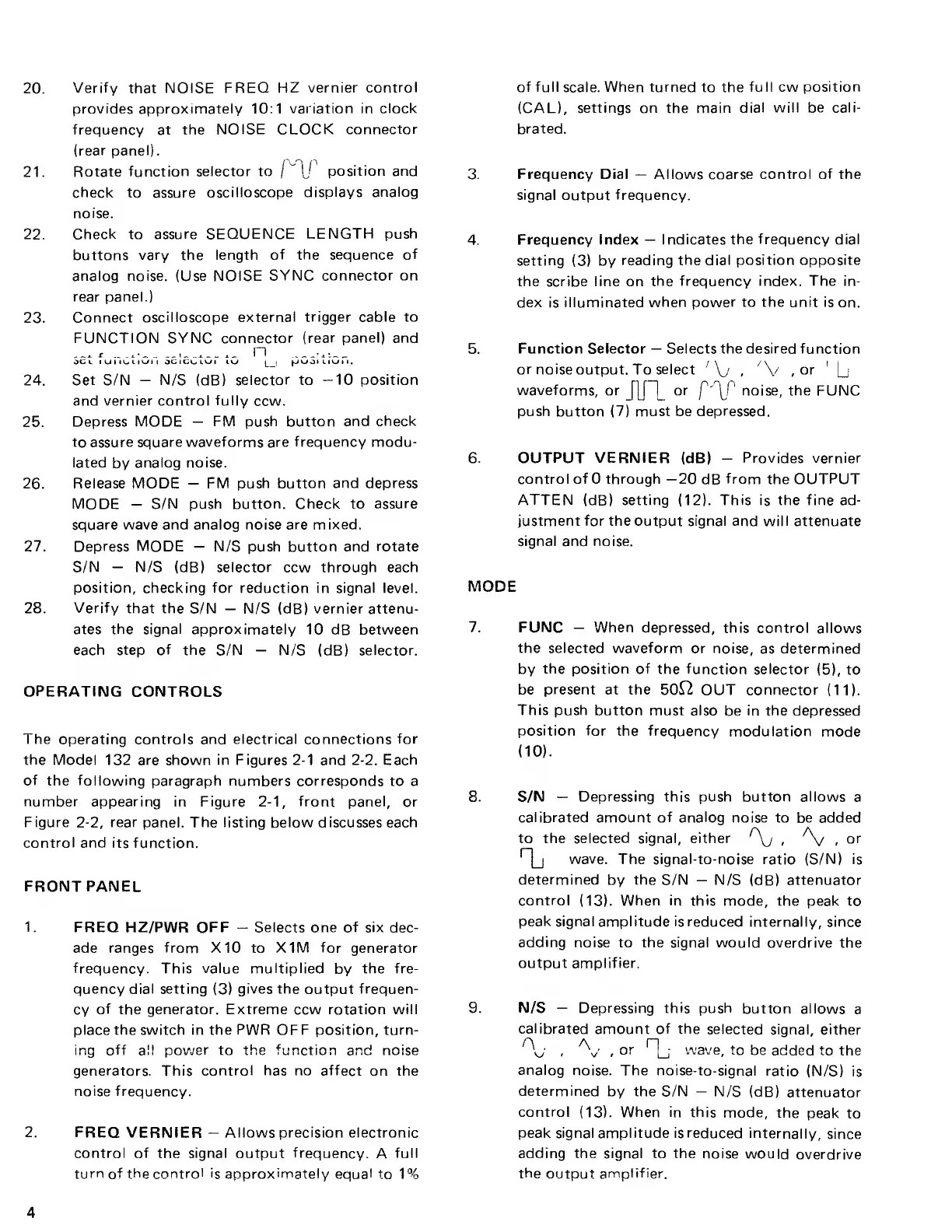
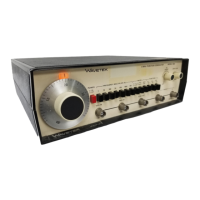
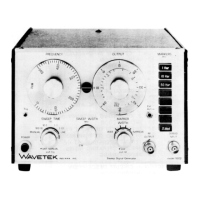
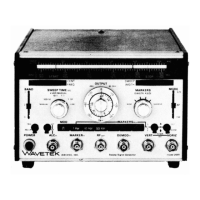
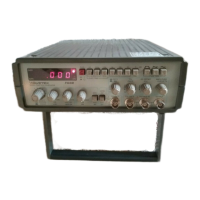
The operating controls and electrical connections
for
the
Model 132 are shown in Figures
2-1
and
2-2.
Each
of
the following paragraph numbers corresponds
to a
number appearing
in Figure
2-1,
front panel, or
Figure
2-2,
rear panel. The listing below discusses each
control
and its function.
FRONT PANEL
1.
FREQ HZ/PWR OFF
—
Selects one of six
dec-
ade ranges from X10 to X1M
for
generator
frequency. This
value multiplied
by
the fre-
quency dial setting
(3)
gives the output frequen-
cy
of
the generator. Extreme ccw rotation will
place the switch in the PWR OFF position, turn-
ing off all
power
to the function and noise
generators.
This
control has no affect
on the
noise
frequency.
2. FREQ
VERNIER
—
Allows precision electronic
control of the signal output frequency.
A
full
turn
of
the control
is
approximately equal
to
1%
of full
scale.
When turned
to the
full cw
position
(CAL),
settings on
the
main dial
will be cali-
brated.
3. Frequency Dial
—
Allows coarse control
of
the
signal output frequency.
4.
Frequency Index
—
Indicates
the frequency dial
setting
(3)
by
reading the dial position opposite
the scribe line on
the frequency index. The in-
dex is illuminated
when power to the unit is
on.
5.
Function Selector
—
Selects the desired function
or noise
output. To
select
!
\j
,
'V
,
or
1
|j
waveforms, or
JjJ
T_ or
nr
noise, the FUNC
push
button
(7)
must
be
depressed.
6. OUTPUT VERNIER
(dB)
-
Provides vernier
control of
0
through
—20
dB
from
the OUTPUT
ATTEN (dB) setting
(12).
This
is
the fine
ad-
justment for the output signal
and
will
attenuate
signal and noise.
MODE
7.
FUNC
—
When
depressed,
this control allows
the
selected waveform or noise,
as determined
by
the position of
the function
selector
(5),
to
be
present at
the
50fi OUT connector
(11).
This push
button must also
be
in the
depressed
position for
the frequency
modulation
mode
(
10
).
8. S/N
—
Depressing this push button allows
a
calibrated amount of analog noise
to be added
to the selected signal,
either
/
\j
, 'v
,
or
HL
wave. The
signal-to-noise ratio (S/N) is
determined
by
the
S/N
—
N/S
(dB)
attenuator
control
(13).
When in this
mode, the peak to
peak
signal amplitude is reduced internally,
since
adding
noise to the signal would
overdrive the
output amplifier.
9.
N/S
—
Depressing
this
push
button allows
a
calibrated amount of the
selected
signal, either
'\y
, ,
or
r
"|_j wave,
to
be added to
the
analog
noise. The noise-to-signal
ratio
(N/S)
is
determined
by the S/N
—
N/S
(dB)
attenuator
control
(13).
When in
this mode,
the
peak to
peak signal amplitude is reduced
internally,
since
adding the signal to the
noise would
overdrive
the
output
amplifier.
4



 To Next Page