14 920943 Rev E July 2014
3.3.6 Conduit
Use UL Listed threaded, rigid, metal conduit and properly sealed connectors.
All threaded connections must be drawn up tight and have a minimum of five threads
engaged.
Do not use flexible conduit or knockout boxes.
When connecting to a fuel management system, consult the manufacturer’s instructions for
conduit requirements for AC and DC lines.
The following charts are provided as a guide to help determine the proper conduit sizes.
Step 1 Determine the square area for each wire by looking up the desired wire gauge on
the following chart and writing down the corresponding square area from the
Square Area column. Calculate the total area by adding up the square area for
each of the wires.
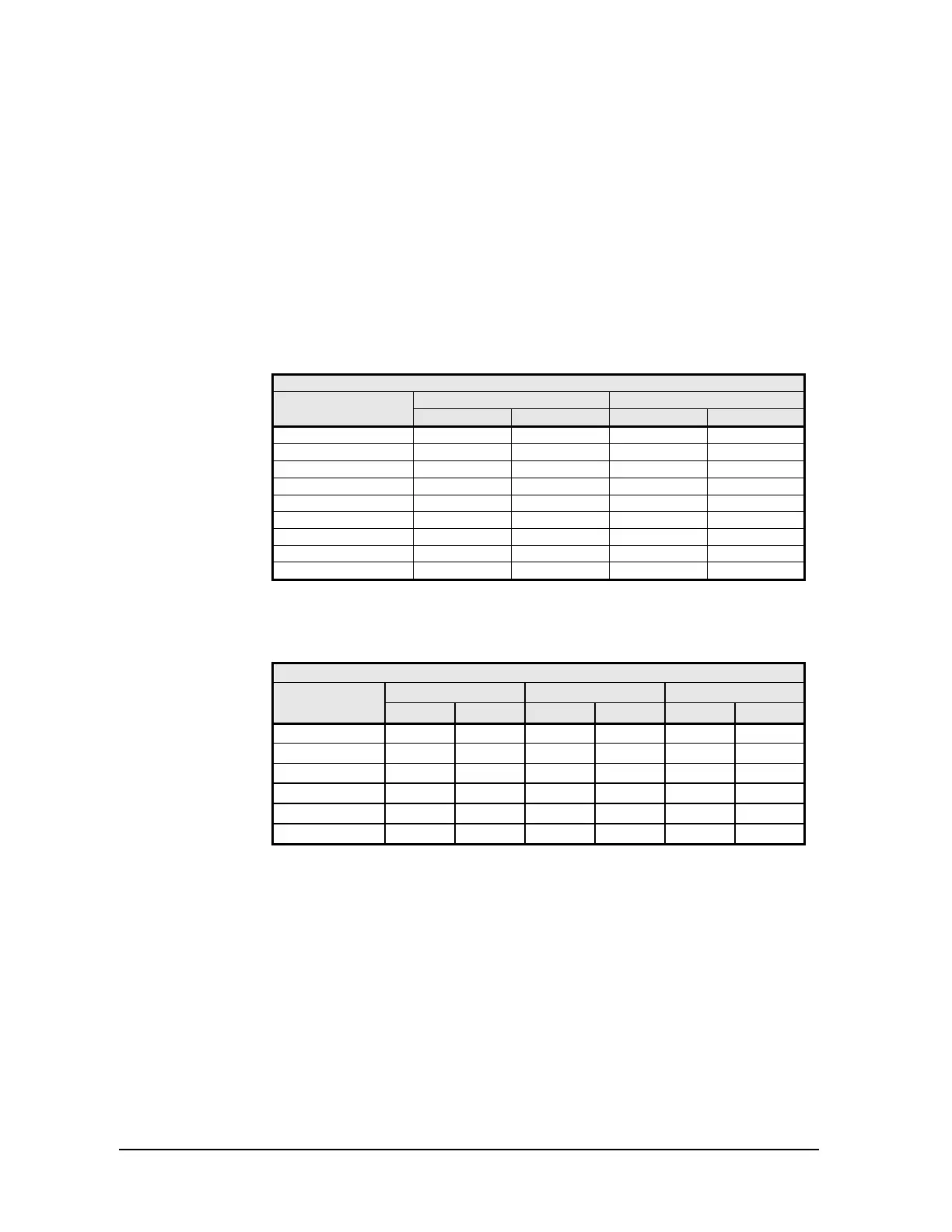
THHN/THWN Wire Areas
Wire Gauge
Diameter Square Area
in mm In
mm
18 .090 2.29 .007 4.1
14 .118 2.95 .011 6.8
12 .135 3.43 .014 9.2
10 .169 4.29 .022 14.5
8 .216 5.49 .037 23.7
6 .259 6.60 .053 34.2
4 .331 8.41 .086 55.5
3 .359 9.14 .102 65.6
2 .394 10.01 .122 78.7
Step 2 In the 25% Fill Area column in the table below, find the square area that is closest
to, without exceeding, the calculated total area. The value listed on the same row
in the Trade Size Conduit column is the diameter of the required conduit.
Trade Size Conduit Square Area
Trade Size
Conduit
Internal Diameter Square Area 25% Fill Area
In mm in
2
mm
2
in
2
mm
2
½”
.629 16 .303 196 .076 49
¾”
.826 21 .532 343 .133 86
1”
1.063 27 .862 556 .215 139
1 ¼”
1.378 35 1.50 968 .375 242
1 ½”
1.614 41 2.04 1314 .509 329
2”
2.087 53 3.36 2165 .839 541


 To Next Page