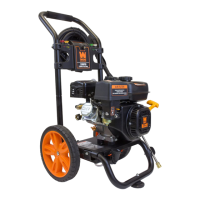
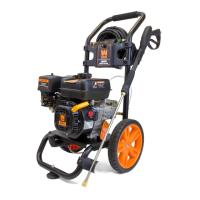
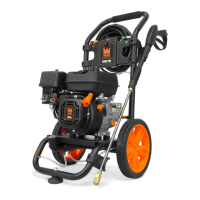
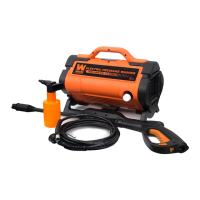
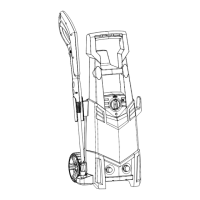
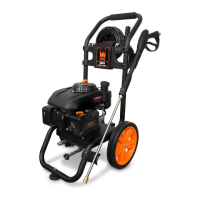
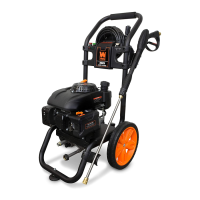
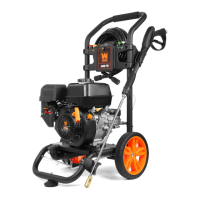
The WEN PW3400 is a 3400-PSI Carb Compliant Pressure Washer designed for easily removing dirt and grime from surfaces like decks, siding, and driveways. This robust tool is engineered to WEN's highest standards for dependability, ease of operation, and operator safety, promising years of rugged, trouble-free performance with proper care.
Important Technical Specifications:
Pressure Washer:
- Model Number: PW3400
- Maximum Pressure: 3400 PSI
- Maximum Flow: 2.7 GPM - 3400 PSI
- Nozzles: Includes 0°, 15°, 25°, 40°, and Soap Nozzle for various applications.
- Gun to Lance Connection: M22 Thread, 14mm Connector
- Gun to Hose Connection: M22 Thread, 14mm Connector
- Lance: 21" Stainless Steel
- Lance to Nozzle Connection: Quick Change
- Pump: Axial Cam
- Detergent Tank Capacity: 0.25 Gallon
- Hose Inner Diameter: 5/16 Inch
- Hose Length: 30 Feet
- Wheel Diameter: 10 Inches
- Product Weight: 60 Pounds
Engine:
- Engine Type: 4 Stroke, OHV, Single Cylinder with Forced Air Cooling System
- Spark Plug Gap: 0.7mm - 0.8mm (0.028 in. - 0.031 in.)
- Spark Plug Torque: 1/2 - 3/4 Turn After Gasket Contacts Base or 15 ft.lb
- Displacement: 212cc
- Fuel Tank Capacity: 0.9 Gallon 87 Octane Minimum
- Oil Capacity: 20.3 fl. oz (600 ml)
- Lubrication System: Splash Lubrication
- Noise Rating: 63 dB at 22 Feet
- Spark Plug: LG F7TC / NGK BP7ES
Usage Features:
The pressure washer comes with a comprehensive set of components for immediate use, including the pressure washer unit, a quick start guide, spray gun, extension lance with quick-connect fitting, 30-foot high pressure hose, upper and lower spray gun hooks, five spray nozzles (0°, 15°, 25°, 40°, and Soap Nozzle), a foot, nozzle cleaner, hex wrench (4mm), spark plug wrench & handle, and a double open-end wrench (10mm / 13mm).
Assembly and Setup:
- Foot Assembly: The rubber foot is attached to the frame by inserting a bolt from the bottom and securing it with a locking nut, ensuring a slight crush on the frame tube without overtightening.
- Handle Installation: The upper frame slides onto the lower frame, with detent pins snapping into place to secure the handle.
- Gun Hooks: Upper and lower gun hooks are attached with included nuts and bolts, ensuring proper alignment before tightening.
- Spray Gun Assembly: The spray wand and trigger handle screw together securely. The high-pressure spray hose connects to the spray gun by inserting the inlet coupler and hand-tightening the black nut.
- Engine Oil: The unit ships without oil; users must add 20.3 fl. oz (600 mL) of 30W, 4-stroke engine oil (for temperatures above 40°F) before first use. The manual provides a temperature-based SAE viscosity grade chart for oil selection. Oil level is checked with a dipstick, ensuring it reaches the top mark without overfilling.
- Gasoline: Use fresh (within 30 days of purchase), lead-free gasoline with a minimum of 87 octane rating. The fuel tank capacity is 0.9 gallons, and it should not be overfilled to allow for expansion.
- Hose Connections: A garden hose connects to the water inlet, and the high-pressure hose connects to the pump's high-pressure outlet. Water supply must not exceed 104°F (40°C) or 101 PSI (700 kPa).
- Starting Procedure: Place the washer on a level surface, turn on water, purge air from the pump by squeezing the spray gun trigger, turn the fuel valve to ON, slide the choke lever to "Choke," turn the engine ON/OFF switch to "ON," pull the recoil handle rapidly after feeling resistance, and gradually slide the choke lever to "RUN" as the engine warms up.
- Stopping Procedure: Turn the fuel valve to OFF and let the engine run until fuel is used up, then turn the ON/OFF switch to OFF. Turn off water and release pressure from the spray gun.
- Spray Gun Operation: A lock tab on the spray gun applies or removes the safety. Squeezing the trigger initiates water flow.
- Detergent Application: Only the black soap nozzle is used for detergent. Detergent is applied after rinsing surfaces with cool water, allowed to set for about 3 minutes, then rinsed. The detergent tank has a capacity of 0.25 gallons.
- Spray Nozzle Use: Nozzles are quick-connect. The 40° tip is for general cleaning (e.g., cement walkways), the 15° tip for stripping, spot cleaning, blasting, and tough stains (e.g., paint, rust, mildew), and the black soap nozzle for detergent application.
Engine Break-In Procedure:
For the first 5 hours of operation, avoid holding the trigger for more than 1 minute at a time. Release the trigger for 30 seconds between pulls. After 8 hours, change the oil, and again after 25 hours, then follow the regular maintenance schedule.
High Altitude Operation:
For altitudes above 2000 feet, an optional altitude kit (PW3400-HA27) is available to ensure proper fuel system operation and prevent decreased performance or increased emissions. Installation by a qualified mechanic in a well-ventilated area is recommended. Operating at lower altitudes with the kit installed can damage the engine.
Maintenance Features:
The manual provides a detailed Recommended Maintenance Schedule, outlining daily, every 25 hours, every 3 months/50 hours, every 6 months/100 hours, and before storage tasks.
Pre-Operation Steps (Before each use):
- Check engine oil and fuel tank levels.
- Ensure the air filter is clean.
- Remove debris from the pressure washer.
- Check the high-pressure hose for damage.
- Flush the garden hose to remove debris.
- Inspect the work area for hazards.
- Clean debris from around the muffler, air cleaner, and controls.
- Wipe exterior surfaces with a damp cloth or soft bristle brush.
After Each Use:
- Shut off the engine and water supply.
- Release water pressure from the spray gun.
- Disconnect the high-pressure hose, spray gun, and nozzle, draining water and wiping them clean.
- Empty water from the pump by pulling the recoil starter 6 times.
- Drain the carburetor.
- Store the unit in a clean, dry area after it cools.
- Consider using a pressure washer pump conditioner, especially for winter storage.
Specific Maintenance Tasks:
- Checking Oil: Regularly check oil level with the dipstick, adding oil as needed.
- Cleaning Spark Arrestor: Clean the spark arrestor (located on the muffler exhaust) with a wire brush every 50 hours or 3 months of use, ensuring the muffler is cool.
- Draining Carburetor: Drain the carburetor after each use to prevent fuel degradation. Turn the fuel valve OFF, position a container, remove the drain screw, and allow fuel to flow out.
- Changing/Adding Oil: Change oil according to the schedule, more frequently under heavy load or high temperatures. Drain old oil by removing the oil plug and tilting the washer, then refill with new oil.
- Air Filter Maintenance: Regularly check the air filter for excessive dirt. Unscrew the cover bolt, remove the element, clean or replace if damaged. A good element can be washed in soapy water, dried, saturated with clean engine oil, and excess oil squeezed off.
- Draining Fuel Tank: Annually or before extended storage, drain the fuel tank by turning the fuel valve to OFF, positioning a container, loosening the carburetor drain screw, then turning the fuel valve to ON to drain the tank through the carburetor.
- Draining Soap: Unplug the soap hose and collect the draining soap in a container.
- Spark Plug Maintenance: Inspect the spark plug for cracks or excessive electrode wear, clean dirt, and re-gap to 0.7-0.8 mm (0.028-0.031 in.). Replace if necessary.
- Checking Detergent Siphoning Tube: Inspect for clogs, leaks, or tears, ensuring a tight fit on the pump fitting. Replace if damaged.
- High Pressure Hose: Inspect for cuts, bulges, or leaks. Replace immediately if damaged; do not attempt repairs.
- Spray Gun: Ensure secure connection and that the trigger safety springs back upon release.
- Spray Nozzle: If pulsing is felt, clean the nozzle by removing it, using a nozzle cleaner or paper clip to dislodge foreign materials, and back-flushing with a garden hose.
Transportation & Storage:
- Extended Storage: Drain the fuel tank, change oil, ensure ventilation, and store in a cool, dry area.
- Winter Storage (Below 40°F): Drain all water from the hose, gun, etc., and use a pump conditioner.
- Transporting: Tighten the fuel cap, drain the fuel tank if possible, and always keep the pressure washer upright to prevent leaks.
Safety Warnings:
The manual emphasizes critical safety warnings, including the danger of carbon monoxide poisoning when operating indoors, risk of explosion from flammable gasoline vapors, and the potential for serious injury from the high-pressure water stream. Users are advised to wear personal protective equipment, avoid hot surfaces, and ensure the machine is on a level surface during operation. Regular inspection for damaged parts is crucial for safe operation.


 To Next Page
 General