All information, illustrations and specifications in this manual are based on the latest information
available at the time of publication. We reserve the right to make changes at any time without notice.
10.0. Specification
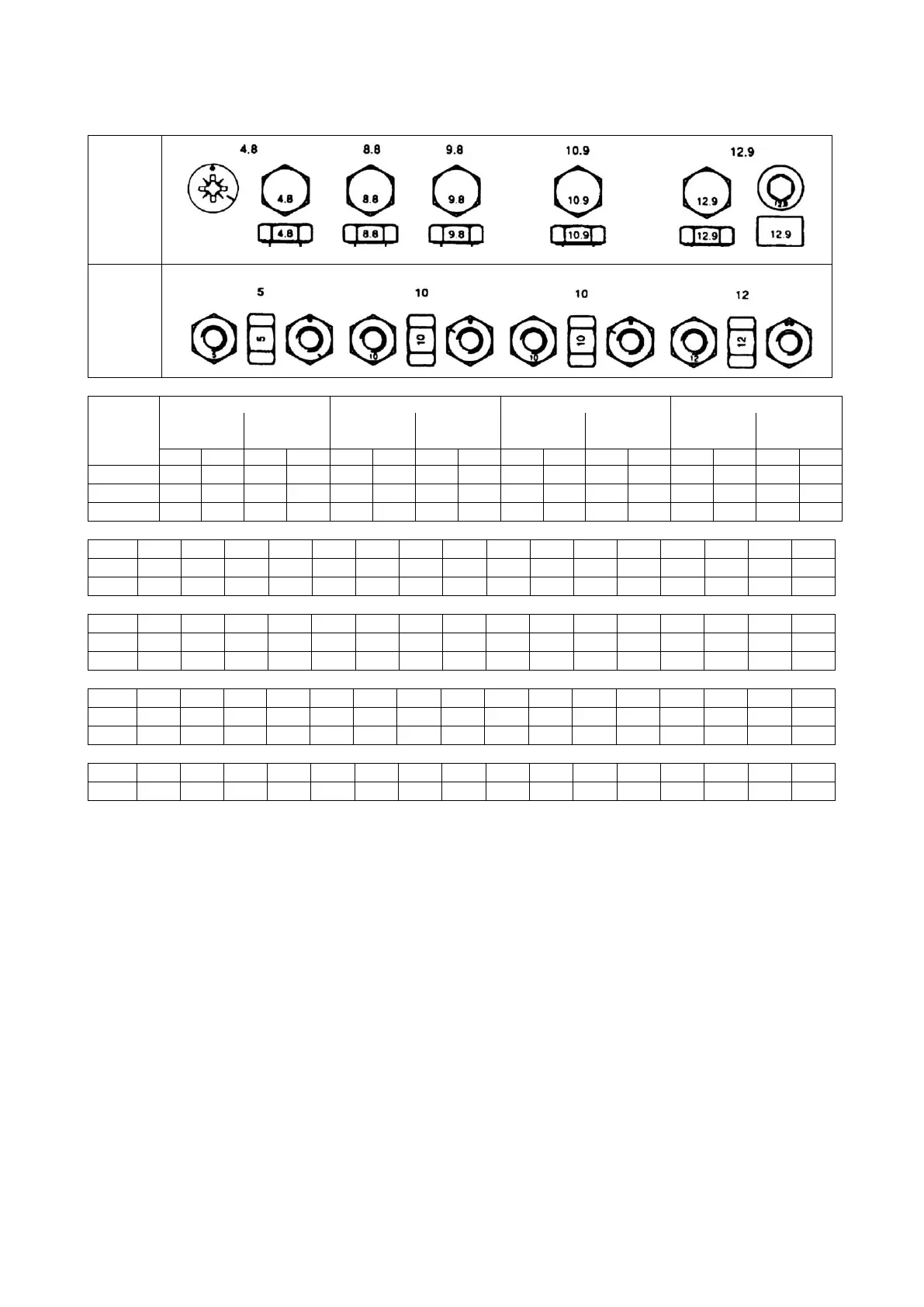
10.2. Metric bolt and cap screw torque values
Property
Class and
Head
Markings
Property
Class and
Nut
Markings
DO NOT use these values if a different torque value or
tightening procedure is given for a specific application.
Torque values listed are for general use only. Check
tightness of fasteners periodically.
Shear bolts are designet to fail under predetermined
loads. Always replace shear bolt with identical property
class
Fasteners should be replaced with the same or higher
property class. If higher property class
fasteners used, these should only be tightened to the
strength of the original.
Make sure fasteners threads are clean and that you
properly start thread engagement. This will prevent
therm from failing when tightening.
Tighten plastic insert or crimped steel-type lock nuts
to approximately 50 percent of the dry torque shown
in the chart, applied to the nut, not to the bolt head.
Tighten toothed or serrated-type lock nuts to the full
torque value.
** “Lubricated“ means coated with a lubricant such as engine oil, or
fasteners with phossphate and oil coatings.
** “Dry“ means plain or zinc platend without any lubrication.


 To Next Page