19
Start-Up Procedure
Check the furnace operation as outlined in the following
instructions. If any sparking, odors or unusual noises are
encountered, shut off electric power immediately. Recheck
for wiring errors or obstructions in or near fan motor (if
equipped).
WARNING: Natural gas heating value (BTU per cubic
foot) can vary significantly. Therefore, it is the installer’s
responsibility to see that BTU/hr. input to the furnace is
adjusted properly. Failure to do so could cause combustion
chamber failure, asphyxiation, fire or explosion resulting in
damage, bodily injury or death. Refer to the National Fuel
Gas Code (NFPA 54) to be sure the furnace is burning fuel
at the proper rate.
Check gas input and pressures
This furnace may not be used at elevations above 4,500 Feet.
Gas supply pressure and manifold pressure with the burner
operating must also be as specified on the nameplate.
Rated input will be obtained on a heating value of 2,500 BTU/hr.
for propane at 10-inches manifold pressure with factory-sized
orifices. If L.P. gas having a different heating value is supplied,
orifices must be changed by a qualified service technician
before the furnace is operated. CAN NOT BE MODIFIED TO BE
USEED ABOUE 4,500 FEET
Types of Gas
Natural
Manifold Pressure, in W.C.
3.4
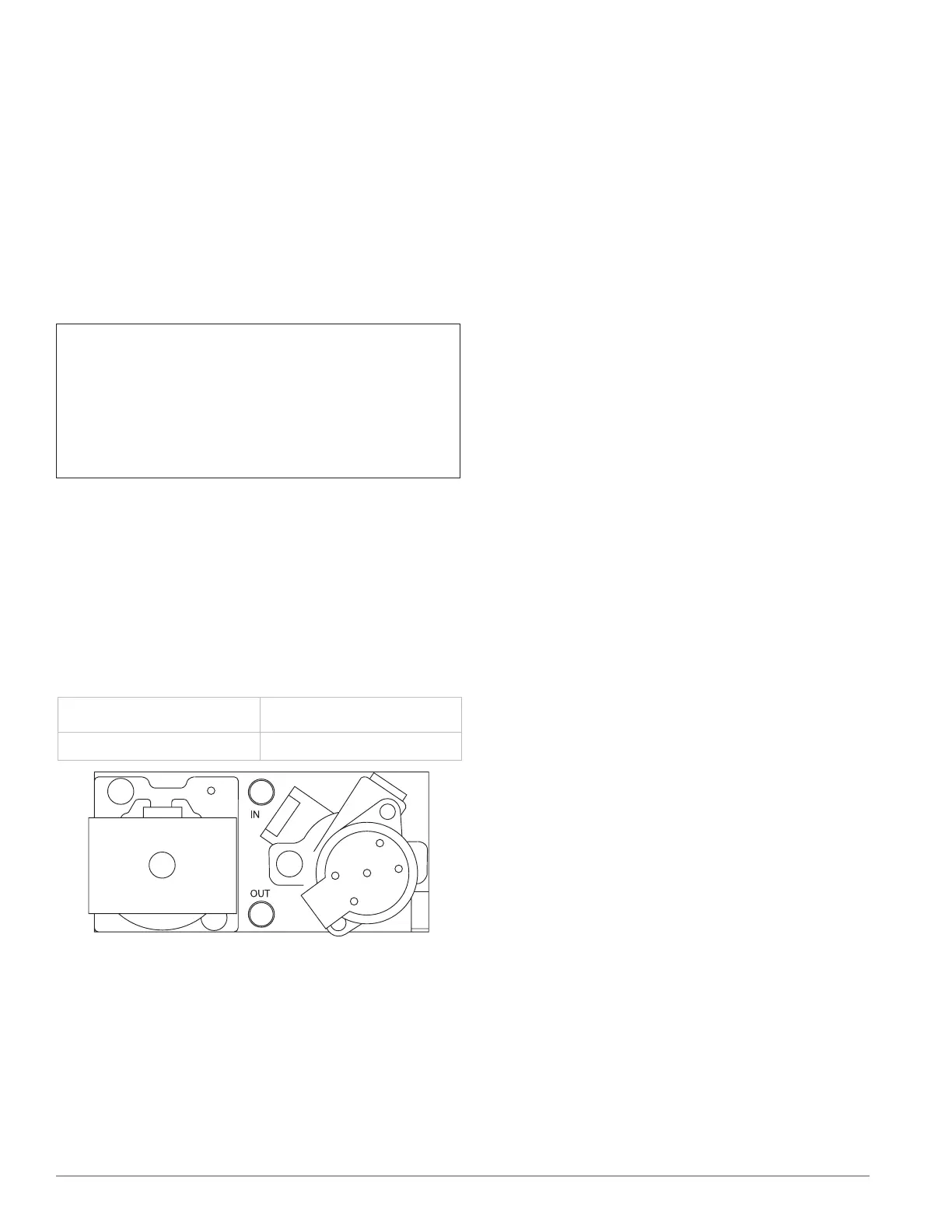
Check the manifold gas pressure
A tapped opening is provided in the gas valve to facilitate
measuring manifold gas pressure. A water column
manometer having a scale range from 0 to 12-inches of water
column should be used for this measurement. The manifold
pressure must be measured with the burner and pilot
operating. Any major changes in the flow must be made by
changing the size of the burner orifice.
Check the gas input (natural gas only)
Under firing could cause inadequate heat, excessive
condensation or ignition problems. Over firing could
cause shooting flame impingement or overheating of the
combustion chamber. Before starting natural gas input
check, obtain the heating value of gas (BTU per cubic foot)
at standard conditions from your local gas supplier.
To measure the input, using the gas meter, proceed as follows:
1. Turn off gas supply to all other appliances except the
furnace.
2. With the furnace operating, time the smallest dial on the
meter for one complete revolution. If this is a 2-cubic-foot
dial, divide the seconds by 2. If it is a 1-cubic-foot dial, use
the time in seconds as is. This gives the seconds per cubic
foot of gas being delivered to the furnace.
3. Assuming natural gas with a heating value of 1,000 BTU
per cubic foot and 34-seconds per cubic foot used as
determined by step (2), then: Seconds per hour = 3,600
Input = 1,000 x 3,600 / 34 = 106,000 BTU/hr. This measured
input must not be greater than the input
indicated on the nameplate of the furnace.
4. Relight all other appliances turned off in Step 1 above. Be
sure all pilots are operating.
Check thermostat
Check thermostat operation. The thermostat will turn on
the furnace when room temperature falls 2˚F below the
thermostat set point for more than 1 minute. The thermostat
will turn off the furnace when the room temperature is more
than 1˚F over set point for more than 1 minute.


 To Next Page