
 Need help?
Do you have a question about the Wilson Electronics weboost Drive Reach OTR and is the answer not in the manual?
Register your Signal Booster by taking a photo and sending it via text, email, or online.
Select a mounting location and assemble the outside antenna with the mast and side exit adapter.
Identify a suitable location for the inside antenna, at least 18 inches but no more than 36 inches from the device.
Place the booster, secure it, and connect the outside and inside antenna cables to the labeled ports.
Connect the power supply cord to the booster and plug the adapter into the vehicle's 12V DC power supply.
The weBoost Drive Reach OTR Cell Signal Booster is designed to enhance cellular signal strength within a vehicle, providing improved call quality, faster data speeds, and more reliable connectivity for users on the go. This system is particularly beneficial for those who frequently travel through areas with weak or inconsistent cellular coverage, such as rural roads, highways, or remote locations.
The core function of the Drive Reach OTR is to capture existing weak cellular signals from outside the vehicle, amplify them, and then rebroadcast the stronger signal inside the vehicle. This process ensures that cellular devices, such as smartphones and tablets, can maintain a more stable connection to the nearest cell tower. The "OTR" designation indicates that this booster is specifically designed for over-the-road vehicles, including trucks, RVs, and other large vehicles, offering robust performance and versatile installation options suitable for these environments.
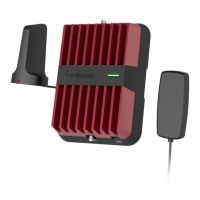
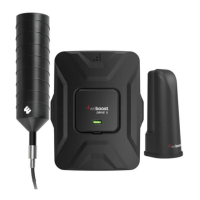
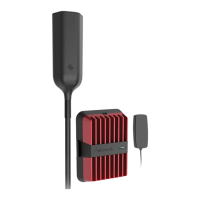
One of the primary usage features of the Drive Reach OTR is its comprehensive kit, which includes all necessary components for installation. The system typically comprises an outside antenna, an inside antenna, the signal booster unit itself, and a power supply. The outside antenna is designed to be mounted on the exterior of the vehicle, where it can capture signals from all directions. The kit often includes various mounting options to accommodate different vehicle types and preferences, such as mast extensions and a side exit adapter, allowing for flexible placement and optimal signal reception. For vehicles without built-in mounting points, a three-way mount is provided, which is particularly useful for attaching the antenna to mirror rails or other suitable structures. This versatility ensures that the system can be adapted to a wide range of vehicles, from personal trucks to commercial fleets.
The inside antenna is responsible for rebroadcasting the amplified signal within the vehicle's cabin. It is typically designed for easy placement, often attaching to the side of a seat or on the dash. The recommended placement for the inside antenna is usually at least 18 inches but no more than 36 inches from where the cellular device will be used, ensuring optimal signal distribution to the user's phone or tablet. This careful placement helps to maximize the effectiveness of the boosted signal, providing a strong and consistent connection for all occupants.
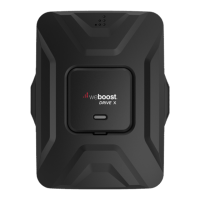
The signal booster unit, the "Drive Reach" component, is the central processing unit of the system. It takes the weak signal from the outside antenna, amplifies it significantly, and then sends the stronger signal to the inside antenna. The booster unit itself is compact and can be mounted in a convenient location within the vehicle, secured with a provided bracket. All cables are clearly labeled to ensure correct connection between the outside antenna, inside antenna, and the booster unit, simplifying the installation process.
Powering the system is straightforward, as the booster connects to the vehicle's 12V DC power supply, typically through a cigarette lighter adapter. This ensures that the booster can operate continuously while the vehicle is in use, providing uninterrupted signal enhancement. The system is designed for ease of use, with a focus on plug-and-play functionality once installed.
Maintenance features for the weBoost Drive Reach OTR are minimal, reflecting the robust and durable design of the product. The components are built to withstand the rigors of vehicle use, including varying weather conditions and vibrations. The outside antenna, in particular, is designed to be weather-resistant and durable, ensuring long-term performance even when exposed to the elements. Regular checks of cable connections to ensure they remain secure and free from damage are generally sufficient. The system does not require frequent adjustments or complex servicing.
For users who need assistance with installation or have questions about the product, weBoost provides comprehensive support. The manual directs users to product installation videos and additional resources available on their website, weboost.com/install. This online support helps users through each step of the installation process, from selecting the best mounting location to connecting all the components.
Furthermore, the product includes a registration process that allows users to register their signal booster. This registration, which involves taking a photo of a Photoregister Code and sending it in via text, email, or online, provides access to premium customer service, special offers, and more. This feature enhances the overall user experience by offering ongoing support and benefits.
In summary, the weBoost Drive Reach OTR Cell Signal Booster is a powerful and versatile solution for improving cellular connectivity in vehicles. Its robust design, flexible installation options, and user-friendly operation make it an ideal choice for anyone seeking to overcome the challenges of weak cellular signals while on the road. The system's focus on durability and ease of maintenance ensures a reliable and long-lasting performance, backed by comprehensive customer support.
 General
| Product Type | Cell Phone Signal Booster |
|---|---|
| Max Gain | 50 dB |
| Impedance | 50 Ohm |
| Frequency Bands | 1900MHz |
| Power | 12V DC |
| Compatible Carriers | All major carriers |
| Power Supply | DC power adapter |
| Outdoor Antenna | Omnidirectional antenna |
| Indoor Antenna | Low-profile indoor antenna |
| Operating Temperature | -30°C to 60°C |




 To Next Page