EasyManua.ls Logo

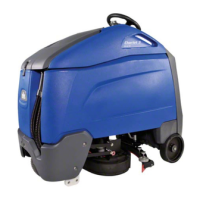
Windsor Chariot 3 iScrub 26 CS26 - User Manual

Windsor Chariot 3 iScrub 26 CS26
55 pages
Print Icon
To Next Page IconTo Next Page
Loading...
86395370-A 12/12/14
Chariot 3 iScrub 26
Scrubber
Operating instructions (ENG)
MODELS: CS26
10061500
CSC26
10061510
CSM26
10061580
CSCM26
10061590
CS26SP
10061520
CSC26SP
10061530
CSM26SP
10061600
CSCM26SP
10061610

Questions and Answers

  • B
    Brian RodriguezAug 17, 2025
    How to troubleshoot no power on my Windsor Chariot 3 iScrub 26 CS26?
    • K
      Kathryn JamesAug 18, 2025
      If your Windsor Scrubber has no power, several things could be the cause. First, check all battery cable connections to ensure they are secure. The emergency shut-off may be activated, so try resetting it. Corroded battery cables can also prevent power, so clean the connections. Other potential issues include a faulty key switch (which would need replacing), the on-board charger being plugged in (unplug it and stow the cord), or a tripped main circuit breaker (reset it).
  • S
    Sean RileyAug 20, 2025
    What to do if my Windsor Chariot 3 iScrub 26 CS26 Scrubber has poor water pickup?
    • H
      Hannah JenkinsAug 20, 2025
      If your Windsor Scrubber isn't picking up water, start by checking the squeegee for any caught debris and remove it. Inspect the squeegee blades for wear; rotate or replace them if needed. A clogged vacuum hose can also cause this issue, so clear any obstructions. Ensure the vacuum hose is securely connected to both the squeegee and the recovery tank dome. Clean the recovery tank float system if it's dirty. Make sure the recovery tank is sealed properly by latching the lid and replacing any damaged gaskets. If the tank is full, the float-ball shut-off may be engaged, so empty the recovery tank. Finally, if foam is filling the recovery tank, empty it and consider using less or a different detergent, or add a defoamer.
  • U
    ugreeneAug 22, 2025
    Why does my Windsor Chariot 3 iScrub 26 CS26 Scrubber have little or no propel?
    • R
      Reginald WeaverAug 22, 2025
      If your Windsor Scrubber has little or no propel, there are several potential causes. Start by ensuring the battery is fully charged. If the machine was turned on with the pedal not in neutral, allow the pedal to return to neutral and restart the machine. Check for a tripped circuit breaker and reset it if necessary. If the wheels are spinning, decrease the brush pressure. If the controller has overheated, allow a cool down period. Inspect for a loose motor connection by checking the wires and connections from the controller to the motor. Also, check the wires and connections from the potentiometer resistance, as well as the wires, connections, and switch for both the drive reset circuit and platform circuit.
  • M
    Mary PottsAug 26, 2025
    How to improve the scrubbing performance of my Windsor Scrubber?
    • R
      Ronnie HuntAug 26, 2025
      If your Windsor Scrubber's scrubbing performance is poor, start by checking the scrub brushes for any caught debris and remove it. Replace worn brushes or pads. Note that using an improper detergent, brush, or pad can affect scrubbing performance, so contact equipment or application specialists. Also, ensure that the battery is fully charged.
  • E
    Erin MoodyAug 27, 2025
    What to do if there is little or no solution flow to the floor with my Windsor Chariot 3 iScrub 26 CS26?
    • S
      Shawn BrownAug 27, 2025
      If your Windsor Scrubber has little or no solution flow to the floor, first check if the solution tank is empty and fill it if needed. Next, inspect the solution strainer for any clogs and clean it. Also, check the solution system plumbing for obstructions and clear them. Finally, the solution solenoid valve may be obstructed or faulty, so repair or replace it as necessary.
  • Y
    ymeyersAug 30, 2025
    Why is the vacuum motor on my Windsor Chariot 3 iScrub 26 CS26 not running or running slowly?
    • R
      Rhonda MasseyAug 30, 2025
      If the vacuum motor on your Windsor Scrubber doesn't run or runs slowly, inspect the vacuum circuit and switch, checking wires, connections, and the motor itself. Also, check the vacuum motor brushes for wear and replace them if needed, and inspect the commutator.
  • J
    Janet CampbellSep 1, 2025
    What causes the brush motors on my Windsor Scrubber to not run or run slowly?
    • T
      Timothy ClaytonSep 2, 2025
      If the brush motors on your Windsor Scrubber do not run or run slowly, ensure the battery is charged. Check the wires, connections, and motor for any issues in the brush circuit or motor itself. Also, inspect the brush motor brushes for wear and replace them if necessary, checking the commutator as well.
  • C
    Caroline RussellSep 4, 2025
    Why is the chemical metering system not operating on my Windsor Chariot 3 iScrub 26 CS26?
    • P
      pam53Sep 4, 2025
      If the chemical metering system on your Windsor Scrubber isn't working, start by checking if the chemical reservoir is empty and fill it if necessary. Inspect the chemical cap strainer for clogs and clean it. Clear any obstructions in the chemical system plumbing. If the flow meter is faulty, press the prime button; if chemical flows, repair or replace the flow meter. If the chemical pump is faulty, press the prime button; if chemical does not flow, repair or replace the pump.
  • J
    Jennifer BakerSep 7, 2025
    What to do if the squeegee on my Windsor Scrubber will not go up or down?
    • N
      Nicholas RobinsonSep 7, 2025
      If the squeegee on your Windsor Scrubber won't move up or down, check the wires, connectors, and actuator for any issues in the circuit or actuator itself. Also, inspect the cables and pulleys for faults and repair or replace them as needed.
  • S
    Sandra FordSep 9, 2025
    Why does the scrub deck on my Windsor Scrubber go down, then raise?
    • J
      justin77Sep 9, 2025
      If the scrub deck on your Windsor Scrubber goes down and then raises, check the wire connections and actuator for any faults in the actuator circuit or the actuator itself. Also, make sure brushes or pad drivers are installed on the machine.

Summary

Safety

Important Safety Instructions

Provides critical safety information and precautions for operating the machine.

Hazard Intensity Level

Defines hazard intensity levels using signal words like WARNING and CAUTION.

Safety Label Locations

Illustrates placement of safety labels on the machine for user awareness.

Operations

Technical Specifications

Lists detailed technical data, dimensions, and capacities of the machine.

Usage Safety Precautions

Warns against use by persons with reduced physical, sensory, or mental capabilities.

How This Machine Works

Explains the primary systems and overall function of the cleaning machine.

Component Identification

Lists and labels key machine components with numerical references for clarity.

Control Panel Overview

Provides a visual guide to the machine's control panel layout and features.

Drive Controls

Details the primary controls for operating the machine's movement and power.

Key, Emergency Stop, and Directional Controls

Explains operation of key switch, emergency stop, and directional controls.

Throttle, Horn, Steering, and Speed Controls

Details throttle pedal, horn button, steering wheel, and speed control.

Battery Indicator and Hour Meter

Describes the battery level indicator and the hour meter for maintenance tracking.

Scrub Controls

Explains the controls related to the scrubbing system and cleaning modes.

Function Mode Dial and Cleaning Modes

Details the function mode dial and various cleaning modes available.

Additional Scrub Modes and Solution Control

Covers heavy duty, vacuum-only, double scrub modes, and solution button.

Machine Operation Procedures

Outlines the step-by-step process for operating the machine.

Pre-Operation Checks and Starting

Details pre-run inspection and safe starting procedures for the machine.

Emergency Stops and Filling Tank

Covers emergency stop procedures and instructions for filling the solution tank.

Scrubbing Techniques and Systems

Explains efficient scrubbing patterns and optional chemical metering system.

Starting, Stopping, and Double Scrubbing

Provides instructions on beginning, stopping, and performing double scrubbing.

Tank Management

Covers procedures for emptying, cleaning tanks, and metering controls.

Tank Emptying, Cleaning, and Metering Controls

Details tank management and operation of chemical metering controls.

Squeegee System

Describes the components of the squeegee system for different machine types.

Disk Squeegee Components

Identifies parts of the disk squeegee: handle, hose, and wheels.

Cylindrical Squeegee Components

Identifies parts of the cylindrical squeegee: knobs, hose, and wheels.

Maintenance

Service Schedule

Outlines routine maintenance tasks and their recommended frequencies.

Batteries

Covers battery maintenance, charging, and replacement procedures.

Battery Component Identification

Labels the components related to the battery system for easy reference.

Wet Cell Battery Maintenance

Provides guidelines for maintaining wet cell batteries for peak efficiency.

Battery Maintenance Procedures

Outlines routine maintenance tasks for batteries, including cleaning and testing.

Checking Battery Specific Gravity

Explains how to check battery specific gravity using a hydrometer.

Charging Batteries Safely

Provides instructions and safety precautions for charging batteries.

Battery Charging Procedure

Details the step-by-step process for charging the machine's batteries.

Changing Batteries

Step-by-step guide for safely removing and replacing batteries.

Onboard Charger System

Details the optional onboard charger and its programming.

Onboard Charger Programming

Instructions for programming the on-board charger for different battery types.

Squeegee Maintenance

Covers maintenance and replacement of squeegee components.

Disk Squeegee Components

Identifies the squeegee and its retainer knob for the disk type.

Cylindrical Squeegee Components

Identifies the squeegee and its retainer knob for the cylindrical type.

Squeegee Blade Maintenance

Describes squeegee blade function, wear checks, and replacement criteria.

Removing Squeegee Assembly

Procedure for safely removing the squeegee assembly.

Replacing Disk Squeegee Blades

Instructions for replacing or rotating blades on the disk squeegee.

Replacing Cylindrical Squeegee Blades

Instructions for replacing blades on the cylindrical squeegee.

Scrub Deck Maintenance

Covers maintenance of scrub deck components for different models.

Disk Scrub Deck Components

Identifies components of the disk scrub deck: Aqua-mizer, skirt, motor, actuator.

Cylindrical Scrub Deck Components

Identifies components of the cylindrical scrub deck: skirt, debris hopper, actuator.

Scrub Brushes

Details types of scrub brushes and pads, and their applications.

Scrub Brush Types and Applications

Details four types of brushes and pad applications for different floor types.

Replacing Disk Scrub Brushes;Pads

Step-by-step guide for replacing disk brushes or pads.

Replacing Cylindrical Scrub Brushes

Instructions for replacing cylindrical scrub brushes and securing components.

Brush Motor Maintenance

Covers maintenance and replacement of brush motor components.

Brush Motor Carbon Brush Replacement

Procedure for replacing carbon brushes in the brush motors.

Replacing Scrub Brush Motors

Instructions for removing and installing scrub brush motors.

Scrub Deck Actuator Maintenance

Covers removal, replacement, and adjustment of the scrub deck actuator.

Actuator Removal and Replacement

Procedure for removing and reinstalling the scrub deck actuator.

Scrub Deck Actuator Adjustment

Steps for adjusting the scrub deck actuator after replacement.

Circuit Protection

Explains the electrical circuit protection mechanisms of the machine.

Main Circuit Breaker Function

Explains the function of the main circuit breaker for electrical overload protection.

Solution System Components

Details components of the solution system and their functions.

Solution System Parts Identification

Lists and identifies components of the solution system, including strainer and valve.

Solution Strainer and Solenoid Valve

Describes the function and location of the solution strainer and solenoid valve.

Optional Chemical Metering System Parts

Explains the chemical bottle, pump, and flow meter for the metering system.

Vacuum System Components

Details components of the vacuum system and their functions.

Vacuum System Parts Identification

Lists and identifies components of the vacuum system: float shut-off, motor, debris bin.

Recovery Tank Float Shut-off Maintenance

Details cleaning and maintenance of the recovery tank float shut-off.

Vacuum Motor Repair or Replacement

Procedure for repairing or replacing the vacuum motor.

Vacuum Motor Carbon Brush Replacement

Instructions for replacing carbon brushes in the vacuum motor.

Drive Motor System

Covers maintenance and operation of the drive motor and parking brake.

Drive Motor and Parking Brake Identification

Identifies the drive motor and parking brake components.

Electric Parking Brake Operation

Explains how the electric parking brake engages and disengages.

Drive Motor Carbon Brush Replacement

Details the procedure for replacing carbon brushes in the drive motor.

Transporting the Machine

Provides guidelines for safely transporting the machine.

Pushing and Tie-Down Procedures

Guidelines for pushing the machine and using tie-down points.

Trailer Loading and Unloading Preparation

Steps for preparing the machine for safe loading and unloading from a trailer.

Troubleshooting

Guides users through common problems and their solutions.

Troubleshooting: Power and Propel Issues

Lists common problems and solutions for power and propulsion issues.

Troubleshooting: Scrubbing and Solution Flow

Addresses issues related to scrubbing performance and solution flow.

Controller Fault Codes

Explains error codes displayed by the controller and their corresponding problems/solutions.

Interpreting Controller Fault Codes

Provides a guide to understanding controller fault codes for diagnostics.

Suggested Spare Parts - Disk

Illustrates and lists spare parts for the disk version of the machine.

Suggested Spare Parts - Cylindrical

Illustrates and lists spare parts for the cylindrical version of the machine.

Windsor Chariot 3 iScrub 26 CS26 Specifications

General IconGeneral
Cleaning path26 inches
Solution tank capacity25 gallons
Recovery tank capacity28 gallons
Power sourceBattery
Brush Deck Width26 inches
Battery voltage36 V
Brush Down PressureAdjustable

Related product manuals