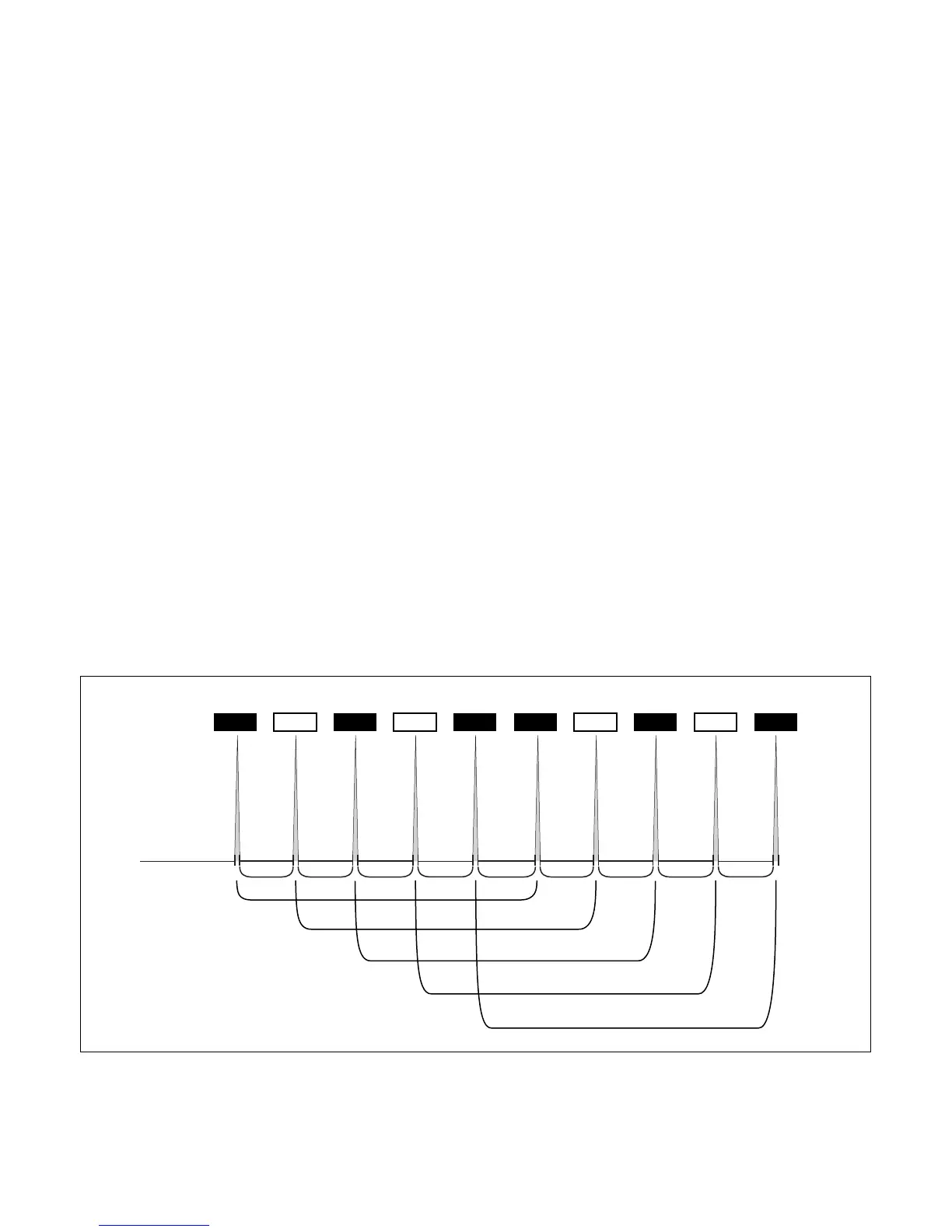
Q-DIVERSITYPLUS™ FREQUENCY DIVERSITY TECHNOLOGY
CH 5CH 4
Frequency
CH 1 CH 2 CH 3 CH 5CH 4CH 1 CH 2 CH 3
913.75 MHz
911.25 MHz903.75 MHz 906.25 MHz
908.75 MHz 926.25 MHz
923.75 MHz916.25 MHz 918.75 MHz
921.25 MHz
2.50 MHzChannel Separation
Q-DiversityPLUS™ Separation
12.50 MHz
2.50 MHz
2.50 MHz
2.50 MHz 2.50 MHz
2.50 MHz
2.50 MHz 2.50 MHz 2.50 MHz
12.50 MHz
12.50 MHz
12.50 MHz
12.50 MHz
What does it do?
Allows XDR95 to provide reliable performance under adverse RF conditions.
What is it?
A dual-frequency broadcast system that maximizes data isolation from undesired interference. It can also be thought of as two
completely separate ‘true-diversity’ systems operating in tandem. RX 1 and 4 work together to receive the lower frequency while
RX 2 and 3 work together to receive the upper frequency.
Do other types of technology use dual-frequency broadcast?
Multiple frequency broadcasts are not unique. OFDM would be an example of splitting up data over multiple frequencies.
However, X2’s proprietary Q-DiversityPLUS is unique for real-time audio applications.
Why do we need it?
Wireless systems are subject to increased interference due to known and unknown sources of RF interference, including DTV,
cell phones, blackberrys and networking devices. XDR95 was designed to address the needs of professional wireless users
requiring consistent reliable performance even in adverse conditions without any loss to sound quality.
How does it work?
In the transmitter, a proprietary digital data stream that includes a digital representation of the audio signal is split and modulated
on two separate RF carrier frequencies. The receiver contains a quadraplex of separate receiver sections that work simultane-
ously to receive the two RF signals. Two receiver sections are directly connected to two internal antennae, while two others are
fed RF signals via two chassis mounted BNC connectors. These sections work simultaneously to receive the two RF signals
that contain the transmitted digital data.
Why is it better?
Q-DiversityPLUS allows the XDR95 to exceed other wireless systems in terms of freedom from negative audio side-effects of
increased interference and longevity of performance in the field.
16
FIGURE 17



 To Next Page