EasyManua.ls Logo

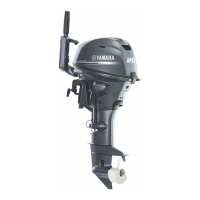
Yamaha F20A - User Manual

Yamaha F20A
232 pages
Print Icon
To Next Page IconTo Next Page
Loading...
F20A
F25A
FT25B
OWNER’S MANUAL
MANUEL D’UTILISATION
MANUAL DEL PROPIETARIO
65W-28199-77
GB
F
ES
65W-9-77 Hyoshi (1-3) 4/18/02 3:14 PM Page 1 (2,1)

Table of Contents

Other manuals for Yamaha F20A

Questions and Answers

  • B
    Brittany GriffinJul 27, 2025
    What to do if my Yamaha F20A engine will not start?
    • J
      Jessica GloverJul 27, 2025
      If your Yamaha Outboard Motor engine won't start but the starter is operating, several factors could be at play. First, ensure the fuel tank isn't empty and that you're using clean, fresh fuel. A clogged fuel filter could also be the culprit, so try cleaning or replacing it. Make sure you are following the correct starting procedure. Other potential issues include fouled or incorrect spark plugs (inspect, clean, or replace them), incorrectly fitted spark plug caps (check and refit), poor ignition wiring connections (check for wear, tighten, or replace wires), a missing engine stop switch lanyard (attach it), or damaged internal engine parts or fuel pump malfunctions, which would require servicing by a Yamaha dealer.
  • A
    Amber CervantesJul 31, 2025
    Why is the warning buzzer sounding on my Yamaha F20A Outboard Motor?
    • H
      Hunter HarrisonJul 31, 2025
      If the warning buzzer sounds or the indicator lamp lights on your Yamaha Outboard Motor, it could be due to several reasons. Check the water intake for any restrictions, as the cooling system might be clogged. Ensure the engine oil level is adequate and that you're using the specified engine oil. Also, the spark plug's heat range might be incorrect, so inspect and replace it if necessary. Other potential causes include contaminated or deteriorated engine oil (replace it), a clogged oil filter, or improperly distributed load on the boat (distribute the load evenly). For issues like a faulty water pump/thermostat or oil feed/injection pump malfunctions, it's best to have it serviced by a Yamaha dealer.
  • P
    powellheatherAug 5, 2025
    How to fix a Yamaha F20A when the starter will not operate?
    • E
      ephillipsAug 5, 2025
      If your Yamaha Outboard Motor's starter won't operate, begin by checking the battery condition and ensuring it has the recommended capacity. Weak or low battery capacity can prevent the starter from functioning. Next, inspect the battery connections for looseness or corrosion; tighten the cables and clean the terminals if needed. Also, verify if the fuse for the electric start circuit is blown and replace it with the correct amperage after identifying and fixing the cause of the overload. Ensure the shift lever is in neutral. If these steps don't resolve the issue, the starter components may be faulty, requiring service by a Yamaha dealer.
  • S
    Shawn GuzmanAug 20, 2025
    What causes a Yamaha Outboard Motor to vibrate excessively?
    • C
      Casey YoungAug 20, 2025
      Excessive vibration in your Yamaha Outboard Motor can be caused by a damaged propeller, which should be repaired or replaced. Alternatively, the propeller shaft could be damaged, requiring service by a Yamaha dealer. Check for weeds or foreign matter tangled on the propeller and remove them. Ensure the motor mounting bolts are tightened. If the steering pivot is loose or damaged, tighten it or have it serviced by a Yamaha dealer.
  • B
    Billy KhanNov 10, 2025
    Why is my Yamaha F20A losing power?
    • H
      Henry PetersonNov 10, 2025
      Loss of power in your Yamaha Outboard Motor can stem from various causes. Start by checking the propeller for damage and have it repaired or replaced if necessary. Ensure the propeller pitch and diameter are correct for optimal speed. Adjust the trim angle for efficient operation and verify that the motor is mounted at the correct height on the transom. Also, inspect for marine growth on the boat bottom and clean it. Other potential issues include fouled or incorrect spark plugs (inspect, clean, or replace them), weeds tangled on the gear housing (remove them), obstructions in the fuel system (check for pinched lines), a clogged fuel filter (clean or replace it), contaminated fuel (use fresh fuel), incorrect spark plug gap (inspect and adjust), poor ignition wiring (check and repair), or t...
  • S
    Sara ButlerNov 15, 2025
    What causes a Yamaha Outboard Motor to idle irregularly?
    • J
      Jacob SinghNov 15, 2025
      An Yamaha Outboard Motor that idles irregularly or stalls can be attributed to several factors. Begin by inspecting the spark plugs for fouling or incorrect type and clean or replace them as needed. Check the fuel system for any obstructions, such as pinched or kinked lines. Ensure the fuel is clean and fresh, and the fuel filter isn't clogged. Also, verify the spark plug gap is correct and the ignition wiring is in good condition. Make sure the air vent screw on the fuel tank is open, the motor angle is correct, and the fuel joint connection is properly connected. If the issue persists, it may be due to failed ignition parts, incorrect carburetor adjustments, a damaged fuel pump, a faulty thermostat, or a clogged carburetor, all of which require servicing by a Yamaha dealer. Additionally,...

Summary

Chapter 1 GENERAL INFORMATION

IDENTIFICATION NUMBERS RECORD

Record serial and key numbers for identification and reference.

EMISSION CONTROL INFORMATION

Details on emissions compliance for SAV models.

SAFETY INFORMATION

Essential safety precautions for operating the outboard motor and boat.

FUELING INSTRUCTIONS

Safe procedures for refueling the outboard motor.

ENGINE OIL

Recommended engine oil types and viscosity for 4-stroke motors.

BATTERY REQUIREMENT

Specifications for electric start models and battery connection precautions.

PROPELLER SELECTION

Guidance on choosing the correct propeller for optimal performance.

START-IN-GEAR PROTECTION

Explanation of the safety feature preventing engine start in gear.

Chapter 2 BASIC COMPONENTS

MAIN COMPONENTS

Identification of major outboard motor parts and their functions.

FUEL TANK

Description of the portable fuel tank's components and usage.

GEAR SHIFT LEVER

Operation of the gear shift lever for forward, neutral, and reverse gears.

RECOIL STARTER HANDLE

Procedure for starting the engine using the recoil starter handle.

TILLER HANDLE

Functions of the tiller handle, including throttle and stop switch.

Throttle Control Grip

How to operate the throttle control grip for speed adjustment.

Throttle Indicator

Understanding the fuel consumption curve on the throttle indicator.

Throttle Friction Adjusting Knob

Adjusting throttle friction for stable speed settings.

Engine Stop Lanyard Switch

Proper use of the engine stop lanyard switch for safety.

REMOTE CONTROL

Overview of remote control operation, including shifter and throttle.

Neutral Throttle Lever

Operation of the neutral throttle lever for engine warm-up.

Main switch

Operation of the main switch for ignition and starting.

Power Trim;Tilt Switch

Operation of the power trim/tilt switch for adjusting motor angle.

STEERING FRICTION ADJUSTING SCREW

Adjusting steering friction for smooth directional control.

TRIM TAB

Adjustment of the trim tab for steering balance.

TRIM ANGLE ADJUSTING ROD

Adjusting the trim angle using the adjusting rod.

WARNING INDICATOR(S)

Explanation of warning indicators and the warning system.

TILT LOCK MECHANISM

Function and operation of the tilt lock mechanism.

TOP COWLING LOCK LEVER

Procedure for removing and installing the top cowling.

FLUSHING DEVICE

Using the flushing device to clean cooling water passages.

WARNING SYSTEM

Overview of the engine warning system indicators.

OVERHEAT WARNING

What to do if the overheat warning device activates.

LOW OIL PRESSURE WARNING

Actions to take when the low oil pressure warning lamp activates.

Chapter 3 OPERATION

INSTALLATION

Precautions for correct outboard motor installation to prevent damage.

MOUNTING THE OUTBOARD MOTOR

Instructions for properly mounting the outboard motor on the boat.

Mounting Height

Determining the optimal mounting height for engine efficiency.

CLAMPING THE OUTBOARD MOTOR

Correct procedures for clamping the outboard motor to the transom.

BREAKING IN (RUNNING IN) ENGINE

Proper engine break-in procedure for optimal performance and engine life.

PRE-OPERATION CHECKS

Essential checks before operating the outboard motor.

CHECKING THE ENGINE OIL LEVEL

How to check and maintain the engine oil level.

FILLING FUEL

Step-by-step guide to safely filling the fuel tank.

STARTING ENGINE

Procedures for starting the engine safely, including safety warnings.

PROCEDURE FOR TILLER CONTROL MODEL

Specific starting procedures for tiller control models.

Manual Start Model

Instructions for starting the engine with a manual start system.

PROCEDURE FOR REMOTE CONTROL MODEL

Specific starting procedures for remote control models.

Electric Start Model

Instructions for starting the engine with an electric start system.

WARMING UP ENGINE

Importance of warming up the engine before operation.

SHIFTING

Procedures for shifting between forward, neutral, and reverse gears.

FORWARD

How to engage the forward gear safely.

REVERSE

Procedures for engaging reverse gear safely.

STOPPING ENGINE

Correct procedure for stopping the engine.

TRIMMING OUTBOARD MOTOR

Understanding trim angle and its effect on boat performance.

ADJUSTING TRIM ANGLE

How to adjust the trim angle for optimal boat handling.

Bow Up

Effects of bow-up trim on boat stability and performance.

Bow Down

Effects of bow-down trim on boat acceleration and handling.

TILTING UP;DOWN

Procedures for tilting the outboard motor up or down.

CRUISING IN SHALLOW WATER

Operating the motor in shallow water with specific precautions.

CRUISING IN OTHER CONDITIONS

General advice for operating in different water conditions.

CRUISING IN SALT WATER

Proper care after operating in salt water to prevent corrosion.

CRUISING IN TURBID WATER

Recommendation for optional equipment when operating in turbid water.

Chapter 4 MAINTENANCE

SPECIFICATIONS

Detailed technical specifications for the outboard motor models.

TRANSPORTING AND STORING OUTBOARD MOTOR

Guidelines for safe transporting and storing of the outboard motor.

STORING OUTBOARD MOTOR

Procedures for long-term storage to prevent damage.

Flushing Cooling System

How to flush the engine’s cooling system with fresh water.

Battery Care

Safety precautions and maintenance for the boat battery.

PERIODIC MAINTENANCE

Importance of regular maintenance and using genuine parts.

MAINTENANCE CHART

Schedule of maintenance tasks and their intervals.

GREASING

Locations and types of grease to use for lubrication points.

CLEANING AND ADJUSTING SPARK PLUG

How to inspect, clean, and adjust spark plugs.

INSPECTING FUEL FILTER

Procedure for inspecting and replacing the fuel filter.

ADJUSTING IDLING SPEED

Steps for adjusting the engine's idling speed.

CHANGING ENGINE OIL

Instructions for draining and refilling the engine oil.

CHECKING TIMING BELT

How to inspect the timing belt for wear and damage.

REPLACING FUSE

Procedure for replacing a blown fuse in electric start models.

CHECKING WIRING AND CONNECTORS

Inspecting electrical wiring and connectors for secure connections.

EXHAUST LEAKAGE

Checking for exhaust leaks from engine joints.

WATER LEAKAGE

Checking for water leaks from engine joints.

CHECKING POWER TRIM AND TILT SYSTEM

Procedures for checking the power trim and tilt system for leaks and function.

CHECKING PROPELLER

Inspecting the propeller for damage, wear, and obstructions.

Removing the Propeller

Step-by-step guide to removing the propeller.

Installing the Propeller

Instructions for correctly installing the propeller.

CHANGING GEAR OIL

Procedures for draining and refilling the gearcase oil.

CLEANING FUEL TANK

Safe procedures for cleaning the fuel tank.

INSPECTING AND REPLACING ANODE(S)

Checking and replacing sacrificial anodes for corrosion protection.

CHECKING BATTERY

Safety precautions and checks for the boat battery.

CHECKING BOLTS AND NUTS

Verifying the tightness of critical bolts and nuts.

CLEANING COOLING-WATER PASSAGES

How to clean the engine’s cooling water passages.

MOTOR EXTERIOR

Cleaning and inspecting the exterior of the outboard motor.

COATING THE BOAT BOTTOM

Importance of hull cleaning and anti-fouling paint.

Chapter 5 TROUBLE RECOVERY

TROUBLESHOOTING

Chart detailing common engine problems, causes, and remedies.

TEMPORARY ACTION IN EMERGENCY

Immediate actions to take in emergency situations.

IMPACT DAMAGE

Procedures for addressing damage caused by collision.

STARTER WILL NOT OPERATE

Troubleshooting steps when the starter mechanism fails.

TREATMENT OF SUBMERGED MOTOR

Procedures for treating an outboard motor that has been submerged.

Chapter 6 INDEX

INDEX

Alphabetical listing of topics and their corresponding page numbers.

Yamaha F20A Specifications

General IconGeneral
BrandYamaha
ModelF20A
CategoryOutboard Motor
LanguageEnglish

Related product manuals