EasyManua.ls Logo

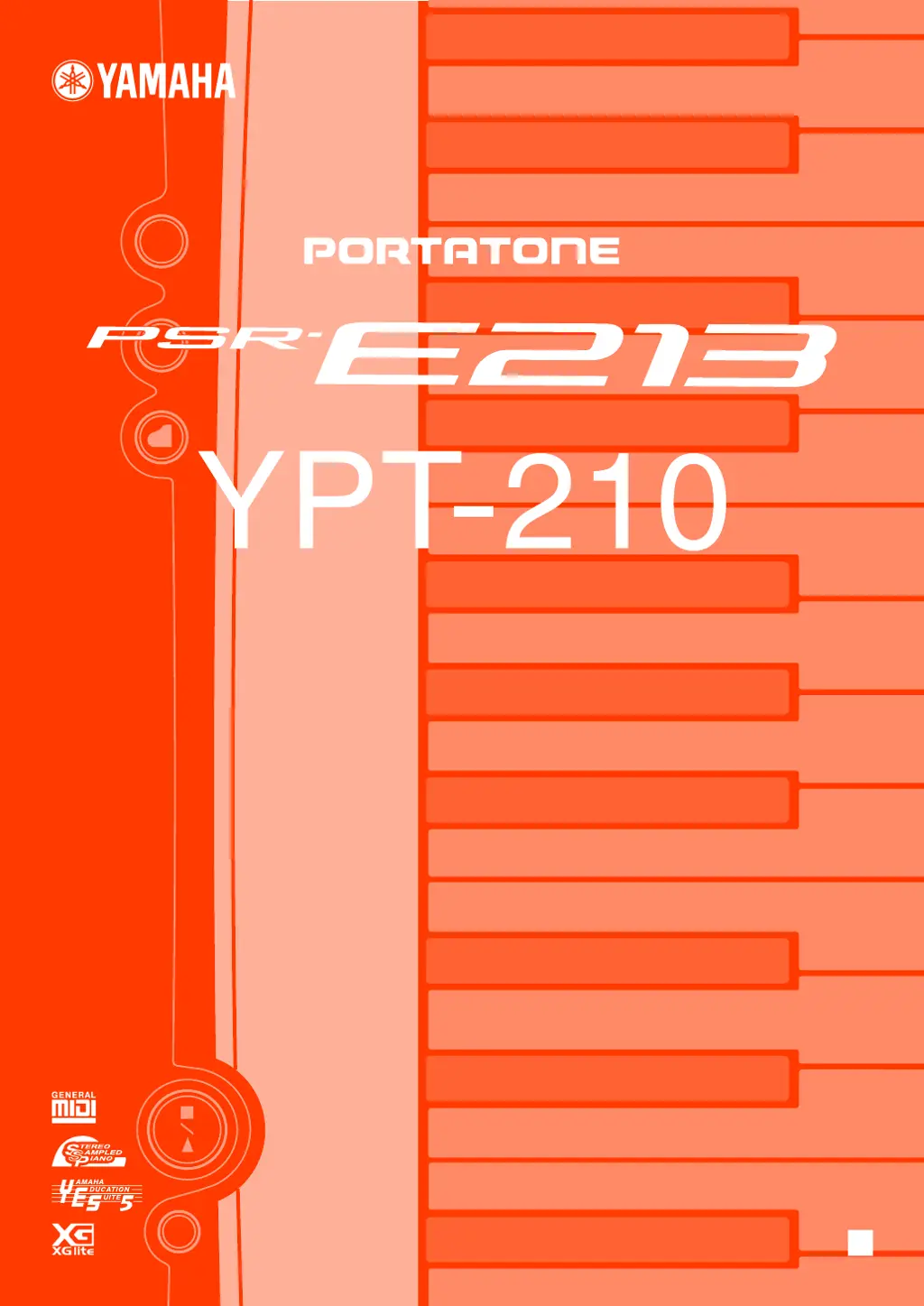
Yamaha PSR-E213 - User Manual

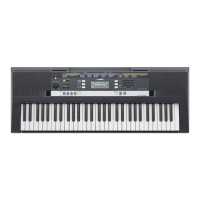
Yamaha PSR-E213
72 pages
Print Icon
To Next Page IconTo Next Page
Loading...
Owner’s Manual
EN

Table of Contents

Questions and Answers

  • R
    Robert WardSep 12, 2025
    What to do if ACMP ON indicator doesn't appear on my Yamaha Electronic Keyboard?
    • M
      Mary RossSep 12, 2025
      If the ACMP ON indicator does not appear when the [ACMP ON/OFF] button is pressed on your Yamaha Electronic Keyboard, always press the [STYLE] button first when you are going to use any style-related function.
  • B
    brittanyrodriguezSep 13, 2025
    Why don't the part indications appear on my Yamaha Electronic Keyboard during a lesson?
    • W
      William HahnSep 13, 2025
      If the part indications, such as Right, Left and Both Hands, do not appear on your Yamaha Electronic Keyboard—even when pressing the [R] or [L] buttons for the Lesson, make sure that you are not pressing the [R] or [L] buttons while the Song is playing. Stop the Song first, then select the desired part and start the Lesson.
  • G
    grodriguezSep 15, 2025
    Why doesn't the volume change when I press harder on my Yamaha PSR-E213 Electronic Keyboard?
    • J
      Jake MorrisonSep 15, 2025
      Since this Yamaha Electronic Keyboard does not have touch response, the level of the sound does not change in response to your playing strength.

Summary

FCC Information (U.S.A.)

Important Notice: Do Not Modify This Unit!

Warnings against unauthorized modifications to the unit.

Precautions

Warning

Basic precautions to avoid serious injury or death.

Caution

Basic precautions to avoid physical injury or damage.

Setting Up

Power Requirements

How to connect the AC adaptor or use batteries.

Using an AC Power Adaptor

Detailed steps for connecting the AC power adaptor.

Using Batteries

Detailed steps for inserting batteries.

Setting Up (Connections)

Turning On the Power

How to turn the instrument on and adjust the volume.

Quick Guide - Changing Voices

Power On and Volume Adjustment

Steps to power on the instrument and adjust master volume.

Quick Guide - Changing Voices (Continued)

Quick Guide - Playing Songs

Selecting and Listening to Songs

How to select and play a built-in song.

Quick Guide - Playing Songs (Continued)

Quick Guide - Playing with a Style

Selecting a Style Rhythm

How to select and start a Style rhythm.

Quick Guide - Playing with a Style (Continued)

Playing with Auto Accompaniment

How to use auto accompaniment and sync start.

Playing Chords with Styles

Details on playing chords and melodies with styles.

Basic Operation and Displays

Basic Operation (Power;Volume)

Steps to power on the instrument and adjust master volume.

Basic Operation and Displays (Continued)

Song Lesson

Lesson 1: Listen & Learn

How to use Lesson 1 to listen and learn a song.

Song Lesson (Continued)

Lesson 1 Operation Details

Details on selecting parts and stopping Lesson 1.

Lesson 2: Timing

How to play notes with correct timing in Lesson 2.

Lesson 3: Waiting

How to play correct notes and wait for the right timing in Lesson 3.

Song Settings

Song Settings (Continued)

Play With Effects

Play With Effects (Continued)

Handy Performance Features

Setting the Split Point

How to set the split point for the keyboard.

Transpose Function

How to shift the overall pitch of the instrument.

Handy Performance Features (Continued)

Tuning

How to fine-tune the pitch of the instrument.

Song;Style Tempo Control

How to adjust the tempo for songs and styles.

Style (Auto Accompaniment) Functions

Starting Style Playback

Methods for starting style playback (Immediate, Chord, Tap).

Style (Auto Accompaniment) Functions (Continued)

Stopping Style Playback

Methods for stopping style playback (Immediate, Sync Start, Ending).

Playing Auto Accompaniment Chords

Easy Chords

How to play simple chords using one to three fingers.

Standard Chords

How to play chords using normal fingerings.

Playing Auto Accompaniment Chords (Continued)

Function Settings

Selecting and Changing Values

How to navigate and change settings using the FUNCTION button.

Function Settings (Continued)

Troubleshooting

Troubleshooting Guide

Common problems and their possible causes and solutions.

Specifications

Specifications

Technical specifications of the instrument.

Yamaha PSR-E213 Specifications

General IconGeneral
MIDI-keyboard number of keys61 keys
Product colorBlack
Compatible productsGM XGlite
Interface-
DC-in jackYes
Dimensions (WxDxH)945 x 348 x 110 mm
Power requirements12 V
Power source typeDC
Power consumption (typical)10 W
Weight and Dimensions IconWeight and Dimensions
Weight4400 g

Related product manuals