EasyManua.ls Logo

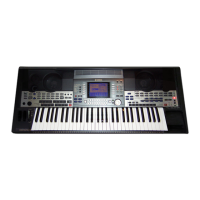
Yamaha PSR-S975 - User Manual

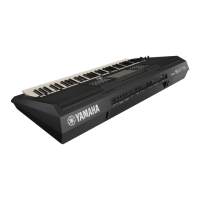
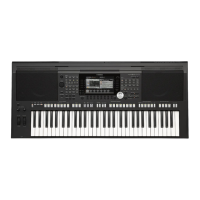
Yamaha PSR-S975
118 pages
Print Icon
To Next Page IconTo Next Page
Loading...
FR
EN
Thank you for purchasing this Yamaha Digital Workstation!
This electric keyboard for professional entertainers not only has a wide selection of Voices and
versatile functions but also gives you the potential of expanding content for the instrument.
We recommend that you read this manual carefully so that you can fully take advantage of the
advanced and convenient functions of the instrument. We also recommend that you keep this
manual in a safe and handy place for future reference.
Before using the instrument, be sure to read “PRECAUTIONS” on pages 5 – 6.
Merci d'avoir choisi ce Clavier Arrangeur Professionnel Yamaha !
Ce clavier électrique destiné aux professionnels dispose d’une large sélection de sonorités
et de fonctions polyvalentes et offre un potentiel considérable pour l’élargissement des
contenus de l'instrument.
Nous vous conseillons de lire attentivement ce mode d'emploi afin de tirer pleinement profit
des fonctions avancées et très utiles de votre instrument. Nous vous recommandons
également de garder ce manuel à portée de main pour toute référence ultérieure.
Avant d'utiliser l'instrument, lisez attentivement la section « PRÉCAUTIONS
D'USAGE » aux pages 5 et 6.
English
Français
Digital Workstation
Clavier Arrangeur Professionnel
Owners Manual
Mode d'emploi

Table of Contents

Other manuals for Yamaha PSR-S975

Questions and Answers

  • A
    Alexander AllenAug 18, 2025
    What to do if style doesn't start on Yamaha Musical Instrument?
    • D
      Deborah TurnerAug 18, 2025
      If the Style does not start even when the [START/STOP] button is pressed on your Yamaha Musical Instrument, the Rhythm channel of the selected Style may not contain any data. Turn the [ACMP] button on and play the left-hand section on the keyboard to sound the accompaniment part of the Style.
  • T
    taylorglennAug 23, 2025
    Why is my Yamaha Musical Instrument sound distorted?
    • K
      Kim SanchezAug 23, 2025
      If the sound from your Yamaha Musical Instrument is distorted or noisy, it could be due to the volume being set too high. Ensure that all volume settings are at appropriate levels. Alternatively, certain effects or filter settings might be causing the distortion. Check these settings and adjust them accordingly.
  • U
    uwilsonAug 26, 2025
    What to do if only rhythm channel plays on Yamaha Musical Instrument?
    • P
      perrymeaganAug 26, 2025
      If only the rhythm channel is playing on your Yamaha Musical Instrument, ensure that the Auto Accompaniment function is turned on by pressing the [ACMP] button. Also, make sure you are playing keys in the chord section of the keyboard. Finally, check if the Track Mute function has been assigned to the LIVE CONTROL knob(s) and reset the value if necessary.
  • A
    Adam JonesAug 28, 2025
    Why don't all notes sound on my Yamaha Musical Instrument?
    • D
      Derrick CarrAug 28, 2025
      If not all simultaneously played notes sound on your Yamaha Musical Instrument, you are likely exceeding the instrument's maximum polyphony. When this happens, the earliest played notes will stop sounding to allow the latest played notes to be heard.
  • P
    prestonkathleenAug 30, 2025
    How to adjust keyboard volume relative to song volume on Yamaha Musical Instrument?
    • S
      Scott AndersonAug 30, 2025
      If the keyboard volume is lower than the Song/Style playback volume on your Yamaha Musical Instrument, the volume of the keyboard parts may be set too low. Increase the volume in the BALANCE display.
  • M
    Mr. Steven WoodsSep 2, 2025
    Why does song playback stop early on Yamaha Musical Instrument?
    • L
      larry93Sep 2, 2025
      If song playback stops before the song is finished on your Yamaha Musical Instrument, the Guide function may be turned on. If this is the case, playback is waiting for the correct key to be played. Press the [GUIDE] button to turn off the Guide function.
  • A
    Amy BauerSep 4, 2025
    Why can't I select songs on my Yamaha Musical Instrument?
    • M
      Michael AllisonSep 4, 2025
      If songs cannot be selected on your Yamaha Musical Instrument, it may be because the language settings have been changed. Set the appropriate language for the Song file name. Alternatively, if the size of the Song data is large (about 300 KB or greater), the Song cannot be selected because the data is too large to be handled by the instrument.
  • M
    Michael StoneSep 7, 2025
    What to do if main display doesn't appear on Yamaha Musical Instrument?
    • J
      Joseph OrozcoSep 7, 2025
      If the Main display does not appear even when turning the power on for your Yamaha Musical Instrument, this may occur if a USB flash drive has been installed to the instrument. Installation of some USB flash drives may result in a long interval between turning the power on and appearance of the Main display. To avoid this, turn the power on after disconnecting the device.
  • A
    Aimee DavisSep 9, 2025
    Why won't my Yamaha Musical Instrument play songs?
    • J
      Jose GarciaSep 9, 2025
      If song playback does not start on your Yamaha Musical Instrument, the song may have been stopped at the end of the song data. Return to the beginning of the song by pressing the SONG [J] (STOP) button. In the case of a Song to which write-protect has been applied, there are some restrictions and playback may not be possible.
  • R
    randallwilkinsonSep 12, 2025
    How to restore original audio playback volume on Yamaha Musical Instrument?
    • J
      Judy McdonaldSep 12, 2025
      Setting the volume value to 100 plays back the file at the same volume as when it was recorded on Yamaha Musical Instrument.

Summary

Welcome to Digital Workstation

Panel Controls and Terminal Locations

Top and Rear Panel Controls

Details the controls and connectors on the top and rear of the instrument.

Instrument Setup Procedures

Power and Initial Setup

Covers power connection, turning on/off, and essential initial configurations.

Display and Demo Settings

Explains adjusting volume, display language, and using the demo feature.

Core Instrument Operations

Navigating the Interface

Explains how to use the LCD, direct access, and understand on-screen messages.

File Management and Operations

Covers saving, creating, renaming, copying, deleting files and folders.

Understanding and Using Voices

Playing and Controlling Voices

Explains how to play voices, adjust pitch, and use performance controls.

Voice Effects and Customization

Details applying effects, creating custom voices, and installing expansion packs.

Working with Styles and Accompaniment

Playing Styles and Auto Accompaniment

Explains how to select and play styles with automatic accompaniment.

Style Playback Control and Settings

Covers playback controls, tempo, chord fingering, and one-touch settings.

Playing and Recording Songs

Playing, Practicing, and Recording Songs

Explains song playback, notation/lyrics display, and recording performances.

USB Audio Playback and Recording

Playing and Recording Audio Files

Covers playing WAV/MP3 files and recording performances as audio.

Using Multi Pads for Performance

Playing and Creating Multi Pads

Explains how to play pre-recorded phrases and create new ones with audio files.

Music Finder: Panel Setup Assistance

Selecting, Searching, and Managing Music Finder Records

Covers finding, searching, downloading, and registering panel setups.

Saving and Recalling Panel Settings

Saving and Recalling Panel Setups

Explains how to register, save, and recall panel settings.

Microphone and Guitar Input Functions

Connecting and Initial Setup

Covers connecting mics/guitars and initial gain/switch settings.

Vocal Harmony, Vocoder, and Talk Functions

Details vocal harmony, vocoder effects, and the talk function.

Using the Mixing Console for Sound Control

Using the Mixing Console

Explains how to use the mixing console for volume, balance, and effect settings.

Connecting External Devices and Interfaces

Connecting External Devices

Details connections for pedals, audio devices, monitors, USB, and smart devices.

Advanced Instrument Functions

Function Menu and Direct Access Chart

Introduces the function menu, its list, and the direct access chart.

Troubleshooting Common Issues

Instrument Specifications

Yamaha PSR-S975 Specifications

General IconGeneral
Polyphony128 notes
Time StretchYes
Pitch ShiftYes
Vocal CancelYes
Amplifiers15 W x 2
Keyboard61 keys
Display7-inch TFT color display
Featured StylesDJ Styles
EffectsReverb, Chorus, DSP, Master EQ
Recording16-track MIDI
USB Audio PlaybackMP3, WAV
LyricsYes
Speakers2 x 15W
Power SupplyPA-300C or an equivalent recommended by Yamaha
ConnectivityUSB TO DEVICE, USB TO HOST, MIDI IN/OUT
Expansion VoiceYes
FunctionsArpeggio, Harmony
Multi PadsYes
Featured VoicesSuper Articulation, Organ Flutes!

Related product manuals