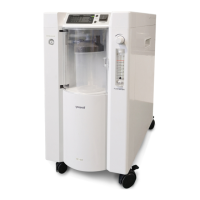
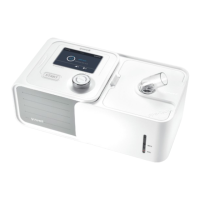
This document describes the 7F-5A/7F-5AW Oxygen Concentrator, a medical device designed to supply oxygen to patients for the treatment of various conditions and for general health improvement.
Function Description
The oxygen concentrator is primarily composed of an oxygen-making host, a flow meter, and a humidifier. It features a safety plastic shell and includes a time collection function that displays the operation time on an LCD. The device is equipped with a power loss alarm function and a device failure alarm function, which covers pressure/cycle failure, compressor failure, and low oxygen concentration. A thermal protector for the compressor ensures enhanced security. The 7F-5AW model also includes a nebulizer function.
The device is intended for use in hospitals and homecare settings to provide oxygen therapy. It can assist in the treatment of heart, head, and blood vessel conditions, respiratory system diseases such as chronic obstructive pneumonia, and rehabilitation for hypoxic conditions. Oxygen therapy can also improve overall body function, being particularly beneficial for the elderly, pregnant women, students, and individuals experiencing physiological hypoxia. It may also help reduce fatigue after significant physical or mental exertion.
Important Technical Specifications
- Maximum Recommended Flow: 5L/min
- Flowrate at Nominal Outlet Pressures (0 and 7kPa): 0.5~5L/min
- Change in Maximum Recommended Flow (with 7kPa back pressure): 0.5L/min
- Oxygen Concentration: ≥90%
- Limited Pressure: 40kPa~70kPa
- Pressure Relief Mechanism Operational at: 250kPa ± 50kPa (36.25psi ± 7.25psi)
- Noise Level: ≤60dB (A)
- Maximum Nebulization Rate (7F-5AW): ≥0.1mL/min
- Power Supply: AC220V ± 22V, 50Hz ± 1Hz
- Input Power: 500VA
- Weight: 17kg
- Dimensions: H38.5cm (15.2”) x W25.5cm (10.0") x D47.5cm (18.7")
- Altitude: Operates without degradation up to 1828 meters (6000 ft); below 90% efficiency from 1828 meters (6000 ft) to 4000 meters (13129 ft).
- Minimum Operating Time: 30 minutes
- Electric Classification: Class II, type BF application part
- Work System: Continuous operation
- Enclosures Protection Classification: IPX0
- Normal Operation Conditions:
- Temperature Range: 10℃~40℃ (50℉~104℉)
- Relative Humidity: 30%~75%
- Atmosphere Pressure: 860hPa~1060hPa (12.47psi~ 15.37psi)
- Temperature at Oxygen Outlet: ≤46°C
- Suggested Nasal Oxygen Cannula Length: Less than 15.2 meters, should not be pinched.
- Transportation and Storage Conditions:
- Temperature Range: -20°C~+55℃ (-4°F ~ +131℉)
- Relative Humidity: 10%~93%, no condensation
- Atmosphere Pressure: 700hPa~1060hPa (10.15psi ~ 15.37psi)
Safety System:
- Automatic shutdown for current overload or loose connection.
- Automatic shutdown for compressor with abnormal high temperature.
- Automatic shutdown for high & low pressure alarm function.
- Automatic shutdown for compressor error function.
- Low oxygen concentration alarm function.
Usage Features
Before Installation:
- Always keep the concentrator upright during transport to prevent cabinet damage.
- A voltage stabilizer should be used if the electrical source voltage is outside the normal range.
- Use an eligible and safe power set and junction box.
- Only authorized technicians should open the cabinet.
- For exigent oxygen users and serious patients, a reserve oxygen supply (e.g., oxygen cylinder, oxygen bag) is recommended in case of power outage or device failure. This device is an oxygen supplement and not for life support.
Storage Place:
- Select a suitable room and use casters to move the concentrator.
- Maintain at least 10cm (4 inches) clearance from walls, draperies, furniture, or other obstructions. Do not place in a confined area.
- Avoid heat, fire, moisture, and extreme temperatures (exorbitant or over-low).
- Do not place sundries or vessels on top of the concentrator.
- Never block the air inlet or place the unit on soft surfaces where the inlet might be blocked. Keep the inlet free from lint, hair, etc.
During Use:
- Users MUST NOT SMOKE while using the device. Keep all ignition sources away. Display "NO SMOKING" signs prominently. Oxygen-enriched air can intensely ignite textiles and other materials.
- For optimum performance, avoid frequent turning on/off; reset after 3-5 minutes. Shorter operation periods can reduce product life.
- Prevent oil, grease, or greasy substances from contacting the oxygen concentrator, tubing, connections, or other oxygen equipment, as this can cause spontaneous and violent ignition. Use only manufacturer-recommended lubricants.
- Avoid using while bathing. If continuous use is prescribed, the concentrator must be in another room at least 2.5m away.
- DO NOT contact the concentrator while wet or if it has fallen into water. Unplug immediately.
- Never leave the product unattended when plugged in.
- Use only as prescribed by a doctor and according to this manual. If oxygen supply is insufficient, contact the supplier/doctor immediately. Do not adjust flowrate unless prescribed.
- Close supervision is necessary near children or individuals with disabilities.
- Use only manufacturer-authorized parts, accessories, or adapters.
- DO NOT connect with other oxygen concentrators or oxygen therapy devices.
- Some administration accessories or humidifiers not specified for use may impair performance.
- Avoid creating sparks near medical oxygen equipment, including static electricity from friction.
- If storage temperature is below 5°C, operate the equipment for at least 4 hours before use.
- Store the oxygen concentrator without intense sunlight, corrosive gas, and in a well-ventilated room. Avoid jolting and inverted transport.
Oxygen Absorbing Operation:
- Open the transparent door, unscrew the humidifier bottle counter-clockwise.
- Fill the bottle with pure or distilled water to the indicated level (MAXIMUM/MINIMUM).
- Screw the bottle securely back clockwise.
- Close the transparent door.
- Ensure the power switch is off, then plug in the device. Do not use an extended power line.
- Turn the power switch to " | ". The LCD will show "HELLO", and green, yellow, and red indicators will light up, indicating normal machine status. The green indicator will remain lit after 1 second. After 4 seconds, the LCD will show elapsed time and time setting interface, and the machine will enter normal operation.
- Turn the flowrate knob to adjust oxygen flow (read the center of the black ball). Turn anticlockwise to increase flowrate, clockwise to decrease. Air bubbles will appear around the sieve core in the humidifier bottle, and oxygen will flow from the outlet.
- Connect the nasal oxygen cannula to the humidifier's oxygen outlet, and the other end to the patient.
- Adjust oxygen absorption time and flowrate according to doctor's advice.
- If the humidifier makes a continuous sound, the nasal oxygen cannula is jammed; clear the pipeline.
- If flowrate falls below 0.5L/min, check for blocked or kinked tubing or a defective humidifier bottle.
Nebulizing Operation (7F-5AW):
- Fill the nebulizing cup with medicinal liquid (follow doctor's advice for nebulizing time and do not exceed maximum scale).
- Pull the nebulizing cover upward from the nebulizing interface.
- Connect the air hose to the nebulizing cup and interface.
- Turn on the power to begin nebulizing.
- Follow doctor's advice for nebulizing time.
- After nebulizing, turn the nebulizing cover right to tighten it to the interface.
- Turn off the concentrator when treatment finishes.
- Screw the nebulizing cover when finished.
Alarm Signals:
The machine has detection functions for pressure/cycle failure, compressor failure, and low oxygen concentration. These are low-priority alarms.
- Oxygen Concentration ≥ 82%: Green indicator lights, LCD shows "elapsed time ---", machine is in good condition.
- Oxygen Concentration < 82%: Yellow indicator lights, LCD shows "elapsed time ---". Contact supplier. Users can continue use with backup oxygen nearby.
- Pressure/Cycle Failure (E1 or E2): Red indicator lights with continuous alarm sound, LCD shows "E1" or "E2". Machine stops. Shut down, use backup oxygen, contact supplier.
- Compressor Failure (E3 or E4): Red indicator lights with continuous alarm sound, LCD shows "E3" or "E4". Machine stops. Shut down, use backup oxygen, contact supplier.
- Power Loss Alarm: Red indicator turns on, alarm sounds, no display. Machine must be shut down. Check power input.
Turning Off:
- Remove the nasal oxygen cannula from the oxygen outlet.
- Close the power switch.
- Cut off the power source.
Maintenance Features
General:
- WARNING: CUT OFF the power supply first to avoid electrical shock. DO NOT remove the cabinet.
- Only authorized or trained technicians should perform maintenance or adjustments.
- Manufacturer recommends each operation time should not be less than 30 minutes to extend machine life.
Cleaning Cabinet:
- Clean the cabinet with a mild household cleaner and a non-abrasive cloth or sponge at least once a month.
Cleaning or Replacing Filters:
- Clean and replace filters in time to protect the compressor and extend machine life.
- CAUTION: DO NOT operate the concentrator without filters installed.
- The mesh filter should be cleaned once every half month.
- The I-stage filter can be removed from the foreside panel.
- Clean filters with a vacuum cleaner or wash in warm soapy water, then rinse thoroughly.
- DRY filters thoroughly before reinstallation.
- Damage: Do not operate the concentrator without filters installed or while filters are wet, as this can permanently damage the concentrator.
- Replace the II-stage filter once a month.
Cleaning Humidifier:
- Change the water in the humidifier bottle every day.
- Clean the humidifier once a week with soapy water and rinse with a 10:1 solution of water and vinegar. Rinse thoroughly with warm water and refill with pure water (or distilled water) to the level shown on the humidifier. (NOTE: No blobs in oxygen tubing).
- Disassembly:
- Screw off the bottle.
- Take out the core tube and sieve core.
- Clean the tube, T-piece, ripple tube, cap, baffle, and cup with pure water or immerse them in warm water for about 15 minutes. Add some vinegar for proper washing.
- NOTE: DO NOT cook or wash accessories with boiled water, as they may distort when heated.
- After washing, dry all accessories before storing.
Cleaning Nebulizing Assembly (7F-5AW):
- Clean the nebulizing assembly after each use.
- Pull out the air hose, mouthpiece, and downward pull the nebulizing cup's cap. Empty any remaining medicinal liquid.
- Wash the air hose, mouthpiece, nebulizing cup's cap, nebulizing baffle, nebulizing cup, and ripple tube.
Replacing Fuse Tube:
- Fuse tube for net power: Type T5AL250V / φ 5x20.
- WARNING: CUT OFF the power supply first.
- Open the top cover, unscrew the screws.
- Unscrew the fuse box counter-clockwise, then replace the fuse tube.

 Need help?
 General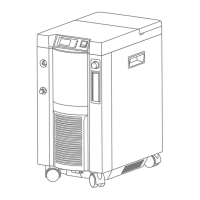

 To Next Page