EasyManua.ls Logo

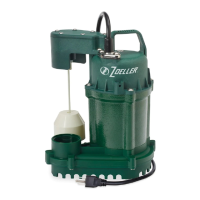
Zoeller 152 Series - User Manual

Zoeller 152 Series
6 pages
Print Icon
To Next Page IconTo Next Page
Loading...
1
© Copyright 2008 Zoeller Co. All rights reserved.
INSTALLATION IN STRUC TIONS
RECOMMENDED MODELS
P/N 006355
Notice to installing contractor: Instructions must remain with installation.
SECTION: 6.10.001
FM0447
0108
Supersedes
0207
PREINSTALLATION CHECKLIST - ALL IN STAL LA TIONS
*Ef uent systems should specify that pumps should not handle solids exceeding three fourths inch (¾") in order to prevent large solids from entering leeching elds, mound systems and
etc. (Model 49 and 70 Series have 3/8", 50, 90 and 140 Series have ½", 130 Series have 5/8", 150 Series have ¾" solids capability, 160/4160/180/4180 Series have ¾" solids capability.)
Where codes permit, sewage pumps can be used for ef uent systems. Nonautomatic pump(s) with external level control recommended for septic tank ef uent applications.
Product information presented
here re ects con di tions at time
of publication. Consult factory
re gard ing dis crep an cies or
in con sis ten cies.
MAIL TO: P.O. BOX 16347 • Louisville, KY 40256-0347
SHIP TO: 3649 Cane Run Road • Louisville, KY 40211-1961
(502) 778-2731 • 1 (800) 928-PUMP • FAX (502) 774-3624
visit our web site:
www.zoeller.com
DATE INSTALLED:
MODEL NUMBER:
1. Inspect your pump. Occasionally, products are damaged during shipment. If the unit is damaged, contact your dealer before using. DO NOT remove the test plugs in the cover nor the motor housing.
2. Carefully read the literature provided to familiarize yourself with speci c details regarding in stal la tion and use. These materials should be retained for future reference.
NOTICE: VENT HOLE FOR
CHECK VALVE
SEE #3 IN CAUTION SECTION
BELOW AND #6 ON PAGE 3
SEWAGE EFFLUENT* SUMP/DEWATERING
211 Series 53, 55, 57, 59 Series 49
264 Series 98 Series 72, 76 Series
266, 267, 268, 270, 4270 Series 137, 139, 140
, 4140,
Series
All Models
282, 284, 4282, 4284 Series
151, 152, 153 Series
292, 293, 294, 295, 4292, 4293, 4294, 4295 Series 161, 163, 165, 4161, 4163, 4165 Series
185, 186, 188, 189, 191, 4185, 4186, 4189 Series
SEE BELOW FOR
LIST OF CAUTIONS
SEE BELOW FOR
LIST OF WARNINGS
1. Make sure there is a properly grounded re cep ta cle avail able. All pumps are furnished with
provisions for proper grounding to protect you against the possibility of electrical shock.
(SEE WARN ING BELOW)
2. Make certain that the receptacle is within the reach of the pump’s pow er supply cord. DO NOT
USE AN EXTENSION CORD. Extension cords that are too long or too light do not deliver suf cient
voltage to the pump motor. But, more important, they could present a safety haz ard if the insulation
were to become damaged or the con nec tion end were to fall into the sump.
3. Make sure the pump electrical supply circuit is equipped with fuses or circuit breakers of
proper capacity. A separate branch circuit is rec om mended, sized ac cord ing to the “National
Elec tri cal Code” for the current shown on the pump nameplate.
4. Testing for ground. As a safety measure, each electrical outlet should be checked for ground
using an Underwriters Laboratory Listed circuit analyzer which will indicate if the power, neutral
and ground wires are correctly connected to your outlet. If they are not, call a quali ed licensed
electrician.
5. For Added Safety. Pumping and other equipment with a 3-prong grounded plug must be connected
to a 3-prong grounded receptacle. For added safety the receptacle may be protected with a ground-
fault circuit interrupter. When a pump needs to be connected in a watertight junction box, the plug
can be removed and spliced to the supply cable with proper grounding. For added safety this circuit
may be protected by a ground-fault circuit in ter rupt er. The complete in stal la tion must comply with
the National Electrical Code and all applicable local codes and ordinances.
6. FOR YOUR PROTECTION, ALWAYS DISCONNECT PUMP FROM ITS POW ER SOURCE BE FORE
HANDLING. Single phase pumps are sup plied with a 3-prong ground ed plug to help protect you
against the possibility of electrical shock. DO NOT UNDER ANY CIRCUM STANCES RE MOVE THE
GROUND PIN. The 3-prong plug must be inserted into a mating 3-prong grounded receptacle.
If the in stal la tion does not have such a receptacle, it must be changed to the prop er type, wired
and ground ed in ac cor dance with the National Elec tri cal Code and all applicable local codes and
or di nanc es. Three phase pumps require motor starting devices with motor overload pro tec tion. See
FM0514 for simplex in stal la tions or FM0486 for duplex in stal la tions. Pumps must be in stalled in
ac cor dance with the National Electrical Code and all ap pli cable local codes and ordinances. Pumps
are not to be installed in locations clas si ed as hazardous in accordance with National Electrical
Code, ANSI/NFPA 70.
7. “Risk of electrical shock” Do not remove power supply cord and strain relief or connect conduit
directly to the pump.
8. Installation and servicing of electrical circuits and hardware should be performed by a quali ed
li censed electrician.
9. Pump installation and servicing should be performed by a quali ed person.
10. Risk of electric shock - These pumps have not been investigated for use in swimming pool and
marine areas.
11. According to the state of California (Prop 65), this product contains chemicals known to the state
of California to cause cancer and birth defects or other reproductive harm.
1. Check to be sure your power source is capable of handling the voltage re quire ments of the motor,
as indicated on the pump name plate.
2. The installation of automatic pumps with variable level oat switch es or nonautomatic pumps using
auxiliary variable level oat switches is the re spon si bil i ty of the in stall ing party and care should be
tak en that the tethered oat switch will not hang up on the pump apparatus or pit peculiarities and
is secured so that the pump will shut off. It is recommended to use rigid piping and ttings and the
pit be 18" or larger in diameter.
3. Information - vent hole purpose. It is necessary that all sub mers ible sump, ef uent, and sewage
pumps capable of handling various sizes of solid waste be of the bottom intake design to reduce
clog ging and seal failures. If a check valve is incorporated in the installation, a vent hole (approx.
3/16") must be drilled in the discharge pipe below the check valve and pit cover to purge the unit
of trapped air. Trapped air is caused by agitation and/or a dry basin. Vent hole should be checked
periodically for clogging. The 50 or 90 Series pumps have a vent lo cated in the pump housing
opposite the oat, ad ja cent to a housing lug, but an additional vent hole is recommended. The
vent hole on a High Head application may cause too much turbulence. You may not want to drill
one. If you choose not to drill a vent hole, be sure the pump case and impeller is covered with liquid
before connecting the pipe to the check valve and no inlet carries air to the pump intake. NOTE:
THE HOLE MUST ALSO BE BELOW THE BASIN COVER AND CLEANED PERIODICALLY. Water
stream will be visible from this hole during pump run periods.
4. Pump should be checked frequently for debris and/or build up which may interfere with the oat “on”
or “off” position. Repair and service should be performed by Zoeller Pump Company Authorized
Service Station only.
5. Dewatering and ef uent sump pumps are not designed for use in pits handling raw sewage.
6. Maximum operating temperature for standard model pumps must not ex ceed 130°F (54°C). Model
49 max. temperature must not exceed 104ºF (40ºC). The 70 and 211 Series max. temperature must
not exceed 110ºF (43ºC).
7. Pump models 188/4188, 189/4189, and 295/4295 nonautomatic pump must run totally submerged
and CSA certi ed pumps must be operated submerged with “off - on” level controls.
8. Pump models 266, 267, 268, 137 and 139 must be operated in an upright position. Do not attempt
to start pump when tilted or laying on its side.
9. Do not operate a pump in an ap pli ca tion where the Total Dynamic Head is less than the minimum
Total Dynamic Head listed on the Pump Performance Curves.
10. Model 49 is for indoor use only.
REFER TO WARRANTY ON PAGE 2.
NOTE: Pumps with the “UL” mark and pumps with the “US” mark are tested to UL Standard UL778.
CSA Certi ed pumps are certi ed to CSA Standard C22.2 No. 108.

Other manuals for Zoeller 152 Series

Question and Answer IconNeed help?

Do you have a question about the Zoeller 152 Series and is the answer not in the manual?

Summary

Installation Instructions and Recommended Models

Preinstallation Checklist

Steps to take before installing a pump, including inspection and reading documentation.

General Safety Warnings

Crucial safety advice including electrical grounding, cord use, and circuit protection.

Operational Cautions

Important operational guidelines for pump installation, maintenance, and performance.

Limited Warranty Information

Sump Pump Installation Dos and Donts

Installation Best Practices

Essential 'do's' for pump installation including grounding, cord use, and discharge piping.

System Protection and Maintenance

Guidance on pump application, testing, sump covers, codes, and backup systems.

Service Checklist and Troubleshooting

Troubleshooting Common Pump Issues

Diagnosing and resolving issues such as pump not starting, overheating, or low output.

Typical Sewage Installation

Typical Effluent Installation

Typical Dewatering Installation

Wiring Instructions

Single Phase Wiring

Safety precautions and guidelines for connecting single-phase pumps.

Three Phase Wiring

Wiring diagrams and considerations for nonautomatic and automatic three-phase pumps.

WD & WH Model Installation

Guidance on float switch setup and determining the pumping range for WD & WH models.

Suggested Methods of Float Installation

Extra Protection Systems

Two Pump System Advantages

Benefits of a two-pump system for enhanced performance and dependability.

The Basement Sentry

Details on 12-volt backup sump pump systems for emergency backup usage.

Pump Performance Curves

Sump; Effluent; Dewatering Models

Performance curves for effluent and dewatering models with 3/8", 1/2", & 3/4" solids capacity.

Sewage Models

Performance curves for sewage models with 2" solids passing capacity.

Summary

Installation Instructions and Recommended Models

Preinstallation Checklist

Steps to take before installing a pump, including inspection and reading documentation.

General Safety Warnings

Crucial safety advice including electrical grounding, cord use, and circuit protection.

Operational Cautions

Important operational guidelines for pump installation, maintenance, and performance.

Limited Warranty Information

Sump Pump Installation Dos and Donts

Installation Best Practices

Essential 'do's' for pump installation including grounding, cord use, and discharge piping.

System Protection and Maintenance

Guidance on pump application, testing, sump covers, codes, and backup systems.

Service Checklist and Troubleshooting

Troubleshooting Common Pump Issues

Diagnosing and resolving issues such as pump not starting, overheating, or low output.

Typical Sewage Installation

Typical Effluent Installation

Typical Dewatering Installation

Wiring Instructions

Single Phase Wiring

Safety precautions and guidelines for connecting single-phase pumps.

Three Phase Wiring

Wiring diagrams and considerations for nonautomatic and automatic three-phase pumps.

WD & WH Model Installation

Guidance on float switch setup and determining the pumping range for WD & WH models.

Suggested Methods of Float Installation

Extra Protection Systems

Two Pump System Advantages

Benefits of a two-pump system for enhanced performance and dependability.

The Basement Sentry

Details on 12-volt backup sump pump systems for emergency backup usage.

Pump Performance Curves

Sump; Effluent; Dewatering Models

Performance curves for effluent and dewatering models with 3/8", 1/2", & 3/4" solids capacity.

Sewage Models

Performance curves for sewage models with 2" solids passing capacity.

Overview

The Zoeller Pump Company provides a comprehensive manual for their range of pumps, including sewage, effluent, and sump/dewatering models, designed for various residential and light commercial applications. These pumps are engineered for reliability and ease of installation, with a strong emphasis on safety and proper maintenance to ensure long-term performance.

Function Description

Zoeller pumps are primarily designed for the efficient removal of unwanted water or wastewater from basements, septic tanks, and other collection points.

  • Sewage Pumps: These pumps are built to handle raw sewage, including solids, from residential and commercial properties, transferring it to a septic system or municipal sewer line. They are robustly constructed to prevent clogging and ensure continuous operation in demanding environments.
  • Effluent Pumps: Designed for use in septic systems, effluent pumps handle pre-treated wastewater (effluent) after solids have settled. They are typically used to transfer effluent to a drain field, mound system, or other on-site disposal system. The manual specifies that effluent pumps should not handle solids exceeding three-fourths inch to protect downstream systems like leeching fields. Non-automatic effluent pumps with external level controls are recommended for septic tank applications.
  • Sump/Dewatering Pumps: These pumps are used to remove clear water from sumps, basements, and other areas prone to flooding. They are essential for preventing water damage in residential and light commercial settings, particularly during heavy rains or groundwater infiltration. The manual explicitly states that dewatering and effluent sump pumps are not designed for use in pits handling raw sewage.

Many Zoeller pumps are available in both automatic and non-automatic configurations. Automatic pumps typically include integrated float switches that activate the pump when water reaches a certain level and deactivate it when the water is removed. Non-automatic pumps require an external level control device or manual activation. Three-phase pumps require motor starting devices with overload protection for proper operation.

Usage Features

Zoeller pumps are designed with several features to enhance usability, safety, and performance.

  • Automatic Operation: Many models feature integrated or auxiliary variable level float switches for automatic operation, ensuring the pump activates and deactivates as needed without manual intervention. Proper placement and securing of these float switches are crucial to prevent hang-ups and ensure reliable shut-off.
  • Unicheck Valve Integration: The manual strongly recommends installing a Zoeller unicheck (combination union and check valve) just above the basin. This component allows for easy removal of the pump for cleaning or repair and prevents backflow of water into the basin after the pump shuts off.
  • Vent Hole: For installations incorporating a check valve, a 3/16" diameter vent hole must be drilled in the discharge pipe below the check valve and pit cover. This vent hole purges trapped air from the unit, which can be caused by agitation or a dry basin, ensuring efficient pump operation. The manual notes that this hole must be below the basin cover and cleaned periodically, with a visible water stream during pump runs.
  • Discharge Pipe Sizing: Users are instructed to use a full-size discharge pipe, matching the pump's discharge diameter, to ensure optimal flow and prevent system inefficiencies.
  • Basin Requirements: The manual specifies minimum basin dimensions (e.g., 18" diameter x 24" deep for dewatering pumps) and emphasizes the need for a clean, debris-free basin. Basins must also be large enough to allow proper clearance for level control switches.
  • Covered Basins: All installations require a basin cover to prevent debris from falling into the basin and to prevent accidental injury. Sewage installations specifically require gas-tight seals to contain gases and odors, with vent gases and odors directed to the atmosphere through a vent pipe.
  • Float Hangers: For installations where it's desirable to install an independent hanger for level control switches, Zoeller offers float hangers or provides instructions for fabricating them from standard pipe and fittings. This helps prevent hang-ups on pumps, piping, or valves.
  • Two Pump Systems ("Extra Protection Systems"): For critical applications where property damage from flooding is a concern, Zoeller offers "Extra Protection Systems." These economical duplex alternating pump systems include two non-automatic pumps with variable level float switches, an alarm system, and two unicheck valves. They provide higher dependability, reduce the chance of costly problems from wear or damage, and offer peace of mind by protecting valuable surroundings. The ability to change lead and lag positions by changing pump plug connections is also a feature.
  • DC Backup Systems (Basement Sentry®): For situations where AC power disruptions or primary pump failures could lead to flooding, Zoeller offers 12-volt backup sump pump systems (Models 507 and 510). These systems include a pump, control, charger, fittings, and a battery case (battery not included), providing emergency backup for clear water applications.

Maintenance Features

Proper maintenance is crucial for the longevity and reliable operation of Zoeller pumps. The manual outlines several key maintenance practices and troubleshooting steps.

  • Pre-Installation Checklist: Before installation, users are instructed to inspect the pump for shipping damage, read all provided literature, and ensure a properly grounded receptacle is available.
  • Regular Inspections: The manual recommends inspecting and testing the system for proper operation at least every three months. This includes checking for debris or buildup that might interfere with float switch operation.
  • Disconnect Power Before Handling: A critical safety instruction is to always disconnect the pump from its power source before handling, servicing, or making any adjustments. For single-phase pumps, this involves unplugging the 3-prong grounded plug. For three-phase pumps, it involves shutting off the main power breaker.
  • Professional Servicing: Installation and servicing of electrical circuits and hardware should be performed by a qualified licensed electrician. Pump installation and servicing should be performed by a qualified person. For any problems not covered by the basic checklist, users are advised to consult the factory and not attempt to service or disassemble the pump themselves. Repairs should only be performed by Zoeller Authorized Service Stations.
  • Double Seal Pumps (4000 Series Only): These pumps offer extra protection from seal failure and require periodic preventative maintenance. The oil in the motor housing and lower seal cavity must be changed during service, and if water or contamination is present, both seals must be replaced with new factory-recommended oil and service parts.
  • Troubleshooting Guide: The manual includes a "Service Checklist" that lists common conditions (e.g., pump will not start, motor overheats, pump starts/stops too often, pump will not shut off, pump operates but delivers little water, drop in head/capacity) and their common causes (e.g., fuse, low voltage, open wiring, bound impeller, defective capacitor, stuck check valve, debris under float, clogged line). This guide helps users diagnose and address minor issues.
  • Cleaning: The basin should be kept clean and free of debris. The vent hole in the discharge pipe should be checked periodically for clogging.
  • Electrical Safety: The manual emphasizes the importance of proper grounding, correct wiring, and protection with fuses or circuit breakers of appropriate capacity. It warns against removing the ground pin from the 3-prong plug, using extension cords, or connecting conduit directly to the pump. Ground-fault circuit interrupters (GFCIs) are recommended for added safety in watertight junction box connections.
  • Temperature Limits: Maximum operating temperatures are specified for different pump models (e.g., 130°F for standard models, 104°F for Model 49), and exceeding these limits can damage the pump.
  • Submerged Operation: Certain models, like 188/4188, 189/4189, and 295/4295 non-automatic pumps, must run totally submerged. Pumps like 266, 267, 268, 137, and 139 must be operated in an upright position.
  • Warranty: Zoeller provides a limited warranty covering defects in material and workmanship for a period of one year from the date of purchase or 18 months from the date of original manufacture, whichever comes first. The warranty is void if the product has been disassembled without approval, misused, neglected, altered, or exposed to abrasive or corrosive substances.

Zoeller 152 Series Specifications

General IconGeneral
Model152 Series
Voltage115V
Phase1
Discharge Size1-1/2" NPT
Construction MaterialCast Iron
Cord Length10 ft
Motor Housing MaterialCast Iron
Impeller MaterialThermoplastic
Solids Handling1/2"
Power Cord Length10 ft
Maximum Head25 ft
Switch TypeVertical Float Switch
TypeSubmersible Sump Pump
Horsepower1/2 HP

Related product manuals