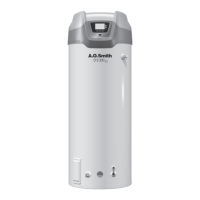
How to make A.O. Smith Heat Pump quieter?
- BBrandon FergusonSep 18, 2025
If your A.O. Smith Heat Pump is too noisy, try the following: tighten fasteners, place vibration dampers underneath the unit, and tighten or align pulleys.


How to make A.O. Smith Heat Pump quieter?
If your A.O. Smith Heat Pump is too noisy, try the following: tighten fasteners, place vibration dampers underneath the unit, and tighten or align pulleys.
Why is my A.O. Smith Water Heater not producing enough hot water?
Several factors can cause an A.O. Smith water heater to not produce enough hot water. The heater might not be lit, or the thermostat isn't on. In this case, refer to the LIGHTING INSTRUCTIONS. The thermostat might be set too low (refer to TEMPERATURE REGULATION). The heater could be undersized, so reduce hot water use. Low gas pressure can also be a factor, so contact your gas supplier. If the incoming water is unusually cold, allow more time for the heater to reheat. Leaking hot water pipes or fixtures should be checked and repaired by a plumber. Finally, a high-temperature limit switch may have been activated, in which case you should contact a service technician.
Why does my A.O. Smith Water Heater pilot keep going out?
A pilot outage in your A.O. Smith water heater may be due to several reasons. The pilot burner might be dirty, so clean the pilot assembly. A thermocouple malfunction is another possibility, requiring replacement of the pilot assembly and/or thermocouple. A defective gas control could also be the cause, necessitating replacement of the gas control. Additionally, ensure the thermocouple tip is correctly positioned in contact with the pilot flame; if not, insert the thermocouple correctly.
What to do if A.O. Smith 100 Water Heater burner will not stay lit?
If the burner in your A.O. Smith water heater won't stay lit, it could be due to a thermocouple malfunction. Consider replacing the pilot assembly and/or thermocouple. Another potential cause is a defective gas control, which would require replacing the gas control.
How to fix a noisy A.O. Smith Water Heater heat pump?
If your A.O. Smith Water Heater's heat pump is too noisy, it might be due to a few reasons. Check if the sheet metal fasteners are loose and tighten them. Vibration from the unit could be transferring to the floor or building structure; in this case, place vibration dampeners underneath the unit. Also, inspect the blower pulley assembly for looseness or misalignment, and tighten or align the pulleys as needed.
Why is the cooling coil icing on my A.O. Smith Water Heater?
If your A.O. Smith Water Heater's cooling coil is icing, it could be due to several reasons. Insufficient airflow through the unit could be the cause. Also, low room temperature can lead to icing. Other potential causes include partial refrigerant loss, a defective TX valve, or a clogged filter dryer. For correction suggestions regarding insufficient air flow, refer to the “Heat pump is not running - low pressure fault” section.
Why is there water on the floor around my A.O. Smith Heat Pump?
If you find water on the floor around your A.O. Smith Heat Pump or water tank, here are several possible causes and solutions: * If tubing, valves, or fittings are leaking, repair them as necessary. * If the heat pump is not level, causing the drain pan to overflow, shim the unit to level it. * Ensure the condensate trap depth maintains a water column during operation if the condensate trap is not installed properly. * If the drain pan is overflowing, remove any obstruction using a pipe snake or compressed air. * If condensation is forming on the bottom of the unit (in humid environments), cover the bottom of the unit with foam insulation.
How do I troubleshoot a high-pressure fault causing my A.O. Smith Heat Pump not to run?
If your A.O. Smith Heat Pump is not running due to a high-pressure fault, consider these potential causes: * Ensure the thermostat setting does not exceed 160°F. * If the air temperature is over 95°F, keep the heat pump off until the room temperature is back in the operating range. * Address low water flow issues. * Replace the unit pump if the external pump is not operating. * Reduce piping or add a booster pump if the piping between the heat pump and storage tank exceeds 50 equivalent feet. * Clean the heat exchanger with a mild acid wash if there is scale buildup. * Open all shut-off valves if they are partially closed.
Why does my A.O. Smith Water Heater smell bad?
Smelly water in your A.O. Smith water heater can be attributed to a high sulfate or mineral content in the water supply. To address this, drain and flush the heater thoroughly, then refill it. Another cause might be bacteria in the water supply, in which case you should chlorinate or aerate the water supply.
Why is my A.O. Smith Water Heater heat pump not running - electrical issues?
If your A.O. Smith Water Heater's heat pump isn't running and you suspect electrical issues, first check if the circuit has adequate ampacity by referring to the unit's nameplate. Inspect the field wiring for short circuits or loose connections, consulting the field wiring diagram. Also, check the unit's electrical cabinet for short circuits or loose connections, tightening all connections as needed. If the thermostat has failed, replace it. If the Phase Monitor fault light is on, reset the phase monitor.
Defines terms like "Qualified Installer or Service Agency" and "ANSI Z223.1 2006 Sec. 3.3.83".
Details grounding requirements for the water heater per electrical codes.
Warns about the risk of hydrogen gas buildup and precautions.
Guides on reading the manual, understanding warnings, and preparing for installation.
Discusses important factors for choosing the optimal location for the heater.
Specifies the necessary skills and qualifications for installation and service.
Explains the need for and use of mixing valves to prevent scalds.
Refers to diagrams for piping methods and recommends dielectric unions.
Covers compliance with electrical codes and power company requirements.
Lists checks to be made by the installer when placing the heater into operation.
Explains how to prevent unusually hot water from reaching fixtures and the risk of scalds.
Describes the function and reset procedure for ECO high-temperature limit controls.
Describes the default "Home Screen" and its components like model information and tank temperature.
Explains the user interface module (UIM) buttons and menu navigation.
Explains the adjustable range and factory default for the operating setpoint.
Details adjustable differential settings for heating element banks.
Explains the adjustable user setting used to calculate the "Economy Set Point".
Explains the three daily operating modes: Normal All Day, Economy All Day, Normal Between.
Records the last 9 fault and alert messages with timestamps for troubleshooting.
Provides instructions for periodic tank flushing and cleaning to reduce sediment.
Explains the purpose of the anode rod and how to inspect and maintain it.
Step-by-step guide for removing lime scale from heating elements.
A checklist to help diagnose issues like "NOT ENOUGH OR NO HOT WATER" and "ABNORMAL SOUNDS".
Steps to take if the malfunction cannot be identified or corrected, including contacting service.
Describes heater circuits and includes wiring diagrams for electrical connections.
Defines symbols used in piping diagrams for various components and devices.
Shows suggested piping configuration for a single unit with a vertical storage tank.
Defines terms like "Qualified Installer or Service Agency" and "ANSI Z223.1 2006 Sec. 3.3.83".
Details grounding requirements for the water heater per electrical codes.
Warns about the risk of hydrogen gas buildup and precautions.
Guides on reading the manual, understanding warnings, and preparing for installation.
Discusses important factors for choosing the optimal location for the heater.
Specifies the necessary skills and qualifications for installation and service.
Explains the need for and use of mixing valves to prevent scalds.
Refers to diagrams for piping methods and recommends dielectric unions.
Covers compliance with electrical codes and power company requirements.
Lists checks to be made by the installer when placing the heater into operation.
Explains how to prevent unusually hot water from reaching fixtures and the risk of scalds.
Describes the function and reset procedure for ECO high-temperature limit controls.
Describes the default "Home Screen" and its components like model information and tank temperature.
Explains the user interface module (UIM) buttons and menu navigation.
Explains the adjustable range and factory default for the operating setpoint.
Details adjustable differential settings for heating element banks.
Explains the adjustable user setting used to calculate the "Economy Set Point".
Explains the three daily operating modes: Normal All Day, Economy All Day, Normal Between.
Records the last 9 fault and alert messages with timestamps for troubleshooting.
Provides instructions for periodic tank flushing and cleaning to reduce sediment.
Explains the purpose of the anode rod and how to inspect and maintain it.
Step-by-step guide for removing lime scale from heating elements.
A checklist to help diagnose issues like "NOT ENOUGH OR NO HOT WATER" and "ABNORMAL SOUNDS".
Steps to take if the malfunction cannot be identified or corrected, including contacting service.
Describes heater circuits and includes wiring diagrams for electrical connections.
Defines symbols used in piping diagrams for various components and devices.
Shows suggested piping configuration for a single unit with a vertical storage tank.
| Brand | A.O. Smith |
|---|---|
| Series | 100 Series |
| Category | Water Heater |
| Vent Type | Atmospheric |
| Type | Tank |
| Fuel Type | Natural Gas, Propane |
| Warranty | 6-Year Limited Tank and Parts |


Loading...