EasyManua.ls Logo

AAON MUA II - User Manual

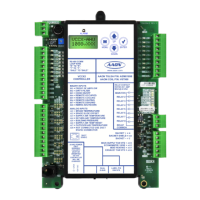
AAON MUA II
24 pages
Print Icon
To Next Page IconTo Next Page
Loading...
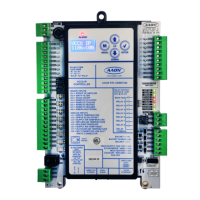
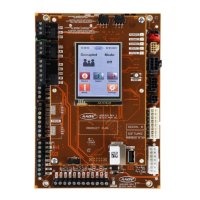
MUA II Controller
Technical Guide
FACTORY CONTROLS SYSTEM
Question and Answer IconNeed help?

Do you have a question about the AAON MUA II and is the answer not in the manual?

Summary

Controller Overview

Features

Lists key features of the MUA II Controller, including cooling/heating stages, modulating heat, and scheduling.

Controller Inputs and Outputs

General Information

Introduces inputs and outputs available on the MUA II controller and expansion boards.

Analog Sensor Inputs

Details wiring for space/supply temp, occupied contact, outdoor air, and fan proof sensors.

Relay and Analog Outputs

Describes relay outputs and the controller's analog output.

Controller Installation & Wiring

General Installation

Emphasizes the importance of correct wiring for successful installation.

Controller Mounting

Provides guidelines for mounting the controller in a suitable environment.

Important Wiring Considerations

Lists crucial wiring practices to prevent damage and ensure proper function.

Expansion Board Installation & Wiring

Jumper Settings

Details how to set jumpers on expansion boards for correct operation.

Wiring Considerations

Explains 24 VAC power requirements and polarity for expansion boards.

Wiring Details

Space Temperature Sensor Wiring

Details wiring for a space temperature sensor used for Supply Air Setpoint reset.

Supply Air Temperature Sensor Wiring

Explains how to wire the Supply Air Temperature sensor, including cautions.

Outdoor Air Temperature Sensor Wiring

Provides wiring instructions for the Outdoor Air Temperature sensor and mounting recommendations.

Remote Occupied Contact Wiring

Details wiring for a remote occupied contact closure from another system.

Outside Air Humidity Sensor Wiring

Explains wiring for the Outside Air Humidity sensor, including resistor and pull-up resistor removal.

Space Humidity Sensor Wiring

Details wiring for a Space Humidity sensor or Fan Proof Of Flow Switch.

Fan Proof Of Flow Switch Wiring

Explains wiring for the Fan Proof Of Flow Switch as an alternative to a humidity sensor.

Start-up & Commissioning

Controller Addressing

Describes how to set unique addresses for controllers on a communication loop.

Power Wiring

Details power requirements and wiring considerations for the controller and expansion boards.

Initialization

Outlines the expected system behavior upon initial power-up, including delays and LEDs.

Programming The Controller

Guides the user through programming the controller using operator interfaces or PC software.

Sequence Of Operations

MUA Operation Overview

Provides a general explanation of the MUA controller's function in HVAC units.

MUA Modes

Explains the different operational modes like Unoccupied, Cooling, Vent, and Dehumidification.

Dehumidification Mode

Details the conditions and logic for the Dehumidification mode.

Vent Mode

Explains the conditions and logic for the Vent mode of operation.

Reheat Control

Describes the methods used for reheat control during dehumidification.

Heat Mode

Details the conditions and logic for the Heat mode of operation.

External Heating Control

Explains the feature for controlling external hot water valves or SCR controllers.

Temperature Protect Mode

Describes the mode that protects the unit when SAT is outside defined limits.

Other Control Options

Covers options like Fan Proof Switch, Broadcast, and relay configuration.

Scheduling

Details the controller's internal clock, 7-day schedule, and holiday scheduling.

Alarm Detection and Reporting

Explains self-diagnostics, alarm reporting via LEDs, and communication methods.

Force Modes or Overrides

Describes how to override relay and analog outputs using service tools.

Internal Trend Logging

Explains the controller's internal trend log for recording system values.

Troubleshooting

Using LEDs To Verify Operation

Details how to use the controller's LEDs (COMM, PWR, LED2) for diagnostics.

LED2 (Diagnostic LED) Operations

Explains how LED2 blinks to indicate address switch settings and diagnostic codes.

Appendix

Sensor Checks

Provides tables for checking thermistor sensor resistance and voltage.

OE265 Relative Humidity Sensor Data

Provides a table for checking OE265 humidity sensors' voltage output.

Summary

Controller Overview

Features

Lists key features of the MUA II Controller, including cooling/heating stages, modulating heat, and scheduling.

Controller Inputs and Outputs

General Information

Introduces inputs and outputs available on the MUA II controller and expansion boards.

Analog Sensor Inputs

Details wiring for space/supply temp, occupied contact, outdoor air, and fan proof sensors.

Relay and Analog Outputs

Describes relay outputs and the controller's analog output.

Controller Installation & Wiring

General Installation

Emphasizes the importance of correct wiring for successful installation.

Controller Mounting

Provides guidelines for mounting the controller in a suitable environment.

Important Wiring Considerations

Lists crucial wiring practices to prevent damage and ensure proper function.

Expansion Board Installation & Wiring

Jumper Settings

Details how to set jumpers on expansion boards for correct operation.

Wiring Considerations

Explains 24 VAC power requirements and polarity for expansion boards.

Wiring Details

Space Temperature Sensor Wiring

Details wiring for a space temperature sensor used for Supply Air Setpoint reset.

Supply Air Temperature Sensor Wiring

Explains how to wire the Supply Air Temperature sensor, including cautions.

Outdoor Air Temperature Sensor Wiring

Provides wiring instructions for the Outdoor Air Temperature sensor and mounting recommendations.

Remote Occupied Contact Wiring

Details wiring for a remote occupied contact closure from another system.

Outside Air Humidity Sensor Wiring

Explains wiring for the Outside Air Humidity sensor, including resistor and pull-up resistor removal.

Space Humidity Sensor Wiring

Details wiring for a Space Humidity sensor or Fan Proof Of Flow Switch.

Fan Proof Of Flow Switch Wiring

Explains wiring for the Fan Proof Of Flow Switch as an alternative to a humidity sensor.

Start-up & Commissioning

Controller Addressing

Describes how to set unique addresses for controllers on a communication loop.

Power Wiring

Details power requirements and wiring considerations for the controller and expansion boards.

Initialization

Outlines the expected system behavior upon initial power-up, including delays and LEDs.

Programming The Controller

Guides the user through programming the controller using operator interfaces or PC software.

Sequence Of Operations

MUA Operation Overview

Provides a general explanation of the MUA controller's function in HVAC units.

MUA Modes

Explains the different operational modes like Unoccupied, Cooling, Vent, and Dehumidification.

Dehumidification Mode

Details the conditions and logic for the Dehumidification mode.

Vent Mode

Explains the conditions and logic for the Vent mode of operation.

Reheat Control

Describes the methods used for reheat control during dehumidification.

Heat Mode

Details the conditions and logic for the Heat mode of operation.

External Heating Control

Explains the feature for controlling external hot water valves or SCR controllers.

Temperature Protect Mode

Describes the mode that protects the unit when SAT is outside defined limits.

Other Control Options

Covers options like Fan Proof Switch, Broadcast, and relay configuration.

Scheduling

Details the controller's internal clock, 7-day schedule, and holiday scheduling.

Alarm Detection and Reporting

Explains self-diagnostics, alarm reporting via LEDs, and communication methods.

Force Modes or Overrides

Describes how to override relay and analog outputs using service tools.

Internal Trend Logging

Explains the controller's internal trend log for recording system values.

Troubleshooting

Using LEDs To Verify Operation

Details how to use the controller's LEDs (COMM, PWR, LED2) for diagnostics.

LED2 (Diagnostic LED) Operations

Explains how LED2 blinks to indicate address switch settings and diagnostic codes.

Appendix

Sensor Checks

Provides tables for checking thermistor sensor resistance and voltage.

OE265 Relative Humidity Sensor Data

Provides a table for checking OE265 humidity sensors' voltage output.

Overview

The AAON MUA II Controller is a sophisticated device designed for managing Makeup Air HVAC units, providing fresh air of neutral temperature and humidity into buildings. This technical guide details its features, installation, wiring, operation, and troubleshooting.

Function Description

The MUA II Controller Board is engineered to control HVAC units, offering capabilities for heating, cooling, and dehumidification. It manages these functions based on outdoor air temperature and dewpoint temperature setpoints. The controller can operate in six distinct modes: one unoccupied mode and five occupied modes (Cooling, Vent, Dehumidification, Heating, and Temperature Protect Mode).

In Unoccupied Mode, the controller shuts off cooling, heating, and the blower.

In Occupied Mode, the unit can operate in:

  • Cooling Mode: Initiated when the outdoor air temperature (OAT) is one Cooling Deadband above the Supply Air Setpoint and the Dewpoint Temperature is below the Dewpoint Setpoint. It maintains the supply air temperature (SAT) within a ± Cooling Deadband from the Supply Air Setpoint by activating and deactivating cooling stages.
  • Vent Mode: Occurs when the OAT is between the Cooling and Heating Deadband from the Supply Air Setpoint, and the Dewpoint reading is below the Dewpoint Setpoint. In this mode, heating and cooling are shut off, but the blower continues normal operation.
  • Dehumidification Mode: Activated when the controller reads a Dewpoint Temperature above the Dewpoint Setpoint. It uses outside enthalpy to calculate compressor needs for moisture extraction and activates reheat control to prevent overcooling.
  • Heating Mode: Engaged when the OAT is one Heating Deadband below the Supply Air Setpoint and the Dewpoint Temperature is below the Dewpoint Setpoint. It stages heating to deliver supply air at the Supply Temperature Setpoint.
  • Temperature Protect Mode: Initiated when the SAT rises above the High Cutoff Temperature Setpoint or drops below the Low Cutoff Temperature Setpoint for a defined period.

The controller also supports Reheat Control during dehumidification, utilizing Unit Hot Gas Reheat (ON/OFF or Modulating) and/or Dehumidification Heat (unit heating source) to maintain the desired supply air temperature.

Important Technical Specifications

Inputs and Outputs:

  • Analog Inputs: 5 usable analog inputs on the main board, expandable.
    • Input #1: Reset Temperature Sensor: Used for modulating Supply Air Setpoint based on space temperature.
    • Input #2: Supply Air Temperature: Controls heating and cooling staging.
    • Input #3: Remote Occupied Contact: Monitors a contact closure from another building automation system to indicate occupied mode.
    • Input #4: Outdoor Air Temperature: Initiates heating, cooling, and vent modes; used with outdoor air humidity for Dewpoint Temperature calculation.
    • Input #5: Outdoor Air Humidity: Used with OAT to calculate Dewpoint Temperature for dehumidification.
    • Input #6: Not Used.
    • Input #7: Fan Proof of Flow Switch or Reset Humidity Sensor: Monitors fan operation or can be used for an indoor humidity sensor for Dewpoint setpoint reset.
  • Relay Outputs: 5 usable relay outputs on the main board, expandable up to 16 additional binary (relay) outputs using expansion boards.
    • Relay #1: Fan (Enable): Non-configurable output.
    • Relay #2-#5 Configurable Relays: Configurable for heating stages, cooling stages, gas reheat control for dehumidification, or external heat enable.
    • Relay #6-#21 Configurable Relays: Available via expansion boards, configurable for heating stages (up to 8), cooling stages (up to 8), gas reheat control, or external heat enable.
  • Analog Output: 1 Analog Output (AOUT1) for controlling external heating devices, configurable for 0-10 VDC or 2-10 VDC signals.

Expansion Capabilities:

  • Supports 2-slot or 4-slot expansion boards via modular cable.
  • Up to 4 Relay Output Expansion Boards can be installed on the expansion base board.

Power Requirements:

  • MUA II Controller: 10 VA at 24 VAC.
  • 2-slot expansion board: 5 VA at 24 VAC.
  • 4-slot expansion board: 10 VA at 24 VAC.

Communication:

  • RS-485 communications loop for interconnecting controllers or connecting to a system manager.
  • 9600 Baud for local loop RS-485.

Sensors:

  • All temperature sensors must be Thermistor Type III (10K Ohms resistance @ 77°F).
  • Humidity sensors are OE265 Relative Humidity Transmitters.

Dimensions:

  • MUA II Controller: 7.3" x 6.2" x 6.7" (approximate, based on diagram).
  • 2 Slot Expansion Base Board: 4.73" x 4.00" x 5.96" (approximate).
  • 4 Slot Expansion Base Board: 9.52" x 4.00" x 8.96" (approximate).
  • 4 Relay Output Expansion Board: 4.00" x 1.67" x 4.24" (approximate).

Usage Features

Controller Addressing:

  • Each controller requires a unique address (1 to 59) set via address switches, especially when networked.
  • Address changes require power cycling the controller.

Scheduling:

  • Internal battery-backed Real Time Clock (RTC) for scheduling.
  • 7-day schedule with 2 start-stop events per day.
  • 1 holiday schedule with 2 start-stop events, usable for 14 different holiday periods.

Configuration and Setup:

  • Configuration selections tailor software operation to mechanical equipment.
  • Supply Temperature Reset from Space Temperature: Resets supply temp setpoint upwards based on space temperature sensor.
  • Outside Dewpoint Reset from Space Humidity: Resets outside dewpoint setpoint downwards based on space humidity sensor.
  • Remote Occupied Contact: Allows external building automation systems to enable occupied/unoccupied modes.
  • Outside Air Temperature/Humidity Broadcast: Allows one sensor to broadcast data to multiple controllers on a communication loop, reducing sensor installation.

Force Modes or Overrides:

  • Relay outputs can be user-overridden (Auto, Forced ON, Forced OFF) via Modular Service Tool or PRISM graphical front-end.
  • Analog outputs can be forced to specific voltage values (0.0 to 10.0 VDC).
  • Overrides are active only when the remote device is connected and communicating, terminating after 10 minutes of communication loss to protect equipment.

Maintenance Features

Troubleshooting with LEDs:

  • The MUA II controller has four LEDs for troubleshooting:
    • COMM LED: Indicates system communications. Continuous glow for stand-alone/interconnected systems, flicker for networked systems or when connected to a service tool.
    • PWR LED: Indicates 24 VAC power. Should glow continuously.
    • LED1: Not used for this controller application.
    • LED2 (Diagnostic LED): Blinks diagnostic codes every 10 seconds to indicate problems.
      • 1 blink: Normal Operations (No Alarm Conditions)
      • 2 blinks: Sensor Failure (OAT, OAH, SAT)
      • 3 blinks: Mechanical Failure
      • 4 blinks: Fan Proving Alarm
      • 5 blinks: Unit In Force Mode

Alarm Detection and Reporting:

  • Continuous self-diagnostics to detect operating failures.
  • Alarms reported on Status Screens (Modular Service Tool/System Manager) or logged to disk (PRISM computer front-end).
  • RemoteLink (modem) can initiate callouts to pagers for alarm conditions.

Internal Trend Logging:

  • Continuously maintains an Internal Trend Log, recording fixed values at user-programmed intervals.
  • Log data includes Date, Time, Supply Air Temperature, Outside Air Temperature, Supply Air Setpoint, Outdoor Air Humidity, Dewpoint Setpoint, Onboard Relay Status, Expansion Board Relay Status, and External Heat (% Of Max Heat).
  • 120 log positions available. User must retrieve logs at intervals shorter than the 120-log duration to prevent data overwriting.
    • 1 Minute Interval = 2 Hour Duration
    • 15 Minute Interval = 30 Hour Duration
    • 30 Minute Interval = 60 Hour Duration
    • 60 Minute Interval = 120 Hour Duration

Sensor Checks:

  • Thermistor Sensor Testing: Resistance and voltage tables provided to check sensor operation.
    • Disconnected: Check resistance with a multimeter.
    • Connected: Read DC voltage. Voltage > 5.08 VDC indicates "open" sensor/wiring; voltage < 0.05 VDC indicates "shorted" sensor/wiring.
  • OE265 Relative Humidity Sensors Testing: Voltage table provided to check sensor operation while connected to a powered controller.
    • Read DC voltage. Voltage > 5.08 VDC indicates "open" sensor/wiring; voltage < 0.05 VDC indicates "shorted" sensor/wiring.

Wiring Considerations:

  • All 24 VAC wiring must have common ground wires.
  • Minimum wire size: 18 gauge for 24 VAC, 24 gauge for sensors.
  • Communication wiring: Minimum 18 gauge, 2 conductor, twisted pair with shield.
  • Polarity must be observed for all boards (GND-to-GND and 24VAC-to-24VAC) to prevent damage.
  • Expansion boards and controller must always be powered together; loss of power to expansion boards renders the controller inoperative.

AAON MUA II Specifications

General IconGeneral
BrandAAON
ModelMUA II
CategoryController
LanguageEnglish

Related product manuals