EasyManua.ls Logo

Aim Solo 2 DL - User Manual

Aim Solo 2 DL
38 pages
Print Icon
To Next Page IconTo Next Page
Loading...
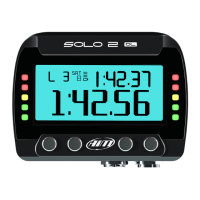
Solo 2 DL GPS Lap Timer
USER GUIDE 1.00
www.aim-sportline.com
Made in Italy
MANUALE SOLO 2DL .qxp_Layout 1 13/04/18 16:20 Pagina 1
Question and Answer IconNeed help?

Do you have a question about the Aim Solo 2 DL and is the answer not in the manual?

Summary

1. Solo 2 DL in a few words

What is Solo 2 DL?

Introduces the AiM GPS log-timer, its dimensions, usability, and logging capability.

Why Solo 2 DL?

Highlights key features like ECU connection, configurable display pages, integrated GPS, track database, Wi-Fi, and RGB LEDs.

What about ECU connection?

Explains how Solo 2 DL manages ECU connections and communication lines like CAN, K-Line, RS232.

If the vehicle does not have an ECU?

Describes connecting Solo 2 DL to an RPM wave for synchronization if the vehicle lacks an ECU.

Anything else?

Mentions upcoming iPhone app for data analysis and real-time viewing.

2. What is in the kit?

4. What is multiple configurations feature?

6. What you can do via keyboard

Type of Racing

Explains two race types: speed and performance, each with different options and memo trigger settings.

Track Management

Details Solo 2 DL's GPS receiver for lap time calculation and track selection modes: automatic and manual.

Backlight

Allows setting backlight to ON/OFF and choosing from eight different colors for the Solo 2 DL display.

Wi-Fi

Manages Wi-Fi settings, including modes ON, Auto, OFF, and resetting Wi-Fi configuration.

Configurations

Allows selecting one of up to 10 transmitted configurations for the Solo 2 DL.

Unit of Measure

Sets measurement units for speed (km/h or mph), temperature (Celsius/Fahrenheit), and pressure (bar/PSI).

Date Time

Configures time zone, Daylight Saving Time, and date/time formats, synchronized via GPS.

Language

Allows setting the Solo 2 DL display language from a list of available options.

System Info

Displays the serial number, firmware version, and boot version of the Solo 2 DL.

7. Solo 2 DL and the PC

Connection to the PC

Explains that Solo 2 DL connects via Wi-Fi and outlines the steps for PC connection.

Wi-Fi Configuration

Details two Wi-Fi modes: Access Point (AP) for direct PC connection and existing network (WLAN) connection.

Adding Solo 2 DL to an Existing Network

Describes connecting Solo 2 DL to a pre-existing Wi-Fi network (WLAN) for team use.

Wi-Fi Network Settings

Provides an example configuration for setting up a WLAN network for AiM devices and a PC.

Internet Connectivity

Recommends against allowing Internet on the AiM device network for optimal speed, suggesting a second Wi-Fi for connectivity.

Connection Issues

Addresses issues where Solo 2 DL is connected but not shown in Race Studio 3, suggesting static IP checks.

Working on Mac with Virtualized Windows

Guides Mac users on setting up Race Studio 3 using a virtualized Windows machine for Wi-Fi interface sharing.

Connected Device Visualization Issues

Discusses potential delays or failures in visualizing Wi-Fi connected devices on iMacs with virtualized Windows.

7.2 Configuration of Solo 2 DL

Channels Configuration

Allows enabling and setting parameters for all Solo 2 DL channels, including units and sampling frequency.

ECU Connection and Configuration

Explains connecting Solo 2 DL to vehicle ECUs via CAN, RS232, K-Line and loading ECU protocols.

LCU-One CAN Setting

Details connecting and configuring the AiM LCU One CAN lambda controller with Solo 2 DL.

Parameters Settings

Covers GPS Lap detection parameters and conditions for starting data recording based on RPM or speed.

Led-Bars Setting

Configures the top LED bar for gear shift lights or predictive lap time, setting colors and thresholds.

Display Settings

Allows setting up to eight pages, each with 1 to 4 fields, customizing display content by dragging and dropping channels.

SmartyCam Stream Setting

Connects Solo 2 DL to SmartyCam to display desired data on video, allowing channel selection and configuration.

Transmitting Multiple Configurations

Explains how to transmit multiple configurations to the Solo 2 DL using the software, via selection or drag-and-drop.

Managing a Track on Solo 2 DL with RS3

Describes using Race Studio 3's Track Manager to create, delete, modify, and transmit tracks to the Solo 2 DL.

ECU Driver Builder

Guides users on creating custom CAN protocols for vehicle ECUs not included in Race Studio 3.

8. On the Track

Track Page

Displays the selected track and satellite status, automatically disappears when the engine starts.

7.6 The Device Window

Live Measures

Allows checking all Solo 2 DL channels in real-time.

Download

Enables downloading recorded data for analysis.

Wi-Fi and Properties

Manages Wi-Fi configuration and device properties.

Settings

Allows configuring date format, daylight saving, time format, time zone, and backlight.

Tracks

Manages tracks stored in the device memory.

Counters

Sets user odometer decimal places and allows resetting it.

Logo

Transmits or receives the logo displayed during device startup.

Firmware

Checks or updates the Solo 2 DL firmware version.

9. Data Recall

Data Recall Speed Mode

Recalls sampled data showing lap times, best laps, and speed values for speed-based racing.

Data Recall Performance Mode

Recalls sampled data for performance racing, showing lap length, time, and speed for split sessions.

10. Data Download

11. Data Analysis

12. New Firmware Upgrade

13. RPM

RPM from ECU

Describes obtaining RPM values by connecting Solo 2 DL to the vehicle's ECU.

RPM via a 5-50 V Square Wave or Coil (150-400 V)

Explains how to sample RPM using an external power cable when the vehicle has no ECU.

14. Connection with SmartyCam and LCU-One

15. Technical Specification and Drawings

Pinout Solo 2 DL

Provides pinout diagrams for EXP and ECU connectors on the Solo 2 DL device.

Summary

1. Solo 2 DL in a few words

What is Solo 2 DL?

Introduces the AiM GPS log-timer, its dimensions, usability, and logging capability.

Why Solo 2 DL?

Highlights key features like ECU connection, configurable display pages, integrated GPS, track database, Wi-Fi, and RGB LEDs.

What about ECU connection?

Explains how Solo 2 DL manages ECU connections and communication lines like CAN, K-Line, RS232.

If the vehicle does not have an ECU?

Describes connecting Solo 2 DL to an RPM wave for synchronization if the vehicle lacks an ECU.

Anything else?

Mentions upcoming iPhone app for data analysis and real-time viewing.

2. What is in the kit?

4. What is multiple configurations feature?

6. What you can do via keyboard

Type of Racing

Explains two race types: speed and performance, each with different options and memo trigger settings.

Track Management

Details Solo 2 DL's GPS receiver for lap time calculation and track selection modes: automatic and manual.

Backlight

Allows setting backlight to ON/OFF and choosing from eight different colors for the Solo 2 DL display.

Wi-Fi

Manages Wi-Fi settings, including modes ON, Auto, OFF, and resetting Wi-Fi configuration.

Configurations

Allows selecting one of up to 10 transmitted configurations for the Solo 2 DL.

Unit of Measure

Sets measurement units for speed (km/h or mph), temperature (Celsius/Fahrenheit), and pressure (bar/PSI).

Date Time

Configures time zone, Daylight Saving Time, and date/time formats, synchronized via GPS.

Language

Allows setting the Solo 2 DL display language from a list of available options.

System Info

Displays the serial number, firmware version, and boot version of the Solo 2 DL.

7. Solo 2 DL and the PC

Connection to the PC

Explains that Solo 2 DL connects via Wi-Fi and outlines the steps for PC connection.

Wi-Fi Configuration

Details two Wi-Fi modes: Access Point (AP) for direct PC connection and existing network (WLAN) connection.

Adding Solo 2 DL to an Existing Network

Describes connecting Solo 2 DL to a pre-existing Wi-Fi network (WLAN) for team use.

Wi-Fi Network Settings

Provides an example configuration for setting up a WLAN network for AiM devices and a PC.

Internet Connectivity

Recommends against allowing Internet on the AiM device network for optimal speed, suggesting a second Wi-Fi for connectivity.

Connection Issues

Addresses issues where Solo 2 DL is connected but not shown in Race Studio 3, suggesting static IP checks.

Working on Mac with Virtualized Windows

Guides Mac users on setting up Race Studio 3 using a virtualized Windows machine for Wi-Fi interface sharing.

Connected Device Visualization Issues

Discusses potential delays or failures in visualizing Wi-Fi connected devices on iMacs with virtualized Windows.

7.2 Configuration of Solo 2 DL

Channels Configuration

Allows enabling and setting parameters for all Solo 2 DL channels, including units and sampling frequency.

ECU Connection and Configuration

Explains connecting Solo 2 DL to vehicle ECUs via CAN, RS232, K-Line and loading ECU protocols.

LCU-One CAN Setting

Details connecting and configuring the AiM LCU One CAN lambda controller with Solo 2 DL.

Parameters Settings

Covers GPS Lap detection parameters and conditions for starting data recording based on RPM or speed.

Led-Bars Setting

Configures the top LED bar for gear shift lights or predictive lap time, setting colors and thresholds.

Display Settings

Allows setting up to eight pages, each with 1 to 4 fields, customizing display content by dragging and dropping channels.

SmartyCam Stream Setting

Connects Solo 2 DL to SmartyCam to display desired data on video, allowing channel selection and configuration.

Transmitting Multiple Configurations

Explains how to transmit multiple configurations to the Solo 2 DL using the software, via selection or drag-and-drop.

Managing a Track on Solo 2 DL with RS3

Describes using Race Studio 3's Track Manager to create, delete, modify, and transmit tracks to the Solo 2 DL.

ECU Driver Builder

Guides users on creating custom CAN protocols for vehicle ECUs not included in Race Studio 3.

8. On the Track

Track Page

Displays the selected track and satellite status, automatically disappears when the engine starts.

7.6 The Device Window

Live Measures

Allows checking all Solo 2 DL channels in real-time.

Download

Enables downloading recorded data for analysis.

Wi-Fi and Properties

Manages Wi-Fi configuration and device properties.

Settings

Allows configuring date format, daylight saving, time format, time zone, and backlight.

Tracks

Manages tracks stored in the device memory.

Counters

Sets user odometer decimal places and allows resetting it.

Logo

Transmits or receives the logo displayed during device startup.

Firmware

Checks or updates the Solo 2 DL firmware version.

9. Data Recall

Data Recall Speed Mode

Recalls sampled data showing lap times, best laps, and speed values for speed-based racing.

Data Recall Performance Mode

Recalls sampled data for performance racing, showing lap length, time, and speed for split sessions.

10. Data Download

11. Data Analysis

12. New Firmware Upgrade

13. RPM

RPM from ECU

Describes obtaining RPM values by connecting Solo 2 DL to the vehicle's ECU.

RPM via a 5-50 V Square Wave or Coil (150-400 V)

Explains how to sample RPM using an external power cable when the vehicle has no ECU.

14. Connection with SmartyCam and LCU-One

15. Technical Specification and Drawings

Pinout Solo 2 DL

Provides pinout diagrams for EXP and ECU connectors on the Solo 2 DL device.

Aim Solo 2 DL Specifications

General IconGeneral
GPSYes
Data LoggingYes
Wi-Fi ConnectivityYes
Weight240 g
TypeLap timer and data logger
Memory4 GB
ConnectivityWi-Fi, USB
ECU ConnectionYes
PowerRechargeable lithium battery
CompatibilityCars with ECU, OBDII
Battery LifeUp to 4 hours