3 Using the Microphone
26 C 214
3.5.11 Electric
Guitar/Bass
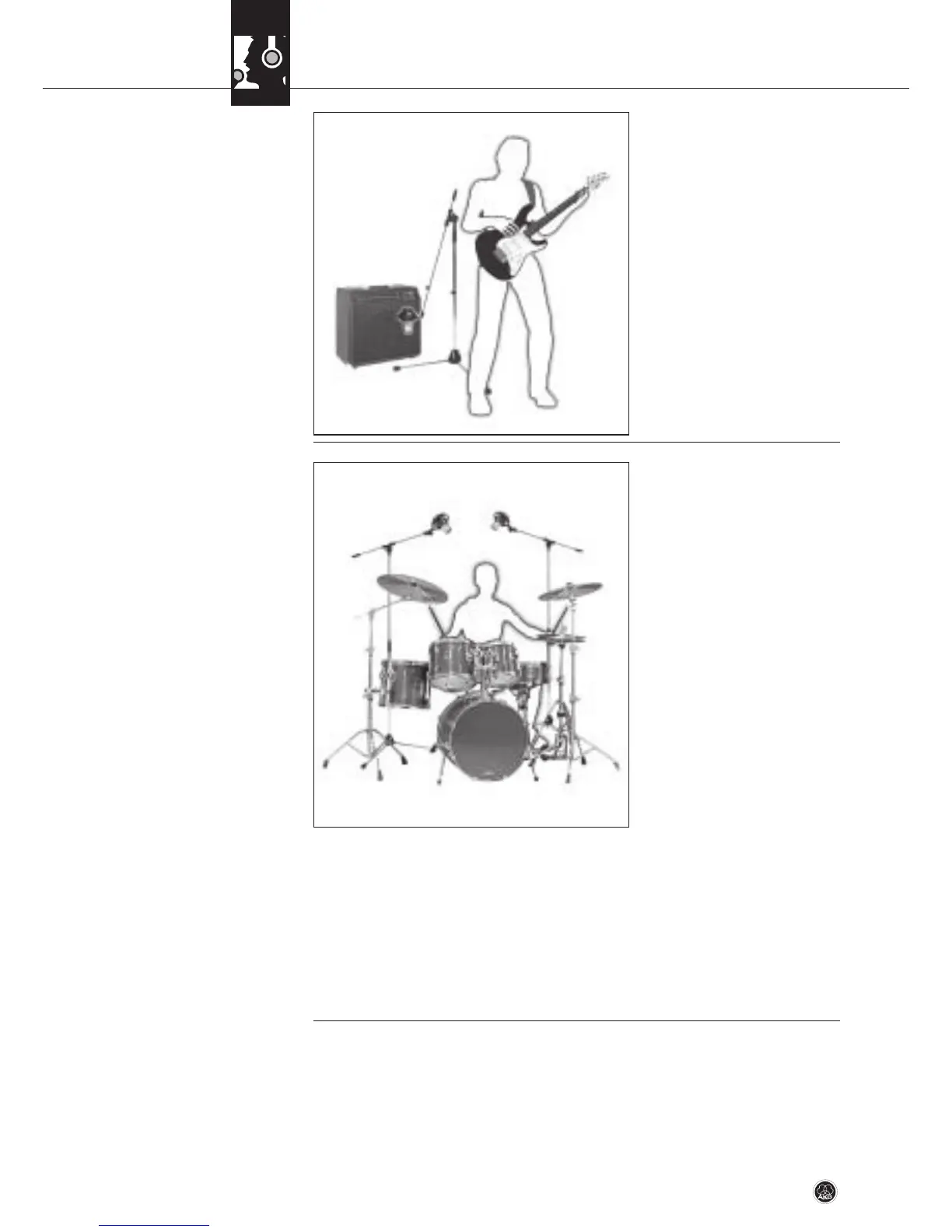
Fig. 14: Electric guitar.
3.5.12 Drums
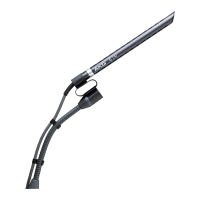
Fig. 15: Typical drum kit.
Electric guitar:
Position the microphone 3 to
6 in. (8 to 15 cm) in front of the
speaker, aiming at a point off
the speaker diaphragm center.
Use the bass cut and a preat-
tenuation pad. You may want to
use an additional distant micro-
phone.
Electric bass:
Use the same technique as for
the electric guitar. You can use
a DI box to add the direct signal
of the line output on the bass
amp to the microphone signal.
Overhead miking:
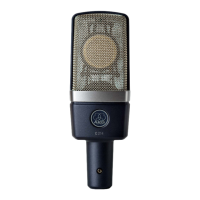
Place two C 214s in an AB or
XY configuration about 2 3/4 to
4 ft. (80 to 120 cm) above the
drummer's head. This tech-
nique will pick up the entire kit,
delivering a highly natural sound.
Use little or no EQ!
Hanging and floor toms:
Use one microphone for each
tom or for every two toms,
aligning the microphone with
the rim of the top head. To re-
duce leakage from other instru-
ments, attenuate the HF range
above 10 kHz using the chan-
nel EQ(s).
Kick drum:
• Be sure to switch the preattenuation pad in (-20 dB) because the kick drum
may produce extremely high sound pressure levels.
• Place the microphone right inside the shell.
For a dry, "click" type sound with lots of attack, position the microphone near
the head, at an angle of 45 degrees.
For a fatter sound, place the microphone closer to the front head or outside the
shell, up to 6 in. (15 cm) from the opening in the front head.


 To Next Page