AUTHORITY 133
with hearing aids. It is important to try the di erent features of this phone thoroughly and in di erent locations,
using your hearing aid or cochlear implant, to determine if you hear any interfering noise. Consult your service
provider or the manufacturer of this phone for information on hearing aid compatibility. If you have questions
about return or exchange policies, consult your service provider or phone retailer.
On July 10, 2003, the U.S. Federal Communications Commission (FCC) Report and Order in WT Docket 01 - 09
modi ed the exception of wireless phones under the Hearing Aid Compatibility Act of 1988 (HAC Act) to require
digital wireless phones be compatible with hearing-aids. The intent of the HAC Act is to ensure reasonable access
to telecommunications services for persons with hearing disabilities. While some wireless phones are used near
some hearing devices (hearing aids and cochlear implants), users may detect a buzzing, humming, or whining
noise. Some hearing devices are more immune than others to this interference noise, and phones also vary in
the amount of interference they generate. The wireless telephone industry has developed a rating system for
wireless phones, to assist hearing device users nd phones that may be compatible with their hearing devices.
Not all phones have been rated. Phones that are rated have the rating on their box or a label located on the box.
The ratings are not guarantees. Results will vary depending on the user’s hearing device and hearing loss. If your
hearing device happens to be vulnerable to interference, you may not be able to use a rated phone successfully.
Trying out the phone with your hearing device is the best way to evaluate it for your personal needs.
M-Ratings: Phones rated M3 or M4 meet FCC requirements and are likely to generate less interference to hearing
devices than phones that are not rated. M4 is the better/higher of the two ratings. Your device is rated M4.
T-Ratings: Phones rated T3 or T4 meet FCC requirements and are likely to be more usable with a hearing aid’s
telecoil than phones that are not rated.
T4 is the better/higher of the two ratings. Your device is rated T3.
Please power o the Bluetooth function while using hearing aid devices with your Authority
TM
. Hearing
devices may also be rated. Your hearing device manufacturer or hearing health professional may help you
nd this rating. Higher ratings mean that the hearing device is relatively immune to interference noise.
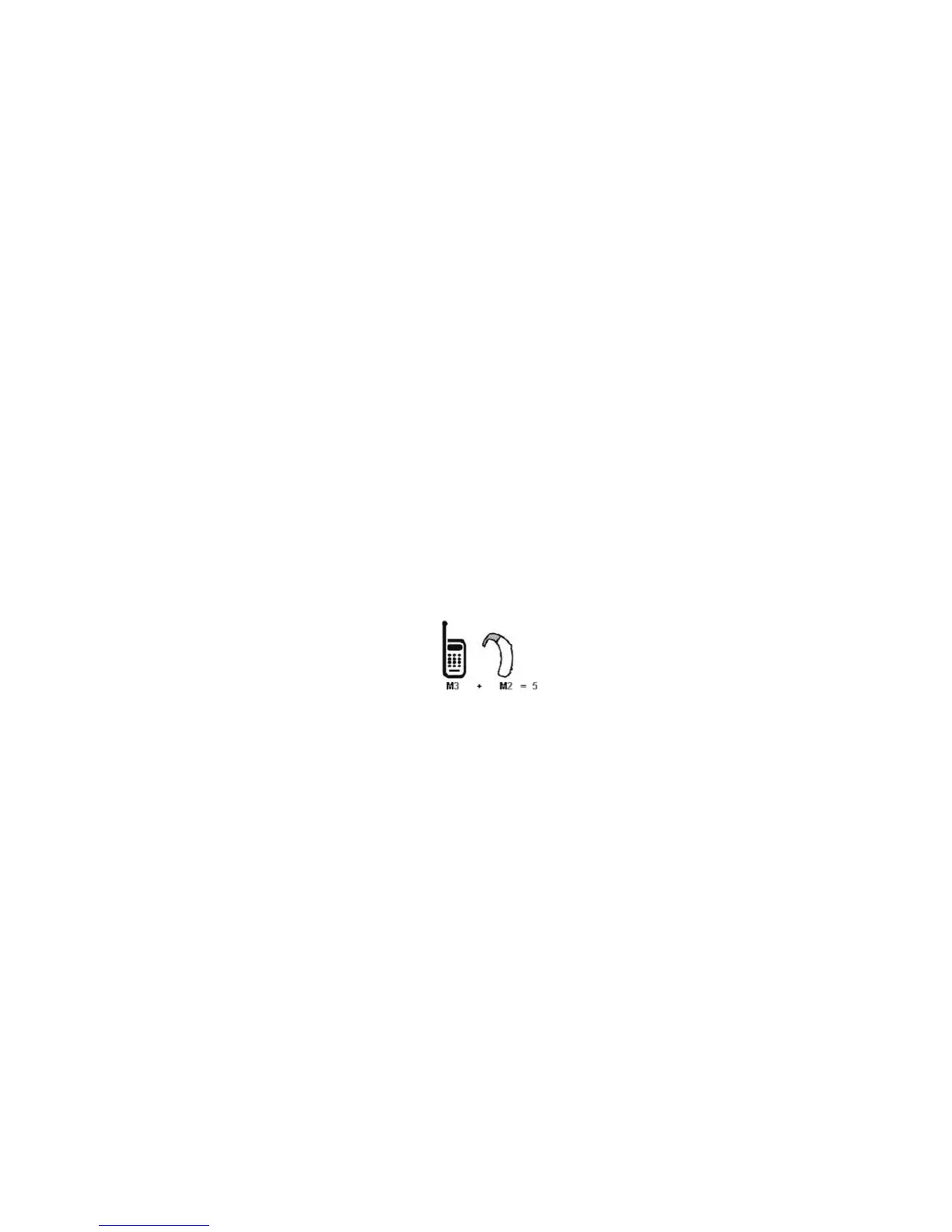
The hearing aid and wireless phone rating values are then added together. A sum of 5 is considered acceptable for
normal use. A sum of 6 is considered for better use. A sum of 8 is considered for best use. In the above example, if a
hearing aid meets the M2 level rating and the wireless phone meets the M3 level rating, the sum of the two values
equal M5. This should provide the hearing aid user with “normal usage” while using their hearing aid with the particular
wireless phone. “Normal usage” in this context is de ned as a signal quality that is acceptable for normal operation.
This methodology applies equally for T ratings. The M mark is intended to be synonymous with the U mark. The
T mark is intended to be synonymous with the UT mark. The M and T marks are recommended by the Alliance for
Telecommunications Industries Solutions (ATIS). The U and UT marks are referenced in Section 20.19 of the FCC
Rules. The HAC rating and measurement procedure are described in the American National Standards Institute
(ANSI) C63.19 standard.
For information about hearing aids and digital wireless phones
FCC Hearing Aid Compatibility and Volume Control:
http://www.fcc.gov/cgb/dro/hearing.html


 To Next Page