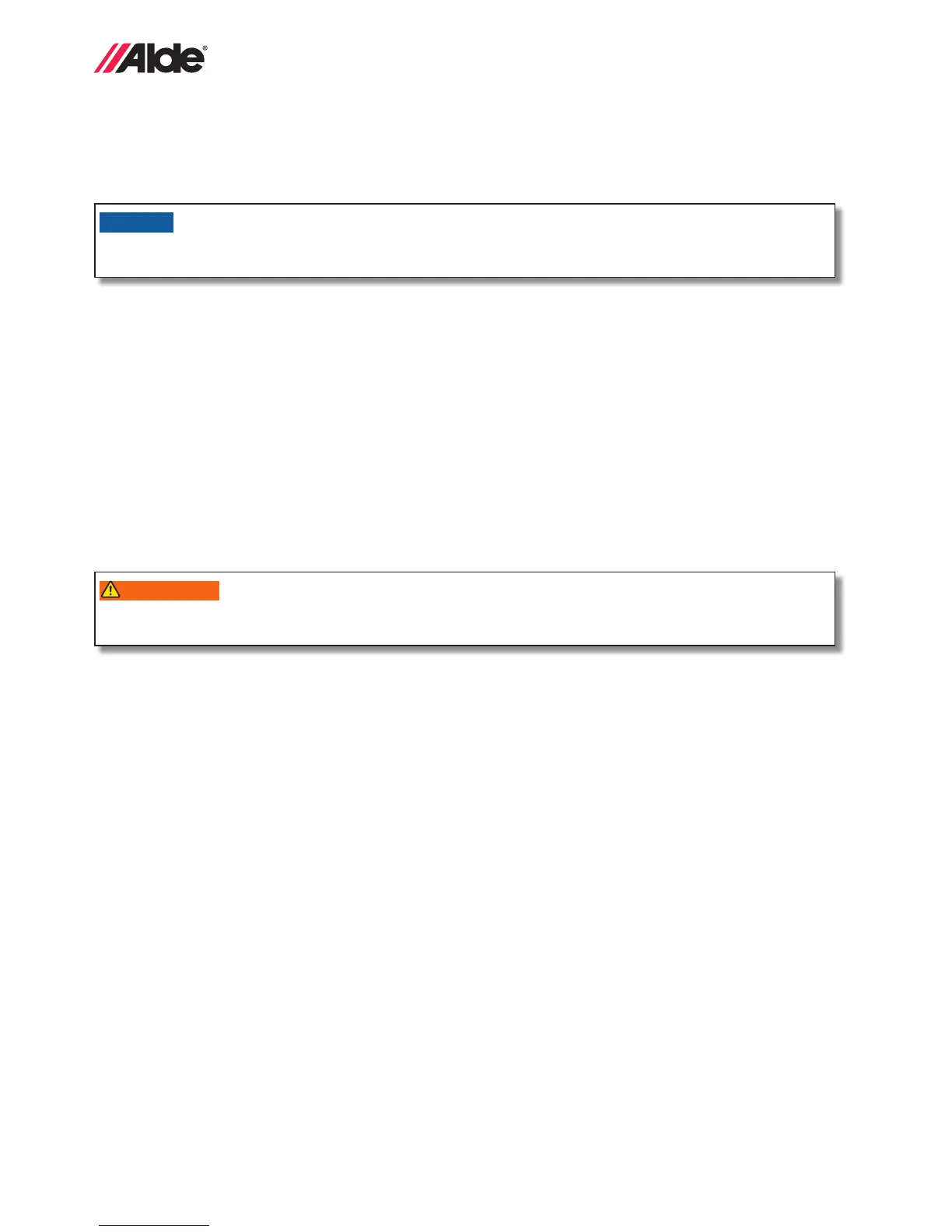
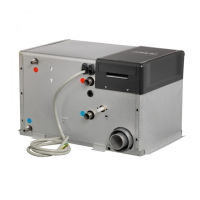
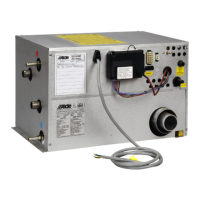
If the heating system has not been operated for some time, or if the gas cylinder has been changed, it may take
longer than normal to light the LPG burner in the boiler.
• No LPG? Check to make sure that there is gas in the LPG tank. If it is empty, have the tank relled.
• Is the main tap fully open?
• Check that the type of LPG used is suitable for the prevailing outdoor temperature. Using butane is unsuitable at tem-
peratures lower than +10°C. Use propane instead.
• Check that the
12 V
fuse for the boiler has not blown.
• Check that power at 12 V is being supplied to the boiler (> 11 V); the current voltage can be read off from the
service menu.
• Check that the exhaust hose is secured properly between the boiler and ue and that it is not damaged or blocked with
dirt, condensation or water. NB. The exhaust hose consists of two hoses, an inner one and an outer one.
• Check there is nothing obstructing/blocking the path of the exhaust gases at the ue.
• Check for correct gas pressure. This can be done by starting all hobs on the gas cooker and then starting the boiler on
gas operation. If there is a reduction in ame on the cooker, the gas pressure is incorrect.
• If the boiler has not been operated for some time, or if the LPG cylinder is new, it may take longer than normal to light
the boiler. Try to restart the boiler.
• If none of the above helps, contact a service workshop.
The electric element is not working
• Check that the fuse for the boiler has not blown.
• Check that power at 12 V is being supplied to the boiler (> 11 V); the current voltage can be read off from the
service menu.
• Check that 230 V really is being supplied to the boiler. Long and/or thin, imsy connection cables result in greater volt-
age drop and the voltage sometimes being lower under certain conditions.
• Check that the power level selected on the panel is high enough, see section ”2:6 Heating with electricity”.
• Check that the load monitor* (where present) has been correctly installed.
• If none of the above helps, contact a service workshop.
Poor heat or none at all (circulation in the heating system)
• Check that the symbol for the circulation pump is visible in the standby menu when heating is required, see section 2:2.
• Check that the circulation pump is working.
• Check that the correct circulation pump is activated, see section ”2:15 Activation of installed functions”.
• Check that the heating system has been bled.
*ACC not working satisfactorily
• Ensure that the temperature sensor that is used reacts effectively to the room temperature for both heating and cooling.
To increase sensitivity, a more open temperature sensor can be used (part no. 3010 638).
• With an outside temperature sensor
(part no. 3010 299)
tted, ACC function is improved: if the outdoor temperature is too
low, the AC should not run at all.


 To Next Page